
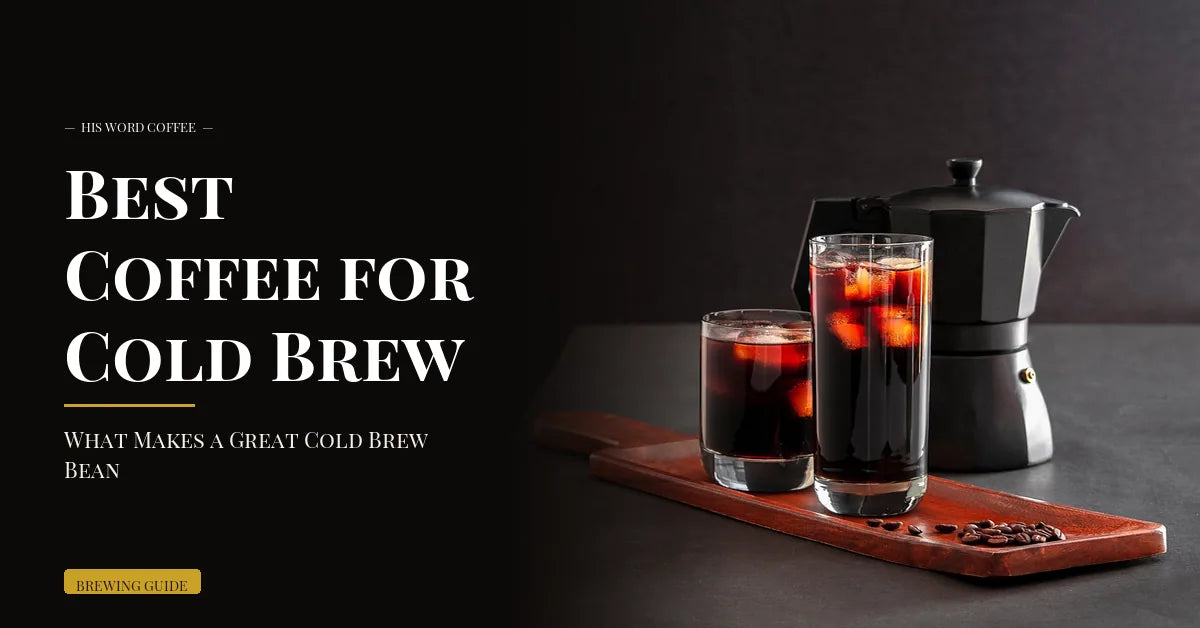
The best coffee for cold brew is a fresh medium or medium-dark roast with chocolate, caramel, or nutty notes. Colombian, Guatemalan, and Brazilian beans work consistently well. Grind extra coarse, use a 1 to 5 ratio for concentrate, and steep 16 to 20 hours in the fridge.
Why bean choice matters for cold brew
Cold water extracts coffee compounds very differently than hot water. Hot water pulls out a wide range of flavors quickly: bright acids, floral aromatics, fruity notes, and heavier chocolate and caramel tones. Cold water is slower and more selective. Over 12 to 20 hours, it pulls out sugars, oils, and the heavier compounds that give coffee its body and richness, but it struggles with bright acids and delicate floral notes. This is why a coffee that is amazing as a pour over can be disappointing as cold brew: the bright, sparkling qualities just do not come through in cold water. What you want are beans built around what cold extraction does well, which means sweetness, body, chocolate, and caramel. Some coffees that taste ordinary hot become something special when steeped overnight. Our Colombia El Tiple is one of those.
Which roast level works best
Medium and medium-dark roasts hit the sweet spot. The caramelization from roasting creates sugars and oils that cold water extracts beautifully, which gives you a naturally sweet, full-bodied cold brew that does not need milk or sugar to taste good.
- Light roast: Often thin, sour, or grassy in cold brew. Cold water cannot fully extract the complex acids that make light roasts interesting. Natural process Ethiopians are the one exception.
- Medium roast: Balanced sweetness, chocolate notes, smooth body. The most versatile choice for cold brew and the one we reach for most.
- Medium-dark roast: Richer body, deeper sweetness, very low acidity. Since cold extraction already suppresses acid, you get an exceptionally smooth cup.
- Dark roast: Can turn bitter and ashy past 16 hours. If you go dark, shorten the steep to 10 to 12 hours and use less coffee.
Best origins for cold brew
Colombia
Reliable, balanced, and consistent. Chocolate, mild fruit sweetness, and a clean medium body. Colombia El Tiple is the backbone of many of our favorite batches.
Guatemala
Chocolate, brown sugar, and a pleasant earthy depth. Cold extraction amplifies those heavier flavors into a rich, almost dessert-like cup. Try Guatemala Los Huipiles.
Brazil
Low acidity, heavy body, nutty or chocolatey sweetness. A safe bet every time if you want a smooth, uncomplicated cold brew.
Ethiopia (natural process only)
The exception to the avoid-bright rule. Natural processed Ethiopian coffees build sweetness and body through the drying process, and the berry and stone fruit can survive cold extraction. Washed Ethiopians and Kenyans tend to lose their best qualities in cold water.
Quick rule of thumb: if a coffee is known for chocolate, caramel, nuts, or body, it will shine in cold brew. If it is known for bright acidity, florals, or tea-like delicacy, brew it hot.
Cold brew grind size
You want an extra coarse grind. Think coarse breadcrumbs or raw turbinado sugar: large, irregular, pebble-like pieces you could pick out with your fingers. This is coarser than French press grind, which feels more like kosher salt. Cold brew steeps for hours, not minutes, so fine grounds with more surface area over-extract and turn bitter and muddy. Extra coarse grounds slow extraction so steep time and flavor stay in balance. Per the Specialty Coffee Association brewing guidelines, grind size and contact time need to be matched for proper extraction (source: SCA brewing standards).
Ratios and steep times
Use a 1 to 5 ratio of coffee to water by weight for concentrate that you dilute 1 to 1 with water or milk over ice. Use a 1 to 8 ratio for ready-to-drink cold brew you sip straight. Steep 16 to 20 hours in the fridge for most coffees. Room temperature works too, but cut the time to 12 to 14 hours. Past 24 hours you get diminishing returns and rising bitterness.
Why freshness still matters
Cold brew is forgiving compared to pour over, but it is not magic. Stale beans give you a flat, lifeless cup no matter how long you steep. Buy whole bean and grind right before brewing. Coffee tastes its best in the first 2 to 3 weeks after roasting. We roast to order and ship in 2 to 3 days so you get beans near their peak.
Frequently asked questions
Q: How long should cold brew steep? 16 to 20 hours in the fridge for medium and medium-dark roasts. 12 to 14 hours at room temperature. 10 to 12 hours if you use a dark roast. Past 24 hours, bitterness starts to climb without adding sweetness.
Q: Can I use any coffee for cold brew? You can, but you will get the best result from medium or medium-dark roasts with chocolate, caramel, or nutty profiles. Colombian, Guatemalan, and Brazilian origins are the most consistent. Bright washed Ethiopians and Kenyans tend to fall flat in cold water.
Q: What ratio of coffee to water should I use? 1 to 5 by weight for concentrate (about 200 grams of coffee per liter of water), then dilute 1 to 1 with water or milk over ice. 1 to 8 for ready-to-drink cold brew you sip straight from the pitcher.
Q: Do I need a special cold brew maker? No. A French press, mason jar with a fine mesh strainer, or a dedicated cold brew pitcher all work. The grind size, ratio, and steep time matter more than the gear.

Leave a comment
This site is protected by hCaptcha and the hCaptcha Privacy Policy and Terms of Service apply.