
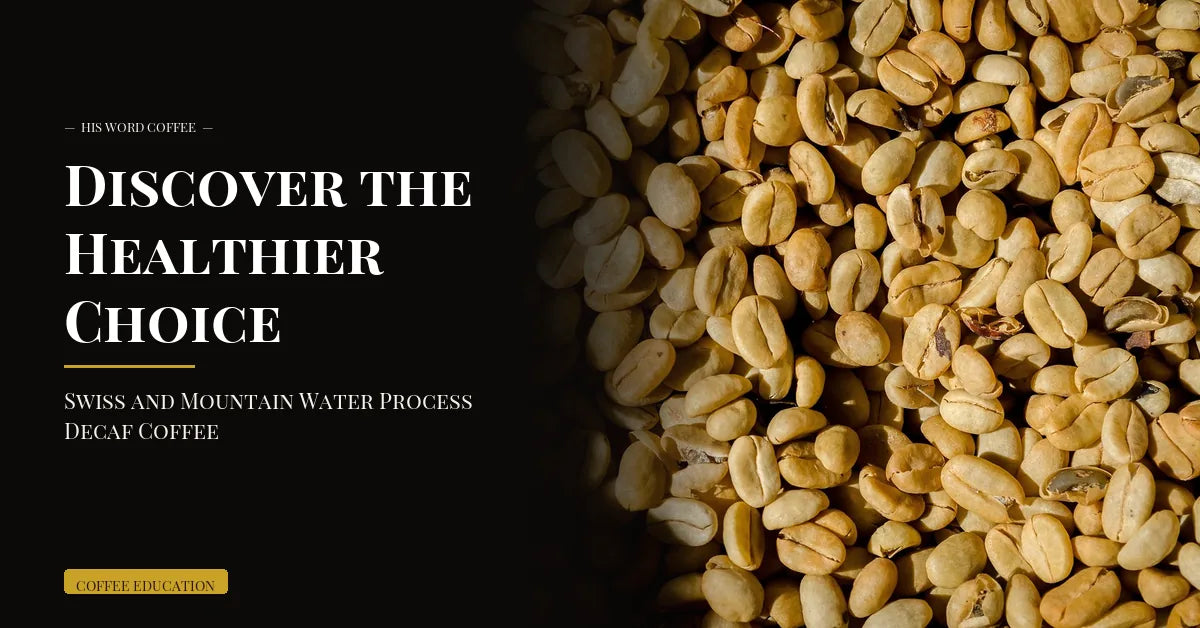
Swiss Water Process and Mountain Water Process are two water-based, chemical-free decaffeination methods. Both remove caffeine using clean water and natural osmosis, leaving the bean intact. The cup tastes closer to regular coffee than chemical-decaf options and works well for late afternoon and evening brewing.
- Swiss Water Process uses water and a carbon filter to pull caffeine from green coffee, no solvents involved.
- Mountain Water Process is a parallel method developed in Mexico using mineral-rich water from the Pico de Orizaba region.
- Both methods preserve about 99.9 percent of the natural flavor compounds, so the cup tastes like real coffee, not flat.
- Our Evening Grace decaf is Mountain Water Process, sourced from Mexico, not Swiss Water.
What is Swiss Water Process decaf?
Swiss Water Process is a chemical-free method of removing caffeine from green coffee using only water, temperature, and time. The process starts with a tank of pure water that has been pre-saturated with the soluble flavor compounds from green coffee. This is called green coffee extract, and it is the key trick of the method. Because the water already contains the same soluble compounds as the new batch of beans, those flavor compounds stay in the bean. Only caffeine, which is not in the extract, moves out into the water by natural osmosis. The water is then cycled through a charcoal filter that catches the caffeine molecules. The filtered water is recharged with flavor compounds and used on the next batch. Each cycle pulls more caffeine out of the bean. By the time the bean dries, more than 99 percent of the caffeine is gone and the natural flavor is still in place.
How the process actually works
The five basic stages of the Swiss Water Process are: soak the green beans in pure water to make the cells permeable; transfer to a tank of green coffee extract; run the extract through a carbon filter that traps caffeine; recharge and recycle the extract through new batches of beans; and dry and bag the decaffeinated beans for shipment. The whole cycle runs in a closed loop, so almost nothing is discarded, and no chemical solvents ever touch the bean.
What is Mountain Water Process?
Mountain Water Process is a Mexican counterpart to Swiss Water Process. It uses the same basic idea (pure water plus osmosis plus carbon filtration), but the water comes from glacial sources near Pico de Orizaba, a mountain in Veracruz, Mexico. The mineral profile of the source water is slightly different, which fans of the method say gives Mexican decaffeinated coffee a softer, sweeter cup. The end result is the same chemical-free decaf, with caffeine removed to roughly 99.9 percent.
Water process vs. chemical decaf
| Method | How caffeine is removed | Chemicals? | Cup notes |
|---|---|---|---|
| Swiss Water Process | Water osmosis plus carbon filter | None | Clean, balanced, close to regular coffee |
| Mountain Water Process | Mexican mineral water plus carbon filter | None | Soft, sweet, slightly fuller body |
| Direct solvent (methylene chloride or ethyl acetate) | Solvent strips caffeine from beans | Yes | Acceptable cup, can taste slightly flat |
| Sugarcane EA (natural) | Ethyl acetate from sugarcane fermentation | Yes (naturally derived) | Sweet, smooth, common in Colombian decaf |
| CO2 process | Pressurized carbon dioxide pulls caffeine | None (CO2 only) | Clean cup, more often used for large industrial batches |
Both water-process methods are popular with specialty roasters because they avoid solvents and they preserve the natural flavor of the origin. Chemical methods are not unsafe (methylene chloride and ethyl acetate are both FDA-allowed in coffee), but a lot of customers prefer a coffee that has never touched a chemical solvent.
Why decaf can still taste great
For years, decaf had a bad reputation because most of it was processed cheaply and tasted flat. The water-process methods changed that. Because the flavor compounds stay in the bean, a well-roasted water-process decaf can taste almost identical to its regular cousin. The trick is roasting it on a profile that respects the lower caffeine content (which slightly changes how the bean behaves in the roaster) and serving the cup fresh, like any specialty coffee.
Frequently asked questions
Q: Is Swiss Water Process the same as Mountain Water Process? They are very similar. Both use water, temperature, and a carbon filter to pull caffeine out of green coffee, and neither uses chemical solvents. The two methods come from different facilities (Swiss Water is based in British Columbia, Mountain Water is based in Mexico) and use slightly different source water. The cups are close, and many roasters use them interchangeably depending on which decaf lots they can source.
Q: Is water process decaf really caffeine-free? No decaf is completely caffeine-free. The Swiss Water and Mountain Water methods remove about 99.9 percent of the caffeine, which is the industry standard for "decaf" labeling. A cup of decaf coffee usually contains 2 to 5 milligrams of caffeine, compared to 90 to 120 milligrams in a regular cup. For most caffeine-sensitive drinkers, that is low enough to drink in the evening without disrupting sleep.
Q: Does Swiss Water Process decaf taste different from regular coffee? A high-quality water-process decaf tastes like coffee, not like flat decaf. The flavor compounds are preserved through the process, so a Colombia decaf still tastes like Colombia and a Sumatra decaf still tastes like Sumatra. There can be a small softening of body and brightness, but most casual drinkers cannot tell water-process decaf from regular coffee in a blind tasting.
Q: Is water process decaf better for you than chemical decaf? For people who want to avoid chemical solvents in their food and drink, yes. There is no documented health concern from FDA-approved decaffeination solvents, but a lot of customers simply prefer a chemical-free process. Water process decaf is also the standard choice for certified organic coffee, because solvent-based decaf cannot be labeled organic.
Q: Does His Word Coffee sell Swiss Water Process decaf? Our decaf, Evening Grace, is processed with Mountain Water Process, which is the Mexican counterpart to Swiss Water Process. Both methods are chemical-free water-based decaf. If you specifically need a Swiss Water Process bean, we are happy to point you to a roaster that carries that lot. Reach out through the contact page.

Leave a comment
This site is protected by hCaptcha and the hCaptcha Privacy Policy and Terms of Service apply.