
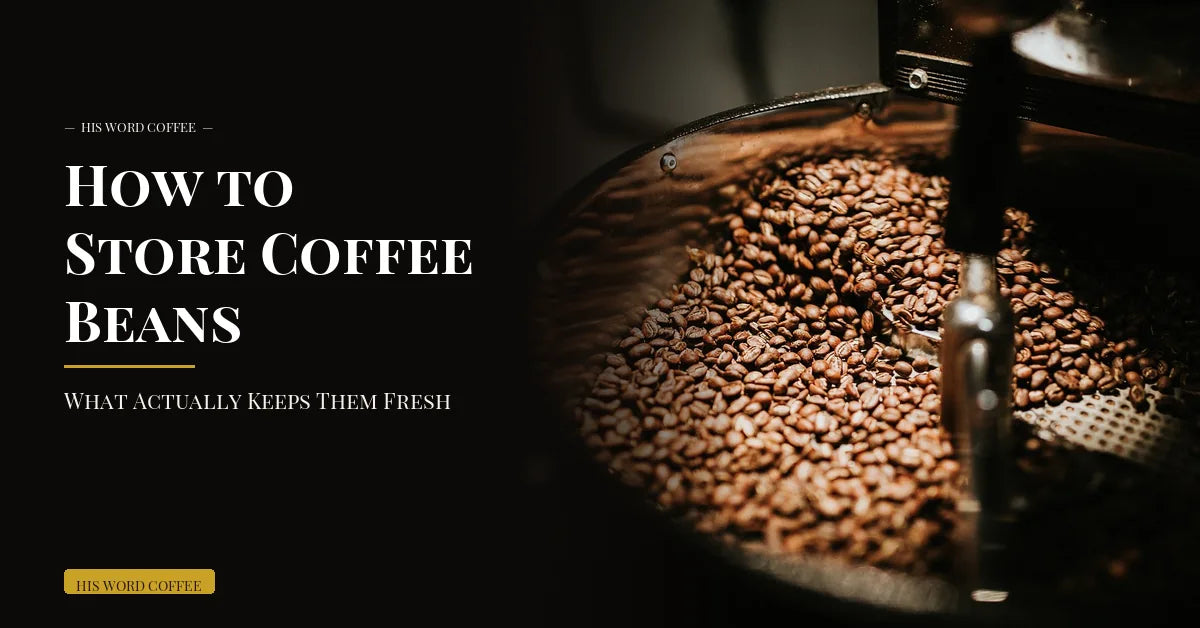
You bought a bag of coffee that smelled incredible when you opened it : warm, a little sweet, that roasty depth that makes you want to brew a cup right then. A few weeks later you go back to it and something's off. The smell is flat. The cup is thin. Nothing's technically wrong with it, but it doesn't taste like anything anymore.
Key Takeaways
- Coffee Staling Factors: Air, moisture, heat, and light are the main reasons coffee goes stale.
- Avoid the Fridge: Refrigerators can introduce unwanted odors and moisture that harm coffee more than they help.
- Better Storage Containers: Opt for opaque, airtight containers stored in a cool cabinet at room temperature.
- Freshness Timeline: Whole beans peak in freshness 7-21 days after roasting before slowly deteriorating.
- Freezing Considerations: Freezing can work if done correctly (freeze once, thaw once, never re-freeze).
That's coffee going stale , and it happens faster than most people expect. But here's the good news: it's almost entirely preventable. The right storage habits can keep your beans tasting genuinely fresh for weeks, not days. This guide covers everything that actually matters: what stales coffee, how long it really lasts, which containers are worth buying, and whether freezing helps or hurts.
What You Need to Know
- Yes, coffee goes stale : whole beans peak in the 7-21 days after roasting, then slowly fade
- The four enemies : air, moisture, heat, and light are what stale your coffee
- Skip the fridge : refrigerators introduce moisture and odors that hurt coffee more than they help
- Freezing can work , but only if done right (freeze once, thaw once, never go back in)
- Best container : opaque, airtight, at room temperature in a cool cabinet
- Grind fresh : pre-ground coffee loses most of its character within hours
What We'll Cover
Does Coffee Actually Go Stale?
The difference between stale coffee and fresh coffee isn't subtle once you know what to look for. Fresh coffee has brightness, complexity, and a lingering finish. Stale coffee just tastes like hot brown water : drinkable, but not worth much. The good news is that staleness is almost entirely a storage problem, not a quality problem. Even great coffee goes stale quickly in a bad environment. And decent coffee stored well can taste genuinely excellent for weeks.
Coffee doesn't announce when it's gone stale , it just quietly fades. The most reliable indicator is smell: fresh beans have a vibrant, complex aroma when you open the bag. Stale beans smell flat or faintly like cardboard. If the smell doesn't make you want to brew a cup immediately, the flavor won't either.
The Four Things That Stale Coffee
☕ Coffee's Four Enemies
- Air (Oxidation): The biggest threat. Oxygen breaks down the aromatic compounds in coffee fast , especially once the beans are ground and the surface area multiplies dramatically. Airtight storage is non-negotiable.
- Moisture: Coffee beans are hygroscopic, meaning they absorb moisture from the air around them. Even small amounts of humidity speed up staling and can cause mold in very humid environments. This is the main reason refrigerators are a bad idea.
- Heat: Warmth accelerates the chemical reactions that cause staling. Cabinets above the stove, spots near the coffee maker, and sunny countertops all work against you. Consistent cool temperature is what you want.
- Light: UV light degrades coffee's organic compounds over time. A beautiful clear glass canister on a sunny counter looks great , but it's slowly killing your coffee all day long.
The reason these four things matter together is that they compound. A bag left slightly open on a warm counter near a sunny window is dealing with all four at once , it'll go stale in days. The same beans in a sealed opaque container in a cool cabinet might stay genuinely fresh for three weeks or more.
How Long Does Coffee Stay Fresh?
Most grocery store coffee doesn't have a roast date on it , just a "best by" date that tells you very little. Fresh-roasted specialty coffee (the SCA's standards) is different. When you know the roast date, you know exactly where you are in the freshness window. We put the roast date on every bag we ship for exactly this reason.
Here's how the freshness arc typically looks for properly stored whole beans:
| Time After Roast | Whole Beans | Pre-Ground |
|---|---|---|
| Days 1-3 | Too fresh . CO₂ off-gassing; espresso especially benefits from a few days of rest | Good but already fading fast |
| Days 4-21 | Peak flavor , this is what good coffee is supposed to taste like | Noticeably stale by day 3-5 |
| Days 21-30 | Still good, subtle flavors beginning to flatten | Significantly stale |
| 30+ days | Drinkable but not what you paid for | Very flat : mostly just hot and bitter |
💡 The Roast Date Is the Number That Matters
If a bag of coffee doesn't have a roast date on it, you have no idea how fresh it is. "Best by" dates are typically set 12-18 months after roasting , which tells you when the coffee becomes definitively bad, not when it's at its best. Look for roast dates, not best-by dates, when you're shopping for quality coffee.
We roast every order to order here in the Pacific Northwest, which means the beans you receive were roasted within a day or two of shipping , not sitting in a warehouse for months.
Can You Freeze Coffee Beans?
Here's the method that works: divide your coffee into single-week portions, seal each portion in a small airtight freezer-safe bag with as much air pressed out as possible, and freeze them. When you're ready for a new bag, take one out, let it come to room temperature before opening (so condensation forms on the outside of the bag rather than on the beans), and use it within a week. Never put it back in the freezer.
The method that doesn't work is using the freezer as your daily storage. If you're grabbing the bag every morning, scooping beans, and putting it back, you're exposing the beans to repeated temperature changes and moisture every single time. That's worse than leaving them on the counter.
Honestly, for most people, the simplest approach beats freezing: buy fresh beans in amounts you'll use within two to three weeks, store them in a good airtight container at room temperature, and order again before you run out. No freezer logistics required. We roast to order, so there's no penalty for buying in smaller amounts , every order is fresh.
What's the Best Container for Coffee Beans?
☕ Container Options, Ranked
- One-way valve bags: Designed specifically for coffee : the valve lets CO₂ escape after roasting without letting oxygen in. If your coffee came in a valve bag, this is fine for daily storage.
- Ceramic or stainless steel canister with gasket lid: Great for ongoing storage, blocks light, seals well. Look for a lid with a rubber gasket and a locking mechanism, not just a friction fit.
- Vacuum-sealed containers: Best option for freshness : removes air before sealing. Worth the investment if you're serious about it or buying in bulk.
- Clear glass jars: Fine if kept in a cabinet, away from light. Not great for a sunny counter display , they look beautiful but don't protect the beans.
- Folded paper bag or Ziploc: Better than nothing, but not by much. Paper isn't airtight, and most zip bags don't seal well enough for more than a day or two.
🌿 Fresh-Roasted and Shipped Right
The best storage routine in the world can't fix stale beans to start with. Every coffee we roast goes out fresh : we don't maintain inventory that sits and waits. Your order gets roasted within a day or two of shipping, then packed in one-way valve bags that protect the beans during transport and storage.
Our House Blend and Breakfast Blend are good starting points if you're not sure where to begin:
- Roasted to order: Every bag goes out fresh, not from a warehouse shelf
- One-way valve bags: Let CO₂ escape without letting air in : the right packaging for fresh coffee
- Roast date included: Know exactly when your coffee was roasted so you know where you are in the freshness window
Good storage starts with good beans. Browse all our fresh-roasted coffees here.
Whole Beans vs. Pre-Ground: Does It Really Matter?
A pound of whole beans might have a few hundred exposed surfaces. That same pound of ground coffee has millions of tiny particles, each with their own surface area in contact with the air. Oxidation, which is what stales coffee, works proportionally to that surface area. The math is ruthless.

Practically speaking: whole beans stored well will taste great for 2-3 weeks after roasting. Pre-ground coffee starts noticeably declining within hours of grinding, and by the time a pre-ground bag has been sitting on a shelf for a week or two, most of what made it interesting is already gone.
That said, pre-ground is sometimes the right call. Not everyone has a grinder, and convenience is a real thing. If you're buying pre-ground, use it quickly (within a week of opening), seal it tight after each use, and don't leave it in a warm or sunny spot. It won't stay fresh the way whole beans do, but good habits still make a difference.
Practical Storage Tips for Every Situation
☕ Storage by Situation
- Most people (weekly buyers): Keep beans in their valve bag or a sealed canister in a cabinet away from the stove. Grind each morning. Done.
- Bulk buyers: Portion into weekly amounts. Keep one week's worth accessible; seal the rest in airtight bags (freezer-safe if using the freeze method, regular airtight bags otherwise).
- Humid climates: Moisture is harder on coffee than heat. Prioritize a canister with a real gasket seal. Keep away from the dishwasher, sink, and any steam source.
- Infrequent brewers: Buy smaller quantities more often. A 6 or 8 oz bag used within two weeks is better than a pound that sits for a month.
- Gift coffee / long-term storage: The freeze-once method (airtight bag, freeze in single-week portions, thaw once and use promptly) can extend shelf life significantly.
🍃 Something a Little Different
If you want to explore a single-origin while you're building better storage habits, our Ethiopia Sunrise is worth a try , it's the kind of coffee that makes you realize why freshness matters so much. Roasted to medium-light, it has a brightness and fruit-forward character that fades noticeably as it stales. Fresh, it's remarkable. Two weeks old and poorly stored, it's forgettable. Good beans, stored well, is the whole story.
Tasting Notes: Blueberry, jasmine, bright citrus finish
Frequently Asked Questions
Does coffee actually go stale, or does it just lose flavor?
Both are true, and they're related. Coffee doesn't go "bad" the way milk does , it won't make you sick. But it does go stale through oxidation, which breaks down the aromatic compounds that give coffee its flavor. What you're left with is coffee that tastes flat, thin, or just kind of like hot water with a brown tint. Technically drinkable, practically not worth it. The goal of good storage is slowing that oxidation down as much as possible.
How long do whole coffee beans last?
Properly stored whole beans : sealed airtight, at room temperature, away from heat and light : stay at peak flavor for 7-21 days after the roast date, and remain good (if slightly faded) through about 4-6 weeks. After that you're drinking stale coffee. The operative word is "after roasting," not after purchasing , which is why fresh-roasted coffee with a roast date beats anything without one.
Should I store coffee in the refrigerator?
No. The refrigerator seems like it should work : cold usually means fresh , but coffee is an exception. Refrigerators are humid, and coffee absorbs moisture from the air around it. They're also full of food odors, which coffee will absorb over time. And every time you open the door, you expose the beans to a burst of cold, humid air followed by warming. A cool, dry cabinet is significantly better than the fridge for coffee storage.
Can you freeze coffee beans?
Yes, but only with a specific method. The freeze-once, thaw-once approach works: portion beans into weekly amounts, seal in airtight freezer bags, freeze them, and thaw one at a time : letting it reach room temperature before opening (this keeps condensation on the outside of the bag, not on the beans). Never put thawed beans back in the freezer. What damages coffee is repeated temperature cycling, not freezing itself.
What's the best container for storing coffee beans?
An opaque, airtight container kept at room temperature in a cool cabinet. The original one-way valve bag your coffee came in is designed for exactly this purpose and works well. For a dedicated canister, look for ceramic or stainless steel with a lid that has a rubber gasket , not just a friction-fit lid. Vacuum-sealed containers are even better if you're serious about freshness. The key features are: blocks light, seals air out, and stays at a consistent cool temperature.
Does ground coffee go stale faster than whole beans?
Dramatically faster. Grinding multiplies the surface area of coffee exposed to air by thousands of times, which means oxidation works much faster. Whole beans stored properly stay fresh for weeks. Ground coffee starts losing its best qualities within hours of grinding, and by the end of day two it's noticeably stale. If you have any way to grind your own coffee, even a basic blade grinder, doing it right before brewing is one of the most meaningful upgrades you can make.
What does stale coffee taste like?
Stale coffee tastes flat, dull, and lifeless. It lacks the brightness, sweetness, or depth that fresh coffee has. Sometimes it tastes slightly bitter without any of the pleasant complexity that usually comes alongside that bitterness. The easiest way to detect stale coffee before you brew it is the smell test : fresh beans have a lively, complex aroma when you open the bag. Stale beans smell flat or faintly cardboardy. If the smell doesn't make you want a cup, the taste probably won't either.
Does roast level affect how long coffee stays fresh?
Slightly. Darker roasts develop more surface oils, which can go rancid a bit faster than the oils in lighter roasts. Lighter roasts tend to retain their more delicate flavors for a slightly longer window. But the difference is modest compared to storage conditions : a light roast stored poorly will stale faster than a dark roast stored well. The storage habits matter more than the roast level For freshness.
Can I use a mason jar to store coffee beans?
A mason jar is better than nothing , it seals reasonably well and is easy to clean. The main downside is that most mason jars are clear glass, which lets in light. If you're keeping it in a cabinet (away from light), a mason jar works fine. If it's sitting on a sunny counter, the light exposure will speed up staling. For the best results, use an opaque container, or keep the mason jar in a dark cabinet.
How do I know when my coffee has gone stale?
The smell test is the most reliable method: open the bag or container and take a deep breath. Fresh coffee has a vibrant, complex aroma : roasty, sweet, sometimes fruity or chocolatey depending on the origin. Stale coffee smells flat, dull, or faintly like a paper bag. When you brew stale coffee, the cup will taste thin and lifeless compared to fresh. If you're not sure, make a mental note of what the coffee smelled like when you first opened it : the drop in aroma is pretty obvious once you start paying attention.
Start Fresh
Good storage habits only matter if you start with coffee worth protecting. We roast every order fresh , no warehouse shelves, no stale inventory. Your beans ship within a day or two of roasting, packed in one-way valve bags designed to keep them at their best until they reach you.
Browse Fresh-Roasted Coffee

Leave a comment
This site is protected by hCaptcha and the hCaptcha Privacy Policy and Terms of Service apply.