best home coffee brewing equipment - His Word Coffee

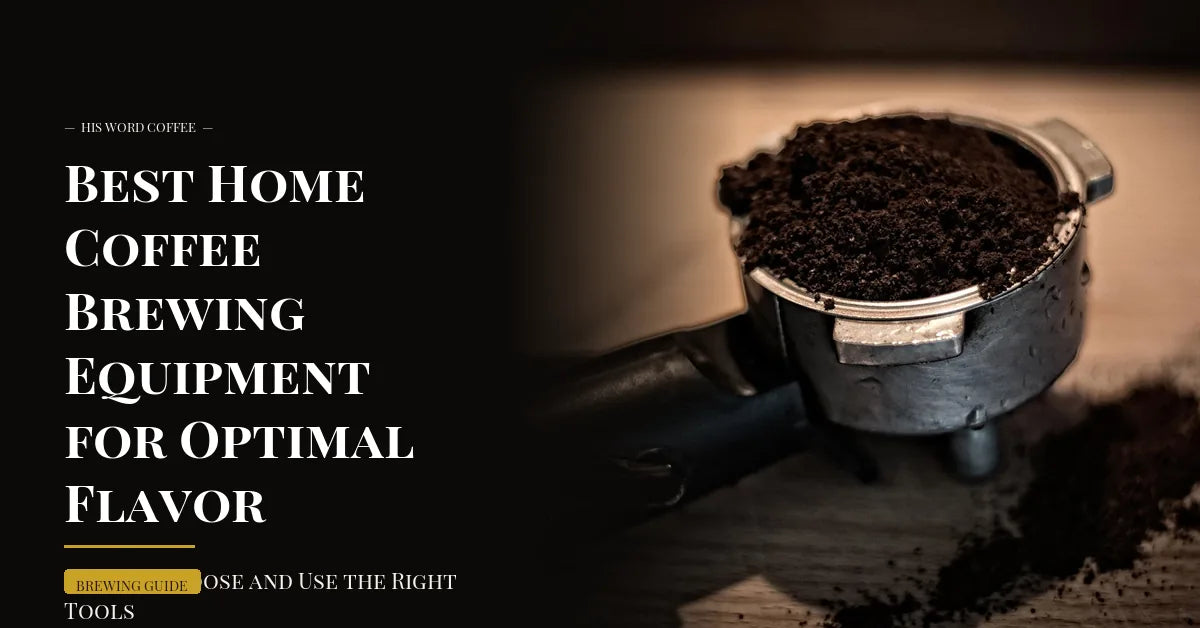
Best Home Coffee Brewing Equipment for Optimal Flavor: How to Choose and Use the Right Tools

You've invested in fresh-roasted specialty coffee (the SCA's standards) beans, but somehow your home brew still doesn't taste as good as what you get from your favorite coffee shop. The beans aren't the problem. Nine times out of ten, it's the equipment holding you back.

Key Takeaways

  • Filter Coffee Quality: Opt for pour-over systems that use high-quality filters to enhance taste and clarity.
  • Water Temperature Control: Invest in a brewer with adjustable water temperature settings, as optimal brewing temp is crucial.
  • Poise Pressure Consideration: Drip coffee machines with built-in pressure control provide consistent results similar to espresso machines.
  • Bulk Buying Option: Look for brewers that can handle larger ground amounts, ideal for households or frequent guests.
  • Maintenance Importance: Regular cleaning and descaling of your brewer are essential to maintain flavor quality over time.

Here's something that might surprise you: the right brewing equipment matters more than the coffee itself. A $50 bag of exceptional beans can taste mediocre if ground inconsistently, brewed at the wrong temperature, or measured imprecisely. But a $15 bag of good coffee? It can taste amazing when you have the proper tools.

In this guide, we're breaking down the essential home coffee brewing equipment you actually need, from budget-friendly options to premium picks. We'll explain what each piece does, why it matters, and how to choose the right gear for your brewing style and budget.

Key Takeaways: Essential Coffee Brewing Equipment

  • Burr grinder: The single most important investment for better coffee (blade grinders create inconsistent particle sizes)
  • Gooseneck kettle: Provides precise pour control; temperature control models ensure optimal extraction
  • Digital scale: Consistency requires measuring by weight, not volume
  • Quality brewer: Pour-over, French press, or AeroPress each highlight different flavor characteristics
  • Fresh beans + proper storage: Even the best equipment can't fix stale coffee
  • Budget allocation: Prioritize grinder first, then kettle, then brewing device

What Equipment Do You Need for Great Coffee at Home?

Let's start with a reality check. Walk into any specialty coffee shop and you'll see thousands of dollars in equipment: commercial espresso machines, high-end grinders, precision temperature control systems. Do you need all that at home? Absolutely not.

What you do need are tools that control the four variables that determine coffee flavor:

  • Grind size: Particle consistency affects extraction rate (what percentage of solubles dissolve from the coffee)
  • Water temperature: Optimal range is 195-205°F; too hot burns, too cool under-extracts
  • Coffee-to-water ratio: Precision ensures consistency and allows you to dial in your perfect strength
  • Brew time: How long water contacts coffee grounds determines what compounds are extracted

Every piece of equipment we recommend helps you control one or more of these variables. That's what separates essential gear from unnecessary gadgets.

4 Essential brewing variables to control
$150-300 Complete starter setup (all essentials)

Coffee Grinders: Why This Is Your Most Important Purchase

If you only invest in one piece of coffee equipment, make it a quality grinder. Here's why: grind consistency is the foundation of good extraction.

When coffee is ground, you create surface area for water to extract solubles. Smaller particles extract faster than larger ones. If your grind is inconsistent (a mix of fine powder, medium chunks, and larger boulders), you'll simultaneously over-extract the fines and under-extract the boulders. The result? Bitter and sour notes in the same cup.

Blade Grinders vs. Burr Grinders

Feature Blade Grinder Burr Grinder
Mechanism Spinning blade chops beans randomly Two abrasive surfaces crush beans uniformly
Consistency Highly inconsistent particle sizes Uniform particle distribution
Adjustability Time-based (imprecise) Grind size settings (precise)
Price Range $15-40 $40-500+
Best For Spices (not coffee) All brewing methods

Bottom line: Skip blade grinders entirely for coffee. They're fine for spices, but they simply can't produce the consistency needed for good extraction.

Manual vs. Electric Burr Grinders

Manual Burr Grinders $40-100

Best for: Single servings, travel, quiet grinding, budget-conscious buyers

Pros: Affordable, portable, quiet operation, excellent grind quality for the price

Cons: Requires 1-2 minutes of hand cranking per serving, not ideal for large batches

Recommended models: Timemore C2, Hario Mini Mill, 1Zpresso Q2

Entry Electric Burr Grinders $100-200

Best for: Daily use, multiple cups, convenience

Pros: Fast, consistent, adjustable settings, good for most brewing methods

Cons: Louder than manual, takes counter space

Recommended models: Baratza Encore, Oxo Brew Conical Burr, Capresso Infinity

Premium Electric Grinders $300-500

Best for: Espresso, serious enthusiasts, professional-level results

Pros: Exceptional consistency, wide range of grind settings, durable construction, precision adjustments

Cons: Significant investment, may be overkill for casual brewers

Recommended models: Baratza Virtuoso+, Fellow Ode, Eureka Mignon series

Our Recommendation

Best value for most people: Baratza Encore ($150). It's the workhorse of home coffee. Reliable, repairable, produces excellent grind consistency for pour-over and drip methods. If you're on a tighter budget, the Timemore C2 manual grinder ($60) delivers impressive quality for the price.

Kettles: Temperature and Pour Control Matter

You can boil water in any kettle, but that doesn't mean you should. The right kettle gives you two critical advantages: temperature control and pour precision.

Why Gooseneck Kettles?

The distinctive curved spout of a gooseneck kettle isn't just aesthetics. It provides precise control over water flow rate and placement. This matters enormously for pour-over methods like V60, Chemex, or Kalita Wave, where you need to saturate grounds evenly and maintain consistent water flow.

195-205°F Optimal brewing temperature for most coffee

Kettle Comparison: Budget to Premium

Type Price Features Best For
Stovetop Gooseneck $25-50 Manual heating, gooseneck spout, no temp control Budget-conscious, gas stove owners
Basic Electric Gooseneck $50-80 Electric heating, gooseneck spout, on/off switch Convenience seekers, quick boiling
Variable Temp Electric $80-150 Precise temperature control, hold function, gooseneck spout Most home brewers serious about quality
Premium Variable Temp $150-200+ PID temperature control, Bluetooth app, aesthetic design, fast heating Enthusiasts, design-conscious buyers

Our Recommendation

Best value: Bonavita 1.0L Variable Temperature Gooseneck ($80-90). Accurate temperature control, 1-degree precision, hold function, reliable performance. Premium pick: Fellow Stagg EKG ($150-180) if you value design and faster heating. Budget option: Hario Buono Stovetop ($40) works great if you have a kitchen thermometer.

Do You Need Temperature Control?

Short answer: it depends on your brewing method and how nerdy you want to get. For pour-over coffee, yes, temperature control makes a noticeable difference. Light roasts typically benefit from higher temps (200-205°F) to fully extract delicate flavors. Darker roasts often taste better at slightly lower temps (195-200°F) to avoid over-extraction.

For French press or immersion methods, you have more temperature forgiveness. But if you brew tea or different coffee origins regularly, variable temperature is incredibly convenient.

Brewing Devices: Pour Over, French Press, and AeroPress

Your brewing device determines extraction method and final flavor profile. Let's break down the three most popular home brewing methods.

Pour Over Drippers

Hario V60 $8-30

Flavor profile: Clean, bright, highlights acidity and origin characteristics

Skill level: Moderate (requires consistent pouring technique)

Best for: Light to medium roasts, single-origin coffees, those who enjoy the ritual

Brew time: 2.5-3.5 minutes

Chemex $40-50

Flavor profile: Very clean, tea-like, exceptional clarity

Skill level: Easy to moderate

Best for: Multiple servings (3-8 cups), visual presentation, clean flavor preference

Brew time: 4-5 minutes

Kalita Wave $25-40

Flavor profile: Balanced, forgiving, consistent

Skill level: Easy

Best for: Beginners to pour-over, those who want consistency without fuss

Brew time: 3-3.5 minutes

Immersion Brewing

French Press $20-80

Flavor profile: Full-bodied, rich oils, heavier mouthfeel

Skill level: Very easy

Best for: Medium to dark roasts, those who prefer body over brightness, minimal fuss

Brew time: 4 minutes

Note: Metal filter allows oils through (unlike paper), creating fuller body but less clarity

AeroPress $30-40

Flavor profile: Versatile (can mimic espresso or pour-over depending on technique)

Skill level: Easy with lots of room to experiment

Best for: Travel, experimentation, single servings, those who love tinkering with recipes

Brew time: 1-2 minutes

Bonus: Extremely durable, portable, easy to clean

Which Brewer Should You Choose?

For beginners: French Press (easiest, most forgiving) or Kalita Wave (consistent pour-over)

For clarity and brightness: V60 or Chemex

For body and richness: French Press

For versatility and experimentation: AeroPress

For multiple cups: Chemex or larger French Press

Digital Scales: The Secret to Consistency

Here's a question: have you ever made a perfect cup of coffee and then couldn't replicate it? That's almost always a measurement issue.

Volume measurements are wildly inconsistent. A "tablespoon" of coffee can vary by 30-40% depending on grind size and how densely you pack it. Weight measurements are exact. 20 grams is always 20 grams.

What to Look For in a Coffee Scale

  • 0.1-gram precision: Essential for dialing in recipes (1-gram precision works but isn't ideal)
  • Built-in timer: Incredibly convenient for pour-over methods
  • Tare function: Allows you to zero out the weight of your vessel
  • Responsive: Updates quickly (cheap scales lag, making pour-over frustrating)
  • Water-resistant: Coffee brewing involves liquid; protect your investment
  • Capacity: At least 2kg for versatility
1:16 Standard coffee-to-water ratio (1g coffee : 16g water)

Scale Recommendations by Budget

Model Price Precision Features
Amazon Basics $15-20 0.1g Basic scale, no timer, gets the job done
Hario Drip Scale $50-60 0.1g Built-in timer, water-resistant, reliable
Timemore Black Mirror $80-120 0.1g Fast response, timer, flow rate indicator, rechargeable
Acaia Pearl $200-250 0.1g Bluetooth app, extremely fast, professional-grade, beautiful design

Our Recommendation

Best value: Hario Drip Scale ($50-60). Solid build quality, integrated timer, accurate readings. Budget pick: Any basic 0.1g precision scale ($15-20) from Amazon works fine if you use your phone for timing. Premium pick: Timemore Black Mirror ($80-120) if you want faster response times and modern features.

Filters and Storage: The Supporting Cast

Coffee Filters: Paper vs. Metal

Paper filters produce cleaner cups by trapping oils and fine particles. This creates clarity and brightness but removes some body. Different paper filters have different thicknesses. Chemex filters, for example, are quite thick, producing exceptional clarity. Always rinse paper filters before brewing to remove paper taste.

Metal filters (used in French Press and some pour-over methods) allow coffee oils through, creating fuller body and richer mouthfeel. However, some fine sediment passes through, reducing clarity.

Which is better? Neither. It's about preference. Light roasts often shine with paper filters that highlight clarity. Dark roasts can benefit from metal filters that preserve body.

Coffee Storage

Even the best brewing equipment can't salvage stale coffee. Proper storage matters.

Coffee Storage Best Practices

  • Airtight container: Oxygen is coffee's enemy; minimize exposure
  • Opaque material: Light degrades coffee; dark containers protect beans
  • Room temperature: Skip the fridge/freezer for daily-use coffee (moisture and odors are problematic)
  • One-way valve: Allows CO2 to escape without letting oxygen in (most good coffee bags have these)
  • Buy what you'll use in 3-4 weeks: The best storage is consuming coffee while it's fresh

Recommended containers: Fellow Atmos ($30-35), Airscape ($25-40), or even quality mason jars stored in a dark cabinet work well.

What Should You Buy First? Budget Recommendations

Not everyone can invest $500 in coffee equipment at once. Here's how to prioritize based on your budget.

Starter Setup ($150-200)

  • Burr grinder: Timemore C2 manual ($60) or Baratza Encore if budget allows ($150)
  • Brewing device: French Press ($25) or AeroPress ($35)
  • Kettle: Hario Buono stovetop ($40)
  • Scale: Basic 0.1g precision scale ($15)
  • Fresh coffee: His Word Coffee specialty beans ($15-18)

Intermediate Setup ($400-500)

  • Burr grinder: Baratza Encore ($150)
  • Brewing device: Hario V60 ($25) + Chemex ($45) or Fellow Stagg Dripper ($75)
  • Kettle: Bonavita Variable Temp Gooseneck ($85)
  • Scale: Hario Drip Scale ($55)
  • Storage: Airscape container ($30)

Premium Setup ($800-1000)

  • Burr grinder: Baratza Virtuoso+ ($250) or Fellow Ode ($300)
  • Brewing device: Hario V60 ($25) + Chemex ($45) + AeroPress ($35)
  • Kettle: Fellow Stagg EKG ($180)
  • Scale: Timemore Black Mirror ($110) or Acaia Pearl ($220)
  • Storage: Fellow Atmos ($35)
$0.50-0.75 Cost per cup with specialty beans and proper equipment

Equipment Is Only Half the Equation

The best grinder and brewer in the world can't fix stale, low-quality coffee. Pair your equipment with fresh-roasted, specialty-grade beans from His Word Coffee.

Shop Fresh-Roasted Coffee

Frequently Asked Questions About Coffee Brewing Equipment

What is the most important piece of coffee brewing equipment?

A burr grinder is the single most important investment for better coffee. Grind consistency directly impacts extraction, and blade grinders simply cannot produce the uniform particle size needed for balanced extraction. Even a $60 manual burr grinder will dramatically improve your coffee compared to pre-ground or blade-ground beans.

Do I need a gooseneck kettle for pour-over coffee?

While not absolutely required, a gooseneck kettle makes pour-over significantly easier and more consistent. The curved spout provides precise control over water flow rate and placement, allowing you to saturate grounds evenly. You can use a regular kettle for immersion methods like French Press, but pour-over (V60, Chemex, Kalita) really benefits from the control a gooseneck provides.

Is a manual or electric grinder better for home use?

Electric burr grinders are more convenient for daily use, especially if you brew multiple cups or prefer not to hand-crank. However, manual burr grinders offer excellent value: you get grind quality comparable to electric grinders costing 2-3x more. Choose manual if you're budget-conscious, brew single servings, or want portability. Choose electric if you value convenience and speed.

What brewing method is best for beginners?

French Press is the most beginner-friendly method: it's forgiving, requires minimal technique, and produces consistently good results. The AeroPress is another excellent beginner choice with more versatility. If you want to start with pour-over, the Kalita Wave is more forgiving than the V60 due to its flat-bottom design and slower flow rate.

Why do I need a scale for coffee? Can't I just use a scoop?

Volumetric measurements (scoops, tablespoons) are inconsistent because coffee density varies significantly with grind size and how it settles. A "scoop" of fine grounds weighs much more than a scoop of coarse grounds. Weight-based measurements ensure consistency, allowing you to replicate good results and troubleshoot issues. A basic scale costs $15-20 and is one of the most impactful upgrades you can make.

Should I store coffee beans in the fridge or freezer?

For coffee you're actively using, store it in an airtight container at room temperature in a dark, cool place. Refrigerators introduce moisture and odors that can compromise flavor. Freezing can work for long-term storage (2+ months) if beans are in airtight, moisture-proof bags and you don't repeatedly thaw and refreeze them. The best approach? Buy what you'll consume within 3-4 weeks and store it properly at room temperature.

How much should I spend on coffee equipment as a beginner?

A complete starter setup can be assembled for $150-200: a manual burr grinder ($60), French Press or AeroPress ($25-35), stovetop gooseneck kettle ($40), and basic scale ($15). This will produce dramatically better coffee than pre-ground beans and standard drip makers. As your interest grows, you can upgrade to electric grinders, variable temperature kettles, and premium brewing devices.

Final Thoughts: Invest in Tools, Taste the Difference

Great coffee at home isn't about having the most expensive equipment. It's about having the right tools to control the variables that matter: grind size, water temperature, ratio, and time.

Start with a burr grinder. That single investment will transform your coffee more than any other piece of equipment. Add a method that matches your taste preferences: pour-over for clarity, French press for body, AeroPress for versatility. Use a scale to ensure consistency. These fundamentals will serve you well whether you spend $150 or $1,500.

And remember: even the best equipment needs quality beans to showcase its capabilities. Fresh-roasted, specialty-grade coffee is where flavor starts.

Ready to Put Your Equipment to Work?

Pair your brewing setup with fresh-roasted specialty coffee from His Word Coffee. Roasted to order, shipped within days, perfect for dialing in your new equipment.

Shop Specialty Coffee

Questions about brewing equipment or which coffee works best with your setup? Contact us. We're happy to help.

Sources: Specialty Coffee Association, Brewing Best Practices.

His Word Coffee — Vancouver, WA
★★★★★ Hundreds of happy customers

Still Drinking Stale Coffee?

His Word Coffee is roasted 1–3 days after you order. The roast date is printed on every bag so you know exactly how fresh it is. Sign up and get 10% off your first bag.

1–3
Days from
order to roast
Air
Fluid bed
roasted
100%
Specialty
grade beans

No spam. Unsubscribe any time. Offer applies to first purchase only.

Ready to upgrade your setup without getting overwhelmed?

Use the starter stack below, then add one variable at a time for best results and better consistency.
Reading next

freshly roasted vs pre packaged coffee a comprehensive comparison of flavor and freshness for coffee lovers - His Word Coffee
ethically sourced coffee vs regular coffee in christian communities - His Word Coffee

Leave a comment

This site is protected by hCaptcha and the hCaptcha Privacy Policy and Terms of Service apply.