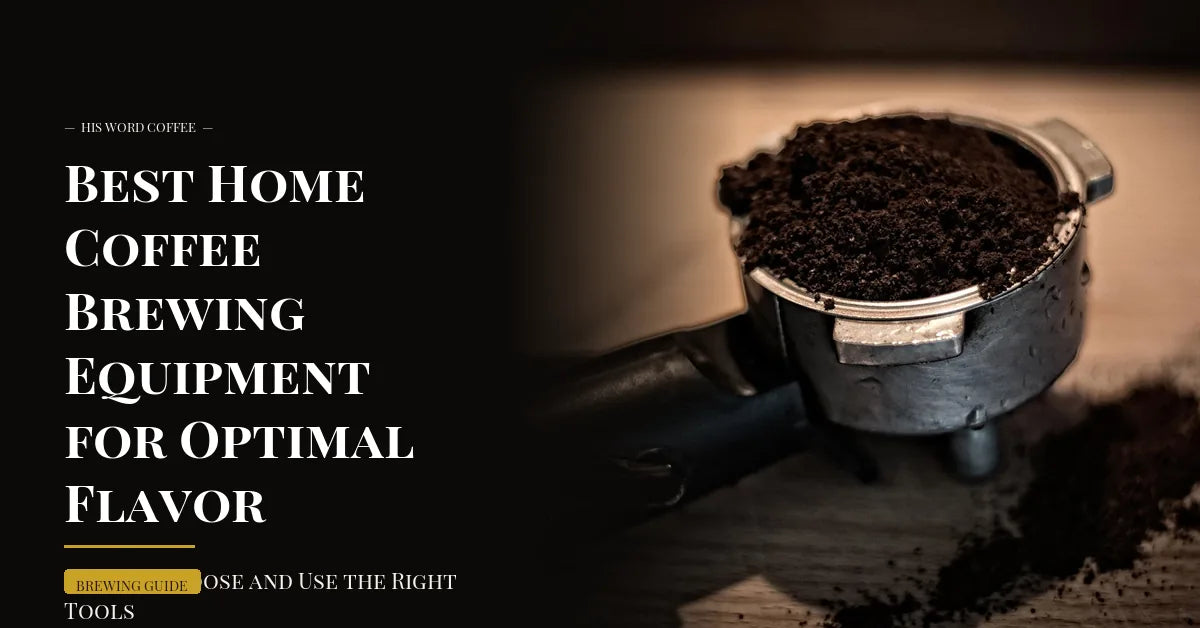
The single highest-impact upgrade for home coffee is a burr grinder. After that, fresh beans, a basic kettle, and one brew device you actually enjoy will get you most of the way to cafe-quality coffee. Expensive gear matters far less than fresh, well-ground beans.
- Burr grinder beats every other upgrade for cup quality.
- Fresh, roast-dated beans matter more than fancy brewers.
- Pick one brew method first, learn it, then add a second.
- A gooseneck kettle is optional for drip, important for pour-over.
- A small kitchen scale is one of the cheapest ways to improve consistency.
The honest priority list
A good home coffee setup is not about owning the most gear. It is about getting four basic variables right: bean freshness, grind size, water temperature, and ratio. The order of upgrades that actually moves the cup is almost always the same. Start with fresh, whole bean coffee from a roaster that prints the roast date. Then add a burr grinder, because grinding right before you brew is the single biggest jump in flavor most home brewers ever make. Then pick one brew device and stick with it for a few weeks. Add a kitchen scale next, because measuring by weight is more accurate than measuring by scoop. Add a kettle if you brew pour-over or French press. Save the espresso machine for last, because espresso is a hobby on top of a hobby and rewards a more disciplined setup. Most home brewers overspend on the brewer and underspend on the grinder, which is the wrong order.
Coffee grinders: the most important purchase
If you only upgrade one thing, upgrade the grinder. A blade grinder chops beans unevenly, which makes the brew taste muddy and over-extracted at the same time. A burr grinder crushes the bean between two textured surfaces and produces a consistent grind, which is what every brew method depends on. A burr grinder for home use can be manual or electric.
Manual burr grinders
Hand-crank grinders with stainless or ceramic burrs. Light, quiet, take up no counter space. The trade-off is the hand effort. A daily cup is fine, brewing for guests is tiring.
Entry electric burr grinders
Plug-in conical burrs with stepped grind settings. The first real upgrade most people buy. Quick, easy, and a noticeable jump in cup quality.
Premium electric grinders
Higher-end flat or conical burrs with stepless or very fine stepped adjustments. Worth it if you are brewing pour-over, French press, and espresso from one machine.
Kettles: temperature and pour control
You do not need a fancy kettle for drip coffee. A regular kettle works fine for French press too. Where a gooseneck kettle earns its keep is pour-over, because the narrow spout gives you control over the speed and direction of the water. If you also want a temperature display, look for a variable-temperature electric kettle, which lets you target the 195 to 205 degree range that most brew methods recommend.
A regular electric kettle plus a probe thermometer is a fine starter combo if you do not want a fancy one. Cheap kettles boil water just as well as expensive ones.
Brew devices: which to start with
If you are buying your first dedicated brew device, the three best entry points are:
- French press. Forgiving, no paper filter, brews two to four cups at a time, almost zero learning curve. Great first device.
- Pour-over dripper (V60, Kalita Wave, or Chemex). Best clean cup for the money. Has a learning curve but rewards practice.
- AeroPress. Small, durable, travels well. Concentrated cup, fast brew.
A standard auto-drip machine is also fine. The cup quality from a basic drip machine plus a burr grinder plus fresh beans will beat a cafe latte made with stale grocery store coffee every time.
Scales and accessories
A small kitchen scale is the cheapest meaningful upgrade after the grinder. Measuring coffee by weight is way more accurate than by scoop, because a tablespoon of light roast and a tablespoon of dark roast weigh different amounts. A scale with one-gram precision and a timer is enough.
Beyond that, a small set of accessories pays for itself fast: a brush for cleaning grinder grounds, a filter holder, a small tin for storing daily beans (keep the rest in the original bag), and a thermometer if your kettle does not have one.
When to consider an espresso machine
Espresso is the steepest learning curve in home coffee. A capable home espresso setup needs a pressurized portafilter machine (the cheaper alternative) or a true semi-automatic with a real grouphead, plus a dedicated espresso-capable grinder, plus a milk steaming option if you want lattes. Plan to spend more on the grinder than on the machine. If you are not ready for that, the simpler path is a pod system or a stovetop moka pot, both of which produce coffee that is in the espresso family without the daily fuss. Our Mighty Pod is a good way to get a fast, consistent espresso-style cup without the espresso-machine commitment.
Frequently asked questions
Q: What is the most important piece of coffee equipment for home? A burr grinder. It is the upgrade that changes the cup the most. Blade grinders produce uneven particles, which extracts unevenly and tastes muddy. A burr grinder gives consistent particle size, which is what every brew method actually needs. After the grinder, fresh beans matter more than any other piece of gear.
Q: Do I need a gooseneck kettle? Only for pour-over. The narrow spout controls where and how fast the water hits the grounds. For drip machines, French press, or a moka pot, a regular kettle works just as well. If you want one tool that covers everything and also lets you target a brew temperature, a variable-temperature electric gooseneck kettle is the most versatile choice.
Q: French press or pour-over for beginners? French press is the easier starting point. There is no paper filter to fumble with, the brew is forgiving on grind size, and it pulls a fuller-bodied cup. Pour-over rewards practice and produces a cleaner cup, but you need a kettle, a scale, and a few minutes of patience. Many home brewers own both and switch based on what they are drinking.
Q: Do I need a coffee scale? A scale is not strictly required, but it is the cheapest path to a consistent cup. Coffee measured by volume changes weight depending on how the grounds settle and which roast you are using. A one-gram precision scale makes every brew the same, which makes troubleshooting much easier when something tastes off.
Q: What is the best brew device for one person? An AeroPress or a single-cup pour-over dripper like a Hario V60. Both make one strong cup at a time, both clean up in seconds, and both are small enough to live in a drawer. For someone making one cup a day, either is a better choice than a four-cup auto-drip.
Q: Should I buy an espresso machine? Only if you actually want to learn espresso. The full setup is expensive, takes counter space, and requires a separate grinder. If you mostly want espresso-style drinks without the project, our Mighty Pod coffee pods are an easier path. If you want the hobby itself, plan to invest in the grinder first, then the machine.
Related shopping and reading
Ready to upgrade your setup without getting overwhelmed?
Use the starter stack below, then add one variable at a time for best results and better consistency.

Leave a comment
This site is protected by hCaptcha and the hCaptcha Privacy Policy and Terms of Service apply.