
What You Need to Know
- Light roast coffee has more caffeine (the FDA's caffeine safety guidelines) than dark roast, not less. Roasting burns off caffeine, so the lighter the roast, the more remains.
- Most light roast coffee is disappointing because it's stale, not because light roast is inferior. Fresh light roast is a completely different experience.
- A good light roast coffee shows the origin clearly: the fruit, floral, and complex notes that come from the bean itself, not from heavy roasting.
Light roast coffee has a reputation problem. Ask most people and they'll tell you it's weak, sour, and watery, the coffee for people who don't really like coffee. They'll say dark roast is stronger, bolder, more caffeine. They're wrong about almost all of it.
Key Takeaways
- Light Roast Caffeine Content: Light roast coffee retains more caffeine than dark roast, as roasting burns off caffeine over time.
- Freshness Matters: Most light roast coffees are disappointing because they are stale, not due to inherent inferiority of the roast type.
- Taste Profile Insight: A good light roast highlights the origin's characteristics such as fruit and floral notes, rather than heavy roasting flavors.
- Misconceptions Debunked: People often believe light roast is weak, sour, and watery, but this misconception arises from poorly sourced or stale coffee.
- Roast Temperature Range: Light roast coffee is roasted to an internal temperature between 356 and 400 degrees F (180-205 C), ending just after the first crack.
The reason most people have a bad impression of light roast isn't because light roast is inferior. It's because most of the light roast coffee they've tried was stale, poorly sourced, or just not very good. A fresh, well-roasted light roast from quality beans is one of the most complex and interesting things you can drink.
This post is about what actually separates a good light roast from a mediocre one, and why, if you've written off light roast coffee, it's worth trying again with better information.
What Is Light Roast Coffee?
Light roast coffee is coffee that's been roasted to a lower internal temperature, typically ending between 356 and 400 degrees F (180-205 C). The roasting stops shortly after, or just at, a milestone called "first crack," when the bean expands rapidly and makes an audible popping sound.
At this point the bean is fully developed but hasn't gone far into the caramelization and pyrolysis reactions that produce the darker, more bitter, more roasted flavors people associate with coffee. What you get instead is the flavor that was already in the bean: the characteristics of the origin, the processing method, the variety of coffee plant.
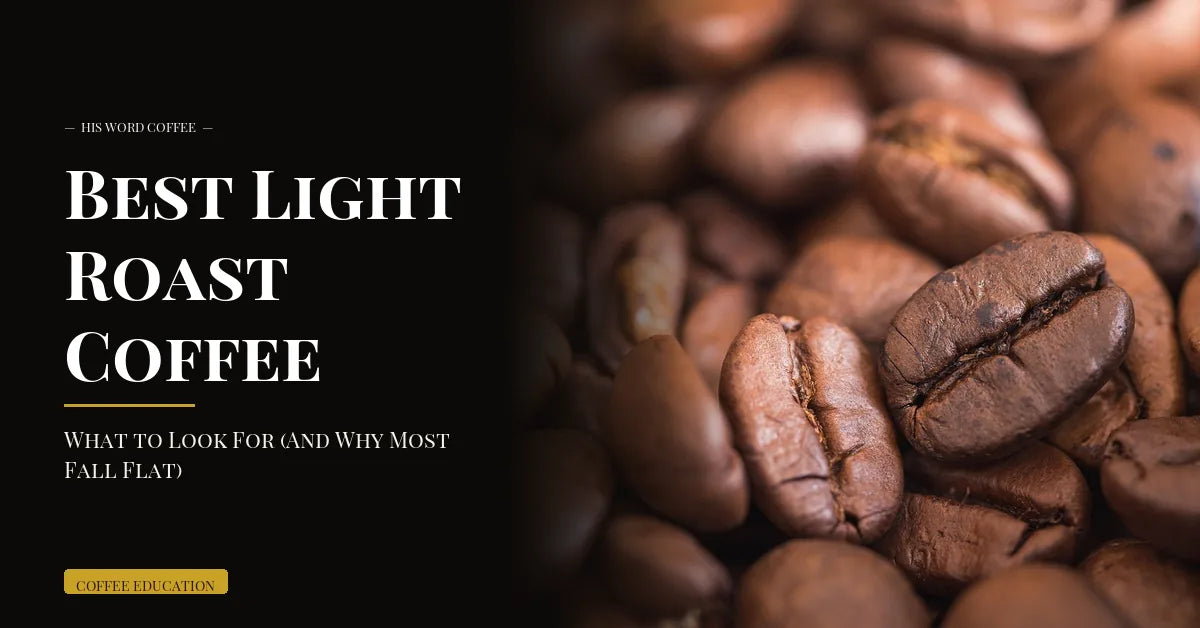
Light roast beans look lighter in color (tan to medium brown), feel denser and harder (less moisture has evaporated), and have a dry surface without the oily sheen of darker roasts. A light roast Colombia tastes like Colombia. A light roast Ethiopia tastes like Ethiopia. The roast doesn't overwrite the origin the way a very dark roast tends to.
Light Roast vs. Dark Roast: The Myths, Corrected

The myths around light roast and dark roast are remarkably persistent. Here's what the science actually says.
Myth 1: Dark roast has more caffeine. False. Caffeine is heat-sensitive and breaks down during roasting. The longer and hotter a bean roasts, the more caffeine is destroyed. Light roast retains more caffeine than dark roast. The difference is small but consistent. If you're drinking light roast for a gentler caffeine experience, that's actually backward.
Myth 2: Light roast is weaker. This one depends on what you mean by "stronger." Light roast has a lighter body, higher acid (research published in PubMed)ity, and more complex flavor. It's not weaker, it's different. Dark roast has a heavier body, more bitterness, and a flavor dominated by the roasting process rather than the origin. Neither is stronger in any meaningful sense. They're optimized for different things.
Myth 3: Dark roast is lower acid. Technically true by pH measurement, but misleading in practice. Dark roast has lower chlorogenic acid (which is destroyed by heat), so the pH is slightly lower. But dark roast also contains more bitter, harsh compounds that many people find harder on their stomach than bright light roast acidity. People who say they can't drink light roast because of the acid often do fine once they try a genuinely fresh, well-roasted example. The "acid" they were reacting to was often bitterness and harshness from a stale or poorly roasted coffee.
What Makes a Good Light Roast Coffee?
Not all light roasts are created equal. Here's what separates genuinely good ones from the ones that earn the bad reputation.
Fresh is non-negotiable. Light roast coffee is more volatile than dark roast. The delicate aromatic compounds that create the bright, complex flavors of a good light roast oxidize quickly. A light roast that was excellent at 10 days post-roast can be flat and sour at 60 days. The light roasts on grocery store shelves, roasted months ago and sitting in warehouses, give a completely false picture of what the roast level is capable of.
Origin quality matters more, not less. In a dark roast, heavy caramelization masks some of the origin's character. In a light roast, there's nowhere to hide. Low-quality beans with defects will show every one of them. A good light roast requires good beans: ideally single-origin, traceable, specialty-grade coffee from a farm where something interesting is happening.
Roasting precision is everything. Under-roasted light roast is grassy, bready, and harsh, the result of the bean being pulled before full development. A properly roasted light roast has sweet, complex flavors with a clean finish. The margin for error is smaller than with dark roast, which is why light roasts from skilled, attentive roasters are genuinely different from light roasts from high-volume commercial operations.
The roasting method matters. Light roast on a fluid bed air roaster, which applies heat evenly through moving air, produces a cleaner, more consistent result than drum roasting at the same roast level. Without direct contact with a hot drum surface, there's no scorching risk, and the delicate flavor compounds come through without interference.
Shop Our Light Roasts How Air Roasting Works →
Why Freshness Defines Your Light Roast Experience

Light roast coffee has a shorter peak window than dark roast, approximately 7 to 21 days after the roast date. After that, oxidation gradually flattens the very aromatic compounds that make light roast interesting.
Here's the problem: the light roast on a grocery store shelf was almost certainly roasted 3 to 6 months ago. The "best by" date on the bag often extends 12 to 18 months from roast, which is a storage estimate, not a freshness promise. You're buying a coffee that is technically still coffee but is nowhere near its peak.
This is why the same person who hates light roast from a grocery store brand will often love light roast from a specialty roaster who ships within days of roasting. It's not that their taste changed. The coffee is literally different, chemically different, at a different point in its life cycle.
At His Word Coffee, we roast to order and ship within 1 to 3 days. Your light roast arrives within its peak window, not weeks or months past it. That changes what light roast tastes like.
How to Get the Best from a Light Roast at Home
Light roast coffee rewards a few adjustments that don't matter as much with darker roasts.
Let it rest 5 to 7 days after roasting. Fresh-roasted light roast off-gases CO2 aggressively. Brewing before the gas settles causes uneven extraction and a slightly sour, hollow taste. After day 5 to 7 the off-gassing stabilizes and the cup opens up significantly.
Use slightly lower water temperature. 195 to 200 degrees F (90 to 93 C) rather than a full boil. Boiling water can over-extract the delicate compounds in light roast, creating unwanted bitterness. A few degrees makes a meaningful difference.
Pour over or Chemex for maximum clarity. Light roast is built for clean, transparent brewing methods. Pour over (V60, Kalita Wave, Chemex) lets the origin character shine. French press works too and you'll get more body and texture, which suits some light roasts well.
Grind finer than you expect. Light roast beans are denser than dark roast. The same grind setting that works for dark roast will under-extract a light roast. Dial slightly finer and adjust from there.
Taste it black first. Light roast at its best often needs nothing added. The natural sweetness and complexity that comes from a good origin (citrus, stone fruit, floral notes) can be surprising if you're used to relying on cream and sugar. Give it one cup black before deciding it needs anything.
Light Roast Options at His Word Coffee
We roast a range of coffees at His Word Coffee, from light-medium to medium-dark, depending on what each origin calls for. Our lighter-roasted options, like the Breakfast Blend and single-origin Ethiopias, are where the fruit-forward, floral characteristics this post describes really come through.
We made those choices deliberately: roasting lighter when the bean has something to say, roasting fuller when the origin's sweetness and body benefit from more development. The goal isn't to pick a roast level and stick to it. The goal is to serve the coffee.
We roast on a fluid bed air roaster in small batches. Heat is applied evenly through moving air rather than a rotating drum, which means every bean develops consistently without scorching. That matters most at lighter roast levels, where precision has the biggest impact on clarity and sweetness.
And we ships within 1-3 days. Every order roasts within a day of your purchase and ships within 1 to 3 days. Your coffee arrives fresh, not weeks past its peak.
Shop Light Roast Coffee Subscribe & Save 10%
Roasted to order. Ships within 1 to 3 days. Free shipping on $40+ after discounts.
Frequently Asked Questions About Light Roast Coffee
Does light roast coffee have more caffeine than dark roast?
Yes, light roast coffee has slightly more caffeine than dark roast. Caffeine breaks down during roasting, so the longer and hotter the roast, the less caffeine remains. The difference between light and dark roast caffeine content is real and scientifically measurable, but small enough that you will not notice it in the cup. If you assumed dark roast = more caffeine, it's the opposite.
Is light roast coffee stronger than dark roast?
It depends on what you mean by "stronger." Light roast has more caffeine and more complex, origin-driven flavor, but it has a lighter body and lower perceived intensity. Dark roast has a heavier body, more bitterness, and a flavor that's dominated by the roasting process. Neither is objectively stronger. They're optimized for different characteristics.
Is light roast coffee good for low acid diets?
Light roast is higher in chlorogenic acids (which are partially destroyed by roasting) and has a brighter acidity. However, many people who think they're sensitive to coffee's acidity are actually reacting to bitterness and harsh compounds, which are more prevalent in dark roast. A fresh, well-roasted light roast is often easier on the stomach than a stale or over-roasted dark. If you've had trouble with coffee feeling harsh or uncomfortable, a fresh light roast is worth trying before assuming roast level is the cause.
What does light roast coffee taste like?
Good light roast coffee tastes bright and complex: fruity, floral, sometimes tea-like, with natural sweetness and a clean finish. The specific flavors depend heavily on the origin. Ethiopian light roasts often show blueberry and jasmine, Colombian light roasts show citrus and caramel, Guatemalan light roasts show stone fruit and chocolate. What you won't get is heavy bitterness or the classic "roasted coffee" taste that dark roasts produce.
Why is my light roast coffee sour?
Sour or harsh light roast almost always comes from one of three causes: (1) the coffee is stale, past its peak window, which amplifies off-flavors; (2) the coffee was under-extracted, too coarse a grind, water too cool, or brew time too short; or (3) the coffee was brewed too soon after roasting before CO2 off-gassing settled. Try fresher coffee, a slightly finer grind, and brewing after day 7 post-roast. The sourness usually disappears.
What is the best brewing method for light roast coffee?
Pour over (V60, Kalita Wave, or Chemex) is widely considered the best method for light roast coffee. It's a transparent brewing method that lets the origin's character (the fruit, floral, and bright notes) come through clearly without the variables that French press or espresso introduce. Use water at 195 to 200 degrees F, a medium-fine grind, and a 1:15 coffee-to-water ratio for a starting point.
Written by Nick at His Word Coffee. We roast light to medium-light on a fluid bed air roaster, ship fresh within 1 to 3 days, and stand behind every bag. If a coffee doesn't work for you, reach out and we'll make it right.

Leave a comment
This site is protected by hCaptcha and the hCaptcha Privacy Policy and Terms of Service apply.