We get this question all the time: "Does light roast coffee really have more caffeine?" It's one of the most common coffee myths out there. The short answer might surprise you.
The truth is, the difference is so small you'd never notice it in your morning cup. But the story behind it is pretty interesting. Let's break it down.
Key Takeaways
- Light and dark roasts have nearly the same caffeine per cup
- Roasting doesn't burn off much caffeine at all
- Light roast beans are denser and smaller than dark roast beans
- How you measure your coffee matters more than roast level
- Brew method has a bigger impact on caffeine than roast
- We air roast our light roasts for a cleaner, brighter flavor
In This Article
The Myth vs. Reality
You've probably heard someone say, "Light roast has more caffeine because it's roasted less." It sounds like it makes sense. Less heat means less caffeine gets destroyed, right?
Not quite. Caffeine is a very stable molecule. It doesn't start breaking down until around 460°F. Most roasting happens well below that. So whether we roast a bean light or dark, the caffeine stays almost the same.
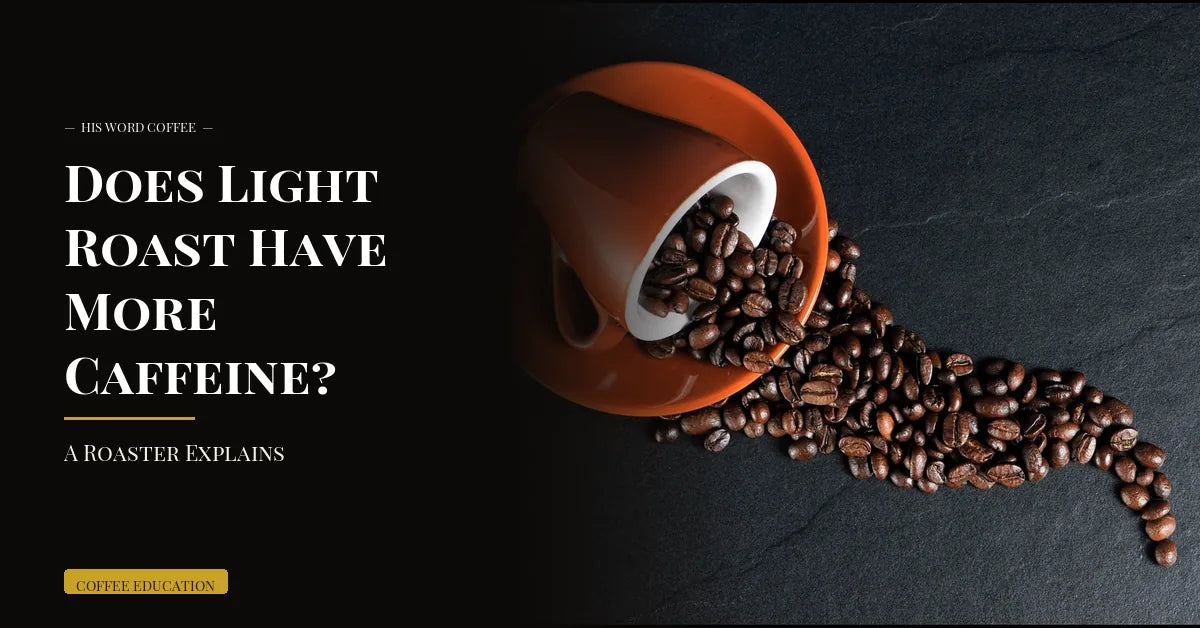
The real difference comes down to bean size. Dark roast beans puff up during roasting. They get bigger and lighter. Light roast beans stay smaller and denser. So if you scoop your coffee by volume, you'll pack more light roast beans into that scoop. More beans means slightly more caffeine.
But if you weigh your coffee (which we recommend), the caffeine is basically the same.
"Whatever you do, work at it with all your heart, as working for the Lord, not for human masters."Colossians 3:23
What Happens During Roasting
When we roast coffee, the beans go through some big changes. They lose moisture, develop oils, and change color. But caffeine? It barely budges.
Here's what actually changes between light and dark roasts:
| Factor | Light Roast | Dark Roast |
|---|---|---|
| Bean size | Smaller, denser | Larger, puffed up |
| Bean weight | Heavier per bean | Lighter per bean |
| Caffeine per bean | Nearly the same | Nearly the same |
| Flavor | Bright, fruity, origin-forward | Bold, smoky, roast-forward |
| Oil on surface | Little to none | Visible, shiny |
The biggest thing roasting changes is flavor, not caffeine. A light roast lets you taste where the coffee came from. A dark roast lets you taste the roasting process itself.
Roaster's Tip
If you want to taste the unique flavors of a single-origin bean, try it as a light roast first. You'll pick up notes you'd never find in a dark roast.
Why Measuring Method Matters
This is where the "light roast has more caffeine" myth actually has a tiny grain of truth. It all depends on how you measure your grounds.
If you use a scoop (measuring by volume), light roast wins on caffeine. Those smaller, denser beans pack more tightly. You end up with more coffee per scoop, and more coffee means more caffeine.
If you use a kitchen scale (measuring by weight), it's basically a tie. Same weight of coffee means roughly the same caffeine, no matter the roast.
We always recommend weighing your coffee. It gives you a more consistent cup every time. A good starting ratio is 1 gram of coffee for every 16 grams of water.
Brew Method and Caffeine
Here's something most people don't think about. Your brew method affects caffeine way more than roast level does.
A cup of drip coffee usually has around 95 mg of caffeine. A shot of espresso has about 63 mg. Cold brew can pack 200 mg or more because of the long steep time. French press falls somewhere in between.
So if you're chasing a caffeine boost, don't worry about roast level. Think about how you're brewing instead. Cold brew and drip are your best bets for a strong caffeine kick.

| Brew Method | Caffeine (per 8 oz) | Why |
|---|---|---|
| Cold brew | 150-200 mg | Long steep time extracts more |
| Drip coffee | 80-100 mg | Hot water, longer contact time |
| French press | 80-100 mg | Full immersion brewing |
| Espresso (1 shot) | 60-70 mg | Short contact time, small volume |
| Pour over | 80-95 mg | Controlled extraction |
How Air Roasting Changes Things
At His Word Coffee, we air roast all of our beans. This doesn't change the caffeine content, but it does make a real difference in flavor.
Traditional drum roasters tumble beans on a hot metal surface. That can create scorch marks and uneven roasting. Air roasting suspends the beans on a bed of hot air. Every bean gets the same heat at the same time.
The result? Our light roasts are clean, bright, and free of that burnt taste you sometimes get with drum-roasted coffee. You taste the bean itself, not the roasting mistakes.
If you've been picking dark roasts because lighter ones tasted sour or grassy, give an air-roasted light roast a try. We think you'll be surprised.
Try Our Air-Roasted Light Roast
Clean, bright, and full of flavor. See for yourself why air roasting makes a difference.
Shop Light RoastsFAQ
Does light roast have more caffeine than dark roast?
Per scoop, yes, very slightly. Per gram, they're basically the same. The difference is so small you won't feel it.
Does roasting destroy caffeine?
Barely. Caffeine is heat-stable up to about 460°F. Roasting temperatures rarely go high enough to break down much caffeine at all.
Which brew method gives the most caffeine?
Cold brew typically has the most caffeine per serving because of its long steep time (12-24 hours). Drip coffee is a close second.
Should I weigh my coffee or use a scoop?
We recommend weighing. It gives you a consistent cup every time, no matter what roast level you're using. Start with a 1:16 coffee-to-water ratio.
What does air roasting do differently?
Air roasting uses hot air instead of a metal drum. It roasts each bean more evenly, which gives you a cleaner taste without scorched or bitter notes.
Sources: National Library of Medicine, Caffeine Content in Coffee | USDA FoodData Central

Leave a comment
This site is protected by hCaptcha and the hCaptcha Privacy Policy and Terms of Service apply.