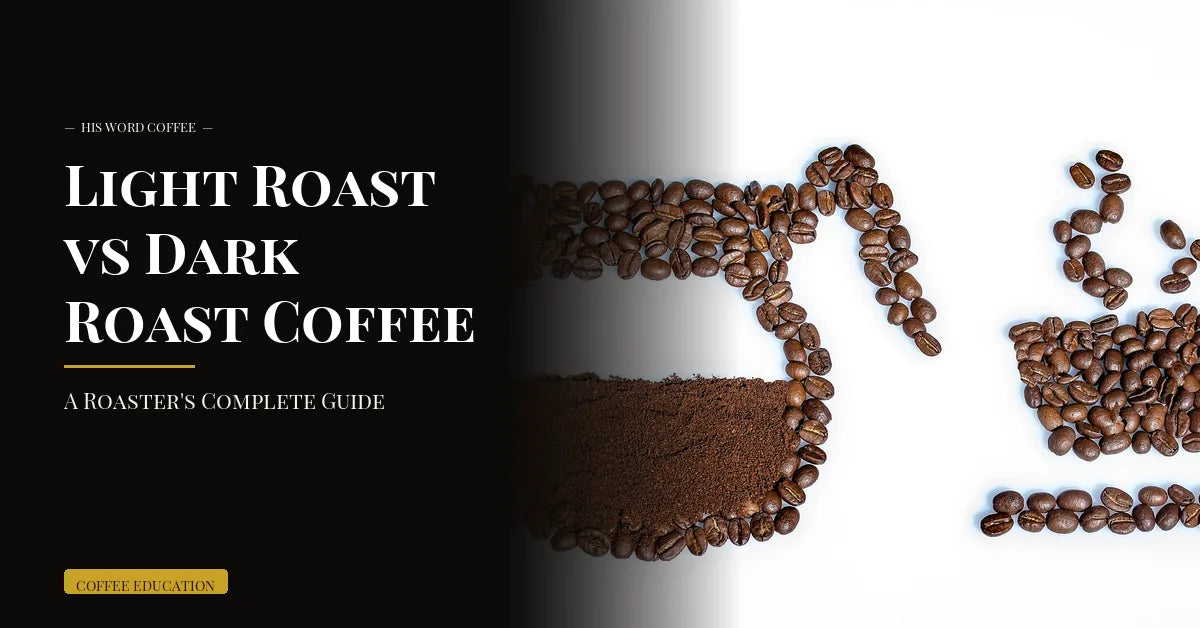
Light roast or dark roast? It's one of the first choices you make when buying coffee. And honestly, there's a lot of confusion out there about what the difference really is.
We've roasted thousands of batches at His Word Coffee. Here's what we've learned about how these two roast levels actually compare, and how to pick the right one for you.
Key Takeaways
- Light roast highlights the bean's origin flavors (fruity, floral, bright)
- Dark roast highlights the roasting flavors (smoky, bold, chocolatey)
- Caffeine is nearly the same in both when measured by weight
- Light roast beans are denser, dark roast beans are lighter and oilier
- Neither is "stronger," they're just different flavor experiences
- Your preferred brew method can help you pick the right roast
In This Article
What Roast Level Actually Means
Roast level is simply how long the beans stay in the roaster and how hot they get. That's it. Light roast beans come out earlier. Dark roast beans stay in longer.
Light roasts are pulled right around "first crack." That's the point where the beans pop, kind of like popcorn. The beans are light brown, dry on the surface, and still very dense.
Dark roasts go past first crack and sometimes all the way to "second crack." The beans turn dark brown or nearly black. Oils come to the surface. The beans are bigger but weigh less because they've lost more moisture.
Medium roasts fall in between. They give you a bit of origin flavor and a bit of roast flavor. We think of them as the sweet spot for people who aren't sure what they like yet.
"Taste and see that the Lord is good; blessed is the one who takes refuge in him."Psalm 34:8
Flavor Differences
This is where it gets interesting. Light and dark roasts taste like completely different drinks, even when they start as the same bean.
Light Roast Flavors
Light roasts let you taste the coffee's origin. An Ethiopian light roast might have blueberry and jasmine notes. A Costa Rican light roast might taste like honey and citrus. These flavors come from the bean itself, not the roasting process.
Light roasts tend to be brighter with more acidity (the pleasant, tangy kind, like a green apple). The body is usually lighter and tea-like.
Dark Roast Flavors
Dark roasts taste like the roast itself. You'll get smoky, chocolatey, nutty, and sometimes bittersweet flavors. These develop during the longer roasting time.
The body is heavier and fuller. The acidity drops way down. Most of the origin character gets replaced by roast character. That's why a dark roast from Ethiopia and a dark roast from Brazil can taste pretty similar.
| Quality | Light Roast | Dark Roast |
|---|---|---|
| Main flavors | Fruity, floral, bright | Smoky, chocolatey, bold |
| Acidity | Higher (pleasant, tangy) | Lower (muted) |
| Body | Light, tea-like | Full, heavy |
| Bean color | Light brown, dry | Dark brown/black, oily |
| Origin flavor | Very noticeable | Mostly hidden |
| Best for | Pour over, drip | Espresso, French press |
Our Pick for New Coffee Drinkers
Start with a medium roast. It gives you the best of both worlds. Once you know what you like, go lighter for more origin flavor or darker for more bold, roasty notes.
The Caffeine Truth
Let's clear this up once and for all. Light roast and dark roast have almost the same caffeine. The difference is so small it doesn't matter.
The myth that light roast has more caffeine comes from how you measure. Light roast beans are smaller and denser. So if you scoop by volume, you get more beans (and slightly more caffeine) with a light roast. If you weigh your coffee, it's basically a tie.
We always recommend using a kitchen scale. It gives you a better, more consistent cup. And it puts the caffeine debate to rest.
Best Brew Methods for Each
Certain brew methods bring out the best in certain roast levels. Here's what we recommend from our own experience.
Light Roast Pairings
- Pour over: The slow, controlled extraction highlights those bright, complex flavors
- Drip coffee: A solid everyday choice that lets origin notes come through
- AeroPress: Great for experimenting with grind size and water temperature
Dark Roast Pairings
- Espresso: The pressure and short brew time work perfectly with bold, roasty beans
- French press: Full immersion brings out that rich, heavy body
- Cold brew: Dark roasts make a smooth, chocolatey cold brew
Can you use any roast with any method? Absolutely. These are just starting points. Part of the fun is experimenting to find what you love.
How to Pick Your Roast
Still not sure? Ask yourself a few simple questions.

Do you like bold, smoky flavors? Go dark. Do you like bright, fruity, or floral flavors? Go light. Do you add cream and sugar? Dark roasts hold up better with add-ins. Do you drink it black? Light roasts shine on their own.
Here's our honest take: we think most people would enjoy light and medium roasts more if they tried them from a good roaster. A lot of "bad" light roast experiences come from beans that were poorly roasted, not from the roast level itself.
Our air roasting process helps with that. It gives every bean an even roast, so our light roasts are smooth and sweet instead of sour or grassy. If you've had a bad light roast before, we'd love for you to give ours a try.
Find Your Perfect Roast
Light, medium, or dark, we air roast every batch for a cleaner, more flavorful cup. Browse our full collection.
Shop All RoastsFAQ
Is dark roast coffee stronger than light roast?
"Stronger" depends on what you mean. Dark roast has a bolder, more intense flavor. But caffeine content is nearly identical between the two when measured by weight.
Why does light roast taste sour sometimes?
Sour light roast usually means the beans were underdeveloped during roasting, or the coffee was brewed with water that wasn't hot enough. A properly roasted light roast should taste bright and sweet, not sour.
Which roast is best for cold brew?
Dark and medium roasts are the most popular for cold brew. They produce a smooth, chocolatey flavor. But a light roast cold brew can be really refreshing if you like fruity, tea-like flavors.
Do light roasts have more antioxidants?
Some studies suggest light roasts retain slightly more chlorogenic acids, which are a type of antioxidant. But the difference is small, and both roast levels offer health benefits.
Can I mix light and dark roast beans together?
You can! Many blends use a mix of roast levels to balance brightness and body. It's a fun way to customize your cup at home.
Sources: Specialty Coffee Association | National Library of Medicine, Coffee Roasting and Bioactive Compounds

Leave a comment
This site is protected by hCaptcha and the hCaptcha Privacy Policy and Terms of Service apply.