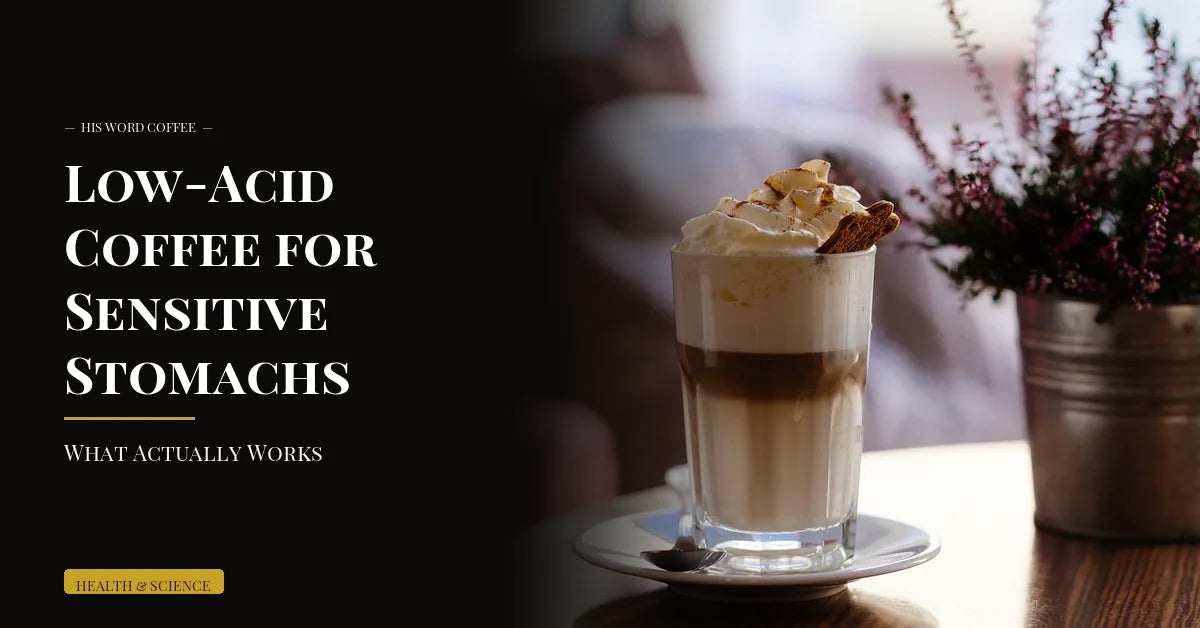
Low-Acid Coffee for Sensitive Stomachs: What Actually Works

Low-Acid Coffee for Sensitive Stomachs: What Actually Works


Key Takeaways

  • Roast Level Matters: Dark roasts stimulate less gastric acid secretion, making them gentler on sensitive stomachs.
  • Caffeine Consideration: Decaf coffee, such as sugarcane EA processed coffee, can reduce caffeine impact while preserving flavor.
  • Gastric Comfort Options: Dark roast decaf coffee is recommended for those with GERD due to reduced acid secretion and lessened relaxation of the lower esophageal sphincter.
  • Natural Varietal Acidity: Jamaica Blue Mountain, a specific varietal grown in different regions, has naturally low acidity attributed to its smooth character and historical reputation.
  • N-Methylpyridinium Role: Dark roasts contain more N-methylpyridinium (NMP), a compound that signals the stomach to produce less acid, aiding in reducing acidity concerns.

8 minute read

If your morning coffee leaves you with heartburn, nausea, or an upset stomach, you are not alone. Millions of people experience digestive discomfort from coffee, and many assume they need to give it up entirely. But here is the good news: the problem usually is not coffee itself. It is the type of coffee and how it is roasted. Finding the right low-acid coffee for sensitive stomachs can make all the difference.

After digging into the peer-reviewed research, we have put together this guide to share what the science actually says about stomach-friendly coffee and how to find one that works for you.

What the Evidence Shows

  • Dark roasts produce less stomach acid (research-backed): A 2014 study found dark roast stimulates significantly less gastric acid secretion than medium roast
  • The compound N-methylpyridinium (NMP) is key: Created during dark roasting, NMP signals your stomach to reduce acid production
  • Certain varietals are widely regarded as gentler: Jamaica Blue Mountain has been prized for generations for its naturally low acidity and smooth character
  • Roasting method matters for dark roasts: Air roasting combined with dark roasting gives you stomach-friendly NMP without the burnt compounds from scorched drum roasting

What Is Low-Acid Coffee, Really?

Low-acid coffee refers to coffee that causes your stomach to produce less acid, not necessarily coffee with a lower pH. That said, some coffees do have a higher pH (less acidic). Typical coffee ranges from 4.85 to 5.13 on the pH scale, while our Haiti Hope Rising measures 5.5 to 5.7, making it gentler from both perspectives.

When most people talk about "acidic" coffee, they are describing how it makes their stomach feel, not the actual pH measurement. And that sensation comes from how certain compounds in coffee interact with your digestive system.

The good news is that researchers have identified specific factors that influence whether coffee triggers stomach discomfort. The even better news is that many of these factors are within your control when choosing which coffee to buy.

What the research says: A comprehensive 2022 review in the journal Nutrients found that the degree of roasting significantly affects how coffee interacts with gastric acid secretion. Dark roasted coffee contains higher amounts of N-methylpyridinium (NMP), which may help reduce stomach acid production. Read the full study

The Four Factors That Actually Matter

The four key factors for stomach-friendly coffee are: roast level (darker is gentler, backed by research), bean origin and variety (some are widely regarded as naturally gentle), roasting method (air roasting prevents scorching), and caffeine content (less caffeine means less stomach acid stimulation).

Not all "low-acid" claims are created equal. Some are marketing speak with little science behind them. Here is what the evidence actually supports:

The Four Factors That Influence Stomach Comfort

  • 1. Roast Level (scientifically supported): Darker roasts contain more N-methylpyridinium (NMP), a compound that signals your stomach to produce less acid. Light roasts retain more chlorogenic acids, which can stimulate acid production. This is the factor with the strongest research behind it.
  • 2. Bean Origin and Variety (industry consensus): Certain origins and varietals are widely regarded as gentler on stomachs. Jamaica Blue Mountain, for example, has been prized for generations for its naturally low acidity and smooth character. Coffees from Brazil, Sumatra, and Haiti share this reputation.
  • 3. Roasting Method (logical combination): While no studies have directly compared stomach sensitivity between roasting methods, air roasting combined with dark roasting makes logical sense. You get the NMP benefits of dark roasting without the burnt, bitter compounds that can result from uneven drum roasting at high temperatures.
  • 4. Caffeine Content (scientifically supported): Caffeine stimulates gastric acid secretion through bitter taste receptors in your stomach. Reducing caffeine can help, though the effect varies by person.
What the research says: A 2014 study published in Molecular Nutrition and Food Research tested gastric acid secretion in healthy volunteers. Dark roast coffee stimulated significantly less acid production than medium roast, even though caffeine levels were similar. The researchers attributed this to higher NMP and lower chlorogenic acid content in dark roasts. Read the study abstract

Why Roasting Method Makes a Difference

While no studies have directly compared stomach sensitivity between roasting methods, the combination of air roasting and dark roasting makes logical sense. You get the stomach-friendly NMP benefits of darker roasting without the burnt, bitter compounds that can result from uneven drum roasting at high temperatures.

Here is an important nuance: at light to medium roast levels, air roasting actually tends to highlight acidity and produce brighter, more crisp flavors. That is great for showcasing origin characteristics, but not ideal for sensitive stomachs.

However, when you dark roast using fluid bed technology, you get the best of both worlds. The dark roast creates the NMP compounds that help reduce stomach acid production (as proven in research). And the air roasting method prevents the scorching that can happen when drum roasters push into darker territory, where beans tumble against hot metal surfaces and develop burnt, bitter compounds.

Why Air Roasting + Dark Roast Works

  • Even heat distribution: No hot spots or cold spots means no scorching, even at darker roast levels
  • Instant chaff removal: Chaff blows away instead of burning against the beans
  • Full NMP development: Dark roasting still creates the stomach-friendly compounds
  • Cleaner dark roast: You get the smoothness of dark roast without the burnt taste

We use fluid bed roasting for all our coffees because we believe it produces a noticeably cleaner cup at every roast level. For our dark roasts like Haiti Hope Rising, this means you get the stomach-friendly benefits of dark roasting without sacrificing flavor quality.

Coffee Origins That Are Naturally Gentler

Certain coffee origins and varietals have long been regarded as naturally gentler on stomachs. Jamaica Blue Mountain is perhaps the most famous example, prized for generations for its smooth character and low acidity. Similar varietals grown in Haiti, Brazil, and Sumatra share this gentle reputation.

While elevation plays a role (lower-altitude coffees tend to have softer acid profiles), the varietal itself matters too. Blue Mountain Typica, for instance, has been cultivated for its smooth, balanced character whether grown in Jamaica or Haiti.

This does not mean high-altitude African coffees are "bad." Ethiopian and Kenyan coffees are prized for their bright, fruity acidity. But if your stomach is sensitive, those same acids can cause problems.

Origins and Varietals Known for Gentleness

  • Jamaica Blue Mountain (and related Typica varietals): Widely regarded as one of the smoothest, lowest-acid coffees in the world. The same Blue Mountain Typica variety is also grown in Haiti.
  • Haiti: Blue Mountain Typica grown in misty highlands, naturally smooth with chocolatey notes
  • Brazil: Low acidity, nutty and sweet, often used in espresso blends
  • Sumatra: Earthy and full-bodied with very low perceived acidity
  • Mexico (lower regions): Mild, balanced, approachable

Does Low-Acid Coffee Taste Different?

Yes, but not necessarily worse. Low-acid coffees tend to taste smoother, sweeter, and more chocolatey. You may notice less brightness or "zing," but many people prefer the rounder, more approachable flavor.

If you love the bright, citrusy punch of a light-roast Ethiopian, a stomach-friendly dark roast from Brazil will taste different. But "different" does not mean "lesser." Many coffee lovers actually prefer the rich, smooth character of lower-acid beans.

The key is finding a roaster who treats low-acid coffee as a specialty product, not an afterthought. When sourced and roasted well, these coffees offer complex flavors with notes of chocolate, caramel, nuts, and subtle fruit.

Finding Your Flavor

If you are transitioning from high-acid coffee, start with a medium-dark roast from a naturally low-acid origin. Look for tasting notes like chocolate, caramel, brown sugar, or nuts. These indicate a smoother, gentler cup.

Avoid coffees described as "bright," "citrusy," "wine-like," or "sparkling." These terms usually signal higher acidity.

Looking to Cut Caffeine Too?

If caffeine is part of your stomach sensitivity, our Evening Grace Decaf offers a gentler option. This Colombian single origin uses the sugarcane EA decaffeination process, which removes 97% of caffeine while preserving the bean's natural sweetness and body.

Tasting Notes: Chocolate, Cane Sugar, Citrus, Roasted Almond

Origin: Valle del Cauca, Colombia (1,700 to 2,100 meters)

The sugarcane process uses ethyl acetate derived from fermented sugarcane rather than harsh chemical solvents. Many people find it produces a more flavorful decaf than other methods.

What the research says: A 2017 study published in PNAS found that caffeine stimulates gastric acid secretion through bitter taste receptors in stomach cells. The researchers demonstrated that caffeine administered directly to the stomach accelerated acid production. For people with caffeine sensitivity, reducing intake may help reduce symptoms. Read the full study

Brewing Methods for Sensitive Stomachs

Cold brew and paper-filtered methods tend to be gentler on stomachs. Cold brewing extracts fewer titratable acids, while paper filters trap oils that can irritate the digestive system. Avoid drinking coffee on an empty stomach regardless of brewing method.

How you brew your coffee matters almost as much as which coffee you buy. Here is what the research suggests:

Brewing Tips for Sensitive Stomachs

  • Try cold brew: Research shows cold brew has lower total titratable acidity than hot brew, which may make it gentler for some people
  • Use paper filters: Paper traps cafestol and other oils that can contribute to stomach irritation
  • Avoid empty stomach drinking: Eat something before your coffee, even if it is just a piece of toast
  • Do not over-extract: Bitter, over-extracted coffee contains more irritating compounds
  • Let it cool slightly: Very hot beverages can irritate the stomach lining
What the research says: A 2018 study from Thomas Jefferson University found that while pH levels of cold and hot brew coffee were similar (4.85 to 5.13), cold brew had lower total titratable acidity. The researchers noted that cold water may limit the extraction of certain acidic compounds. However, they cautioned that cold brew should not be considered a "silver bullet" for avoiding stomach issues. Read the full study

One important note: the research on coffee and stomach sensitivity is still evolving. What works for one person may not work for another. If you have persistent digestive issues, talk to your doctor. Coffee adjustments can help, but they are not a substitute for medical advice.

Infographic titled Low-Acid Coffee for Sensitive Stomachs by His Word Coffee in Vancouver, WA. Charts showing how dark roast and N-methylpyridinium reduce acidity compared to light roasts
Our guide to gentle brewing. We roast these low-acid profiles fresh right here in Vancouver, WA

Frequently Asked Questions

Does low-acid coffee have less caffeine?

Not necessarily. Low-acid coffee refers to the coffee's effect on stomach acid production, not its caffeine content. Dark roasts, which tend to be gentler on stomachs, have only slightly less caffeine than light roasts (the difference is minimal). If caffeine is triggering your symptoms, consider a decaf option like our Evening Grace Decaf, which uses the sugarcane EA process to remove 97% of caffeine while preserving flavor.

Can low-acid coffee help with GERD or acid reflux?

It may help reduce symptoms for some people. Research shows that dark roasted coffee stimulates less gastric acid secretion than lighter roasts, which could benefit GERD sufferers. However, caffeine can also relax the lower esophageal sphincter, allowing stomach acid to escape upward. If you have GERD, try dark roast decaf coffee and avoid drinking on an empty stomach. Always consult your doctor for personalized advice.

What is the difference between low-acid coffee and regular coffee?

Low-acid coffee is designed to reduce stomach acid production rather than just having a lower pH. The key difference is in the roasting: darker roasts contain more N-methylpyridinium (NMP), a compound that signals your stomach to produce less acid. According to research published in Nutrients, dark roasted coffee may contain up to twice as much NMP as light roasts. Origin and varietal matter too. Jamaica Blue Mountain coffee, for example, has been prized for generations for its naturally low acidity and smooth character. Our Haiti Hope Rising uses the same Blue Mountain Typica variety.

Is dark roast coffee easier on your stomach than light roast?

Yes, according to peer-reviewed research. A 2014 study in Molecular Nutrition and Food Research found that dark roast coffee stimulated significantly less gastric acid secretion than medium roast coffee in healthy volunteers. This is because dark roasting creates N-methylpyridinium (NMP) while breaking down chlorogenic acids and other compounds that stimulate acid production.

What brewing method is best for sensitive stomachs?

Cold brew may be gentler for some people because it extracts fewer titratable acids than hot brewing. Research from Thomas Jefferson University found cold brew had lower total titratable acidity than hot brew, though pH levels were similar. Using a paper filter also helps by trapping oils that can irritate the stomach lining. Regardless of brewing method, avoid drinking coffee on an empty stomach.

Coffee You Can Enjoy Again

We cannot promise our coffee will solve your acid reflux. But we can promise we are doing everything within our control to make it as gentle as possible: sourcing Blue Mountain Typica beans known for their naturally low acidity, dark roasting to maximize stomach-friendly compounds, and air roasting to prevent scorching.

Our Haiti Hope Rising was made with sensitive stomachs in mind.

Find Your Roast

Always Fresh. Always Roasted to Order.

Our coffee subscription delivers air-roasted specialty coffee right to your door, with 10% off every order and no contracts. Cancel anytime.

Start Your Subscription
His Word Coffee — Vancouver, WA
★★★★★ Hundreds of happy customers

Still Drinking Stale Coffee?

His Word Coffee is roasted 1–3 days after you order. The roast date is printed on every bag so you know exactly how fresh it is. Sign up and get 10% off your first bag.

1–3
Days from
order to roast
Air
Fluid bed
roasted
100%
Specialty
grade beans

No spam. Unsubscribe any time. Offer applies to first purchase only.

Reading next

Pour Over vs French Press vs Drip: Which Makes the Best Cup?
How Much Caffeine is in Cold Brew Coffee? - His Word Coffee

Leave a comment

This site is protected by hCaptcha and the hCaptcha Privacy Policy and Terms of Service apply.