
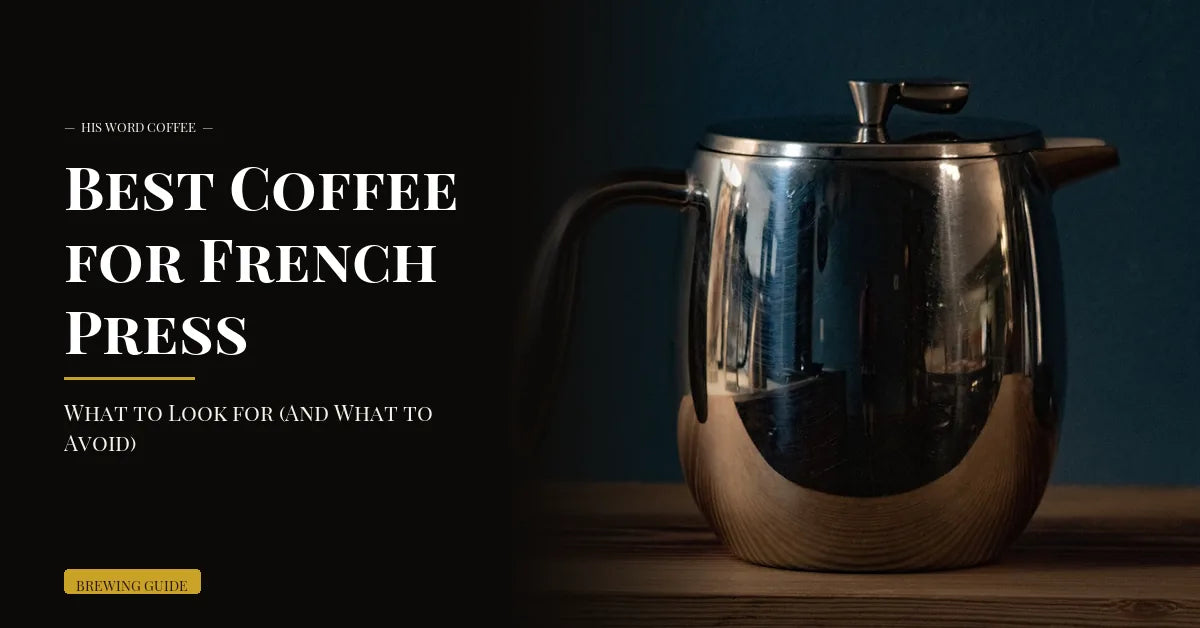
The best coffee for a French press is a fresh medium or medium-dark roast with chocolate, caramel, or nutty notes. Grind it coarse, like kosher salt. Use a 1:15 ratio of coffee to water, steep four minutes at 200 degrees, and press slowly for a rich, full cup.
Why beans matter more in a French press
Most brewing methods use a paper filter that catches oils, fine particles, and some heavier flavor compounds. A French press skips all of that. The metal mesh screen lets everything through. The oils that carry flavor end up in your cup, which is why French press coffee has a thicker body and richer mouthfeel than drip or pour over. It is also why bean choice matters more here than in any other home method: a stale or over-roasted bean that tastes acceptable in a drip machine will taste muddy or bitter in a press, while a fresh medium roast will show flavors you did not know were there. Look for a roast date on the bag, not a best-by date. Coffee tastes its best between 7 and 21 days after roasting, which is why we roast to order.
Best roast level for French press
Medium and medium-dark roasts are the sweet spot. Light roasts tend to taste thin and sour in a press because the bright acidity clashes with the heavy mouthfeel of immersion brewing. Very dark, oily beans go the other direction and turn ashy during the long steep. The 4-minute contact time pulls out too many harsh compounds.
Medium roasts give you balanced caramel and chocolate sweetness with full body. Medium-dark roasts lean into deeper dark chocolate, roasted nuts, and brown sugar. Both hold up well to the long steep without going bitter.
Origins that work best
- Guatemala: Heavy body, chocolate and caramel sweetness, low acidity. Our Guatemala Los Huipiles is one of our favorites for this method.
- Colombia: Balanced sweetness with a clean floral note that keeps the cup from feeling heavy. Try Colombia El Tiple.
- Brazil and Sumatra: The heaviest, most syrupy results. Nutty, earthy, chocolate-forward.
- Ethiopian coffees like our Ethiopia Sunrise can work if you like a fruit-forward press, but their bright character is better suited to pour over.
Grind size and the pinch test
Coarse grind is the single biggest fix for a bitter or gritty press. The texture should feel like kosher salt or raw sugar crystals, with each piece having real weight when you pinch it. Fine grinds over-extract during the 4-minute steep and leave sediment at the bottom of the cup. A burr grinder gives you the most consistent coarse grind. Blade grinders create a mix of boulders and dust, which is the most common reason a French press tastes confused or bitter at home.
Ratio and technique
Use a 1:15 ratio of coffee to water by weight. For a standard 34 oz press, that is about 65 grams of coffee (roughly 4 heaping tablespoons) and 1,000 grams of water. Heat the water to 195 to 205 degrees, which means boiling the kettle and waiting about 30 seconds. Add coffee, pour in twice the weight of coffee in water, and let it bloom for 30 seconds. Pour the rest, stir once gently, put the lid on with the plunger up, and set a timer for 4 minutes. Press slowly and steadily. Pour out the entire press as soon as you finish; leaving coffee on the grounds keeps extracting and turns the cup bitter within minutes.
Common mistakes to avoid
- Pre-ground coffee. The oils that make French press worth it dry out within a week.
- Steeping longer than 5 minutes to get more strength. You get bitterness, not strength.
- Boiling water poured straight in. Drop it 30 seconds off boil to land in the 195 to 205 range.
- Pressing too fast. A slow press keeps fines settled at the bottom.
Frequently asked questions
Q: Can I use the same coffee for French press and pour over? Yes, but a single bag often shines in one method more than the other. Medium and medium-dark roasts work well in both. Light, floral coffees like our Ethiopia Sunrise show off in pour over, while chocolate-forward beans like Guatemala Los Huipiles taste richer in a press.
Q: How long should I steep a French press? Four minutes is the standard. Anything past five minutes pulls out harsh, bitter compounds. If your cup tastes weak at 4 minutes, the problem is usually grind size or ratio, not steep time.
Q: Why does my French press coffee taste gritty? The grind is too fine. French press needs a coarse grind that feels like kosher salt. A blade grinder also creates fines that slip through the mesh. A burr grinder fixes both problems.
Q: How long do French press beans stay fresh? Coffee peaks 7 to 21 days after roasting. After 30 days the oils begin to fade. Buy in amounts you can finish in 2 to 3 weeks and store the bag sealed at room temperature, away from sunlight and heat.


Leave a comment
This site is protected by hCaptcha and the hCaptcha Privacy Policy and Terms of Service apply.