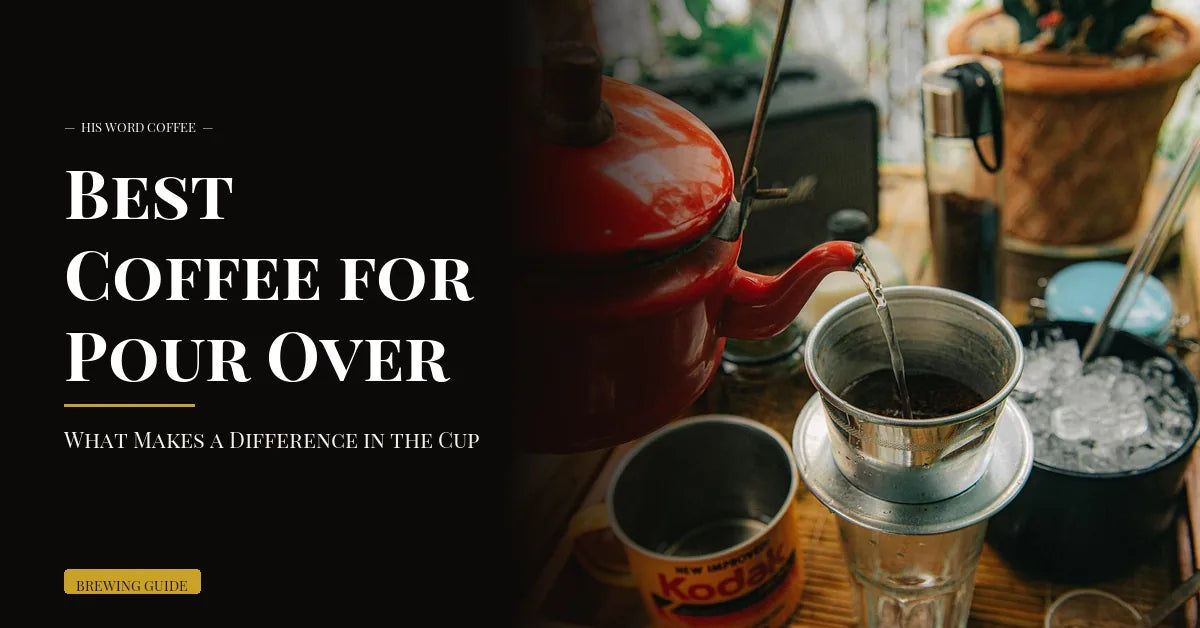
The best coffee for pour over is a fresh light to medium roast single origin with bright, complex flavors. Washed Ethiopian, Costa Rican, and Colombian beans tend to shine. Grind medium-fine, brew with water at 200 degrees, and bloom 30 seconds before the main pour.
Why pour over highlights bean quality
Pour over is a clean brewing method. There is no metal mesh like a French press and no pressure like espresso. The paper filter traps oils and fine particles, so what lands in your cup is clear, bright, and transparent. That transparency is a double-edged sword: great beans taste amazing and stale or low-quality beans have nowhere to hide. Every flaw shows up, including staleness, uneven roasting, and a flat origin character. This is why pour over fans tend to gravitate toward specialty-grade single origin beans. The method rewards complexity. If a coffee has floral notes, berry sweetness, or a citrus-like brightness, pour over will amplify all of it. When we test a new lot at the roastery, pour over is how we evaluate whether the complexity is really there.
What to look for in pour over beans
Freshness
This is the single most important factor. Coffee starts losing aromatic compounds within days of roasting. For pour over, where clarity is everything, you want beans roasted within the last 2 to 3 weeks. We roast to order so beans arrive at their peak instead of sitting in a warehouse.
Roast level
Light to medium roasts work best in pour over. They preserve the origin character of the bean. Dark roasts tend to flatten everything into smoky, bitter territory, which is fine for espresso but loses the point of pour over.
Single origin vs blend
Both can work. Single origins really shine in pour over because you taste the specific terroir of one farm or region. A blend can be smooth and balanced, but it will not give you the "wow, I taste blueberry" moments that make pour over exciting.
Processing method
Washed coffees have the cleanest, brightest flavor profiles in pour over. Natural processed coffees bring more fruit and body. Washed coffees are the safer bet if you are new to the method. Naturals are fun once you know what you like.
Best origins for pour over
African and Central American coffees tend to dominate pour over because they bring acidity and complexity, which are the qualities pour over highlights. South American coffees work too, especially Colombian lots with good altitude.
- Ethiopia (Yirgacheffe): Floral, bergamot, bright berry, tea-like. Try our Ethiopia Sunrise.
- Costa Rica (Tarrazu): Fruit-forward, juicy, honey sweetness. Our Costa Rica Tarrazu is our go-to V60 bean.
- Colombia (Huila): Balanced chocolate and floral notes, approachable. Colombia El Tiple is a great starting point.
- Kenya: Wine-like, blackcurrant, bold acidity.
- Guatemala: Chocolate and caramel, medium body.
Pour over grind size
For V60, Kalita Wave, and Melitta, grind medium-fine. The texture should feel like fine beach sand: clearly gritty and free-flowing with no clumping. For Chemex, go slightly coarser. Medium-coarse feels like rough sand or sea salt, with angular grains. The Chemex uses a thicker filter, so a coarser grind keeps the brew time in check.
A burr grinder is the difference between a clean cup and a muddy one. Blade grinders create uneven particle size, which causes uneven extraction: some of the coffee is bitter and some is sour at the same time.
Brewing technique
Heat your water to 195 to 205 degrees. Wet the paper filter and discard the rinse water. Add about 1 gram of coffee for every 16 grams of water (a 1:16 ratio is the starting point). Pour in twice the weight of coffee in water and let it bloom for 30 to 45 seconds; the grounds will puff up as carbon dioxide escapes. Pour the rest of the water in slow, steady, concentric circles. Total brew time should land between 2:30 and 4:00 depending on the brewer. Taste the cup. Slow your pour or grind finer if it tastes thin and watery. Go faster or coarser if it tastes harsh or bitter.
Frequently asked questions
Q: What roast level is best for pour over? Light to medium. Pour over highlights bright, complex flavors that darker roasts cover up. If you love dark roast, French press or drip will treat those beans better.
Q: What grind size should I use for pour over? Medium-fine for V60, Kalita, and Melitta (like fine beach sand). Medium-coarse for Chemex. If your cup tastes thin or sour, go finer. If it tastes harsh or bitter, go coarser.
Q: Do I need a gooseneck kettle? It helps a lot. A gooseneck gives you the slow, controlled stream that pour over depends on. You can get by with a regular kettle if you pour carefully, but a gooseneck is worth the investment if you brew pour over more than a few times a week.
Q: Why bloom the coffee? Fresh coffee holds carbon dioxide from roasting. The bloom releases that gas in the first 30 to 45 seconds so water can extract evenly through the rest of the brew. Skipping the bloom often leaves the cup tasting flat or sour.

Leave a comment
This site is protected by hCaptcha and the hCaptcha Privacy Policy and Terms of Service apply.