
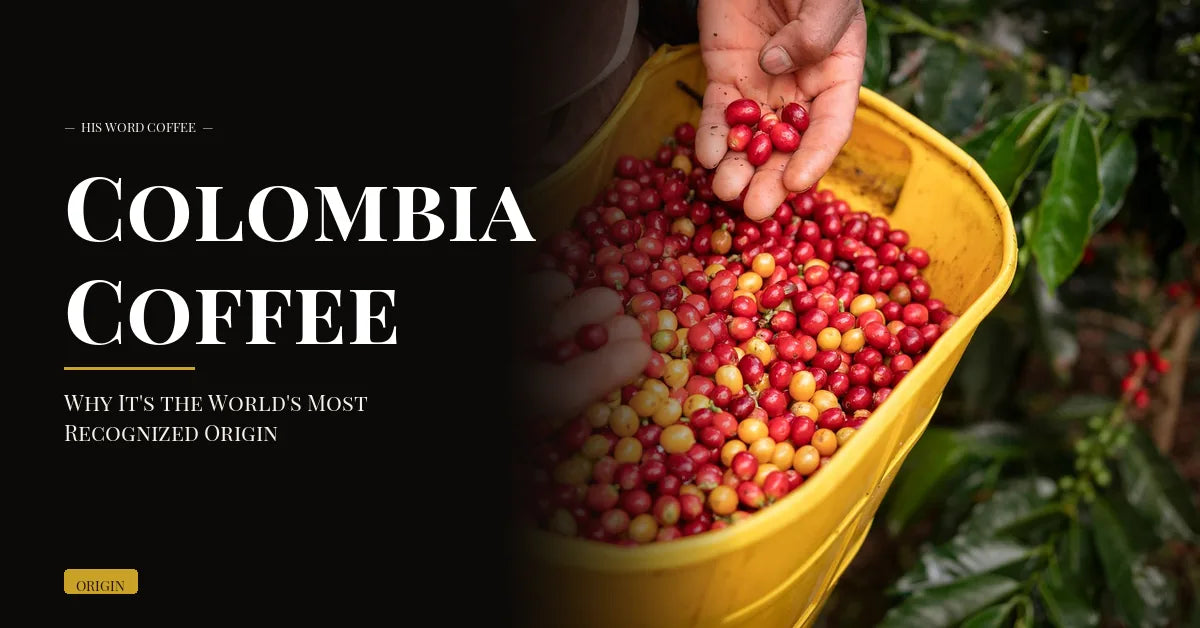
Colombia coffee is the most recognized coffee origin on earth. Not the largest producer, not the oldest tradition, but the most famous. From grocery store shelves in suburban America to specialty roasters in Tokyo, the words "Colombian coffee" carry immediate weight. This guide explores why Colombia earned that reputation, what makes its coffee distinctively delicious, and how the country's diverse regions produce wildly different cups under one celebrated flag.
Key Takeaways
- Colombia is the world's third-largest coffee producer by volume, but first in global brand recognition.
- The Andes mountain range creates dozens of distinct microclimates, from 1,200 to over 2,300 meters altitude.
- Colombian coffee offers a balanced, approachable flavor profile: chocolate, caramel, mild fruit, and medium body.
- Huila and Nariño are Colombia's premier specialty regions, consistently producing high-scoring lots.
- Colombia is predominantly washed-process, producing the clean, bright cup that defines the "Colombian" flavor.
- The Castillo varietal sparked an ongoing debate between disease resistance and flavor complexity.
Colombia's Global Recognition
Ask someone on the street to name a coffee-producing country and the answer will almost always be Colombia. Not Ethiopia, where coffee was discovered. Not Brazil, which produces nearly 40% of the world's coffee. Colombia. That outsized recognition is the result of one of history's most effective agricultural marketing campaigns.
In 1958, the Federación Nacional de Cafeteros de Colombia (FNC) launched the Juan Valdez campaign, featuring a fictional Colombian coffee farmer and his mule. For decades, Juan Valdez appeared on commercials, grocery packaging, and airline cups around the world. The message was simple and relentless: Colombian coffee is premium coffee. "100% Colombian Coffee" became a trusted quality mark that consumers actively sought out.
The campaign worked because the coffee backed it up. Colombian coffee genuinely delivers a clean, balanced, crowd-pleasing cup that suits a wide range of palates. It is not polarizing. It does not require an acquired taste. And because Colombia has the geographic conditions to produce high-quality coffee at meaningful scale, the supply existed to meet the demand the marketing created.
Today Colombia produces roughly 13 to 14 million 60-kilogram bags annually, making it the world's third-largest producer behind Brazil and Vietnam. But in terms of brand value and consumer recognition, no origin comes close. The FNC represents over 540,000 coffee-growing families, and their collective identity under the Colombian coffee brand remains one of agriculture's great success stories.
Geography and Growing Conditions
Colombia sits almost perfectly on the equator, which in most parts of the world would create conditions that are too hot and humid for specialty coffee. But Colombia has the Andes. The mountain range runs the length of the country, splitting into three distinct cordilleras (western, central, and eastern) that create an extraordinary patchwork of altitudes, temperatures, and rainfall patterns.
This topography means Colombia can produce coffee at altitudes ranging from around 1,200 meters in some lowland regions to over 2,300 meters in high-altitude areas like Nariño. At high altitude, coffee cherries ripen slowly. Slow ripening allows sugars and organic acids to develop over a longer period, which translates directly into cup complexity, a phenomenon that coffee producers and agronomists call "altitude-driven flavor development."
The equatorial position also gives many Colombian growing regions two rainy seasons per year, which means two flowering cycles and often two distinct harvest periods. This makes Colombian coffee unique: instead of a single annual harvest, farms in some regions harvest twice, giving buyers access to Colombian lots nearly year-round.
The combination of altitude, rainfall, volcanic soils, and geographic diversity creates what coffee professionals call "terroir," a term borrowed from wine. Different valleys, hillsides, and mountain slopes in Colombia produce measurably different cups, even from the same varietal and processing method.
Why Colombian Coffee Is So Approachable
Colombian coffee occupies a comfortable middle ground in the global coffee flavor spectrum. It is not as intensely floral and fruit-forward as a natural-processed Ethiopian. It is not as earthy and full-bodied as a Sumatran. It is not as nutty and mild as a Brazilian. It is clean, balanced, and accessible in ways that made it ideal for building a global consumer brand.
The signature Colombian flavor profile includes:
- Acidity: Bright and present, but rarely sharp or overwhelming. Often described as citrus or malic (think apple), especially at higher altitudes.
- Body: Medium. Enough weight to feel satisfying, light enough to remain clean and drinkable.
- Sweetness: Chocolate and caramel are the most common descriptors, often accompanied by brown sugar or toffee.
- Fruit: Mild red fruit (cherry, raspberry) or stone fruit (peach, apricot), depending on region and altitude.
- Finish: Clean, with lingering sweetness. Well-washed Colombian coffee tends to have a very clean finish compared to natural-processed origins.
Typical Colombian Flavor Profile
This versatility is a genuine strength. Colombian coffee performs well in every brewing method, from a Mr. Coffee drip machine to a precision pour over. It does not demand perfect technique to taste good. That accessibility is not a flaw; it is a feature that has made Colombia's coffee one of the most beloved in the world.
Major Growing Regions
Colombia's growing regions span thousands of square kilometers and hundreds of distinct microclimates. Understanding the regional differences helps you choose Colombian coffee with intention, whether you are chasing the brightest specialty lot or the most comforting everyday cup.
Huila
Huila has become the gold standard for Colombian specialty coffee. Located in the southwest, it produces some of the country's highest-scoring auction lots, often appearing on competition menus and in direct-trade programs. The region benefits from two harvest periods and a wide range of microclimates along the Magdalena River valley.
Nariño
Nariño sits at extraordinary altitude near the Ecuadorian border, producing some of the most distinctive Colombian coffee available. The thin air and cold nights slow cherry development dramatically, concentrating sugars and building a cup that stands apart: floral, intensely bright, and layered with complexity. Specialty buyers pay a significant premium for prime Nariño lots.
Antioquia
Colombia's most populous department is also one of its largest coffee-producing regions by volume. Antioquia has a long coffee tradition and produces reliable, well-structured lots with a classic Colombian profile. Specialty micro-lots from higher elevations in Antioquia can rival the country's best.
Cauca
Cauca is an emerging specialty origin with a profile that rivals Huila at its best. High altitude farms, many run by indigenous cooperatives, produce complex, fruit-forward lots with excellent structure. The Piendamo and Popayan areas have attracted significant specialty buyer attention in recent years.
Tolima
Tolima is defined by geographic isolation. Mountain communities accessible only by mule or on foot produce small volumes of exceptional coffee that rarely reaches export markets at scale. When specialty buyers make the journey, they find clean, complex cups with remarkable terroir character. Conflict-affected for decades, Tolima has emerged as a peace-dividend coffee origin, with smallholder farmers reconnecting to specialty markets.
Eje Cafetero (Coffee Axis)
The traditional heart of Colombian coffee, the Eje Cafetero (or "Coffee Triangle") is where Colombia's coffee culture was born. Classic rolling coffee farms with wax palms (Colombia's national tree) define the landscape here. The profile is the textbook Colombian cup: smooth, chocolatey, balanced, and clean. This region produces the archetype against which all other Colombian coffee is measured.
Sierra Nevada de Santa Marta
Colombia's northernmost coffee region is geographically isolated from the Andes, sitting on coastal mountains near the Caribbean. The terroir here is unlike anywhere else in Colombia: unique soils, ocean influence, and indigenous Arhuaco communities practicing traditional farming produce a cup with an unusual savory depth alongside the expected Colombian sweetness. Rare and worth seeking out.
Processing Methods
Colombia is predominantly a washed-coffee country. In the traditional washed (wet) process, coffee cherries are depulped to remove the fruit skin, then fermented in water tanks to break down the remaining mucilage, then washed clean and dried on raised beds or patios. The result is a cup that is clean, clear, and bright, where the coffee bean's inherent flavor expresses without interference from fermented fruit sugars.
This washed dominance is deeply embedded in Colombian coffee culture. The FNC historically promoted washed processing as a quality standard, and the country's widespread wet-milling infrastructure reflects decades of investment in that approach. The clean Colombian cup you know is largely a product of this tradition.
In recent years, the specialty and third-wave coffee movement has introduced natural and honey processing to Colombia. In natural processing, whole cherries dry with the fruit intact, producing a sweeter, fruitier, more fermented cup. Honey processing removes the skin but leaves some mucilage on the bean during drying, creating a middle ground between washed clarity and natural sweetness. Colombian producers experimenting with these methods are producing some genuinely exciting results, and a growing number of specialty importers seek them out specifically.
For most Colombia coffee on the market, however, you are buying washed coffee. That is not a compromise. It is the foundation of what makes Colombian coffee the clean, balanced, universally beloved cup it has become.
Coffee Varietals
Colombia grows a range of Arabica varietals, each with different flavor characteristics, disease resistance profiles, and cultivation histories.
| Varietal | Prevalence | Notes |
|---|---|---|
| Castillo | Very High | Developed by Cenicafe for leaf rust (roya) resistance. Widely planted after 2011 rust crisis. Controversy exists over cup quality vs. heirloom varietals. |
| Caturra | High | Colombian workhorse for decades. Bright, balanced, good cup quality. More susceptible to leaf rust than Castillo. Preferred by many specialty buyers. |
| Typica | Moderate | One of the oldest Arabica lines. Excellent cup quality. Low yield and rust-susceptible. Found in traditional and heritage farms. |
| Bourbon | Moderate | Rounded sweetness, complex flavor. Sought out by specialty buyers for its cup quality. Less disease-resistant than Castillo. |
| Tabi | Low | Another Cenicafe development, crosses Typica, Bourbon, and Timor Hybrid. Good cup quality with reasonable rust resistance. |
| Gesha | Very Low | High-end specialty plantings at select farms. Exceptional cup quality. Premium pricing. Grown at the highest altitudes in Colombia. |
The Castillo Debate
No varietal question in Colombian coffee generates more discussion than Castillo. When leaf rust (Hemileia vastatrix) devastated Colombian farms around 2008 to 2012, the FNC promoted Castillo, a Cenicafe-developed hybrid bred specifically for rust resistance. Millions of Caturra and Bourbon trees were replaced.
Many specialty coffee buyers argue that Castillo-grown lots lack the flavor complexity of Caturra or Bourbon, producing a flatter cup with less distinctive character. Others, including World Coffee Research, note that Castillo cup quality is more nuanced, with some studies showing excellent scores when grown at high altitude and processed carefully. The debate is real and ongoing.

If varietal matters to you, ask your roaster. Many specialty-focused importers and roasters specifically seek out lots labeled Caturra, Bourbon, or Tabi, and will note the varietal on the bag. That detail is a signal of producer investment in flavor quality over yield efficiency.
Get the Best Single-Origin Coffees Delivered
We source rotating Colombian lots from Huila, Nariño, and beyond. Join the list and we will let you know when exceptional new arrivals land.
Cooperatives, Fair Trade, and the FNC
Colombia has one of the strongest cooperative and farmer-support traditions in the coffee world. The Federación Nacional de Cafeteros, founded in 1927, is the organizing body behind the Juan Valdez brand and has historically provided Colombian smallholder farmers with price guarantees, technical assistance, and access to export markets. The FNC's guarantee fund (Fondo de Estabilización de Precios) offers a price floor to participating growers, providing a form of economic protection that most coffee-producing countries lack.
Colombia also has a robust fair trade and organic certification infrastructure. Many Colombian cooperatives hold Fairtrade, Rainforest Alliance, or organic certifications, and some of the most competitive specialty lots come from cooperatives that reinvest premiums into community infrastructure, school programs, and agricultural training.
The specialty coffee movement has brought an additional dimension: direct trade. Importers who build long-term relationships with specific Colombian farms or cooperatives often pay prices well above commodity and Fairtrade minimums, providing producers with the economic stability to invest in quality improvements, including experimental processing and varietal selection. That investment is why the ceiling on Colombian coffee quality has risen so dramatically over the past decade.
How to Brew Colombian Coffee
Colombian coffee is one of the most versatile origins in the world. Its balanced profile and medium body make it genuinely excellent in every common brewing method.
Drip / Auto Drip
The most common way most people experience Colombian coffee. A well-sourced Colombian lot in a quality drip machine produces a smooth, chocolatey, approachable cup. Use a medium grind. Ratio: 1:16 (coffee to water by weight) as a starting point. A 15-gram dose to 240ml water is a reasonable single-cup baseline.
Pour Over (V60, Chemex, Kalita)
Pour over highlights the fruit and acidity in Colombian coffee that drip machines sometimes mask. Huila and Nariño lots in particular shine in pour over. Use a medium-fine grind, water at 92 to 95 degrees Celsius (197 to 203 F), and pour in a controlled circular motion. The clarity of a well-executed pour over reveals the complexity that makes high-altitude Colombian coffee worth the premium.
Espresso
Colombian coffee produces excellent espresso, emphasizing the chocolate and caramel notes in the profile. A medium-dark roast Colombian can serve as a single-origin espresso or blend anchor. Use a fine grind, 18 to 20 grams in, 36 to 40 grams out, in 25 to 30 seconds. Expect a sweet, balanced shot with mild fruit character in the finish.
Cold Brew
Colombian cold brew is smooth, chocolatey, and approachable. The cold extraction process mellows the acidity while preserving sweetness, making it ideal for the already-balanced Colombian profile. Coarse grind, 12 to 24 hours steep at room temperature or in the refrigerator, 1:8 ratio (coffee to water).
French Press
French press amplifies body. A Colombian lot in a French press produces a rich, chocolate-forward cup with pleasant texture. Coarse grind essential to avoid over-extraction through the metal filter.
For detailed grind size guidance across all brewing methods, see our Coffee Grind Size Chart.
Colombian Coffee at His Word Coffee
Colombian single-origin lots are a core part of our sourcing rotation at His Word Coffee. We specifically look for Huila and Nariño lots with bright acidity, clean processing, and complex flavor development. Colombia's combination of accessible flavor and genuine depth makes it one of the origins we return to again and again, both for everyday coffee drinkers and for customers exploring the specialty spectrum for the first time. For those who love this origin, our Colombia Single Origin 5 Pounds is available in bulk.
When we source Colombian coffee, we look for the details that separate a good lot from a great one: altitude above 1,700 meters, washed or carefully executed honey processing, varietals that favor flavor quality (Caturra, Bourbon, or high-quality Castillo from altitude), and a producer or cooperative with a track record in specialty markets.
If you are new to single-origin coffee or returning to Colombian after years of commodity blends, a quality Huila or Nariño lot is an excellent place to start. It delivers genuine complexity without demanding that you already speak the language of specialty coffee to appreciate it.
Browse our current Colombian and single-origin offerings at His Word Coffee Single Origins, or explore our full coffee collection.
Frequently Asked Questions
Colombian coffee is distinguished by its balanced, approachable profile: medium body, bright but non-aggressive acidity, and chocolate and caramel sweetness. It occupies a middle ground between the intense florality of Ethiopian coffee and the heavy earthiness of Sumatran, making it one of the most universally accessible origins in the world. Geography is the foundation: the Andes mountain range creates diverse high-altitude growing conditions that enable flavor complexity without extremes.
Huila is Colombia's premier specialty coffee region, consistently producing the country's highest-scoring lots at international competitions and direct-trade programs. Located in southwestern Colombia, Huila benefits from high altitude (1,200 to 2,050 meters), fertile volcanic soils, and two distinct harvest seasons per year. Huila coffee is known for complex fruit notes, dark chocolate sweetness, and a bright, structured acidity. Specialty buyers consider Huila lots among Colombia's most exciting and consistent offerings.
Colombian coffee has a medium body and balanced profile, not a particularly strong or intense cup compared to some other origins. "Strength" in coffee is primarily a function of how much coffee you use relative to water, not the origin. A Colombian coffee brewed at standard ratios produces a smooth, well-balanced cup. If you want more intensity, use a higher coffee-to-water ratio or choose a darker roast, but the origin itself trends toward approachable rather than aggressive.
For specialty coffee, Huila and Nariño consistently produce Colombia's most complex and highly scored lots. Nariño's extreme altitude (up to 2,300 meters) creates an unusually bright, floral cup. Huila offers remarkable consistency and complexity with strong producer infrastructure. For a classic Colombian profile, the Eje Cafetero (Caldas, Risaralda, Quindio) produces the smooth, chocolate-forward cup that defined Colombia's global reputation. The best region depends on what you are looking for in the cup.
The classic Colombia coffee flavor profile includes milk or dark chocolate, caramel, and brown sugar sweetness; bright but medium acidity often described as citrus or apple-like; medium body; and mild red or stone fruit notes (cherry, peach, apricot). The finish is typically clean and sweet. Specialty lots from Huila or Nariño may add more pronounced fruit complexity, floral notes, or a more vibrant acidity. The profile is clean and balanced across brewing methods.
Castillo is a coffee varietal developed by Cenicafe, Colombia's national coffee research center, specifically for resistance to coffee leaf rust (Hemileia vastatrix). When rust devastated Colombian farms from 2008 to 2012, the FNC promoted widespread Castillo planting to replace susceptible Caturra and Bourbon trees. Many specialty coffee buyers argue that Castillo-grown lots lack the flavor complexity of Caturra or Bourbon. Defenders note that well-grown Castillo at high altitude can score very well. Specialty-focused buyers often specifically seek out Caturra or Bourbon varietal lots as a result of this debate.
Colombia is overwhelmingly a washed-process coffee country, which is why the classic Colombian cup is clean and bright. However, natural and honey processing has grown significantly in specialty circles over the past decade. Colombian producers experimenting with these methods are producing sweeter, more fruit-forward lots that differ markedly from the traditional Colombian profile. If you see a Colombian coffee labeled "natural" or "honey," expect more fruit sweetness and body than a traditional washed Colombian lot.
Explore Colombian Single-Origin Coffee
We source rotating Huila, Nariño, and other Colombian lots chosen for altitude, clean processing, and exceptional flavor. Find your next favorite cup.
Shop Single Origins Browse All CoffeesSources: Fair Trade Certified, How It Works. Specialty Coffee Association, Brewing Best Practices.


Leave a comment
This site is protected by hCaptcha and the hCaptcha Privacy Policy and Terms of Service apply.