
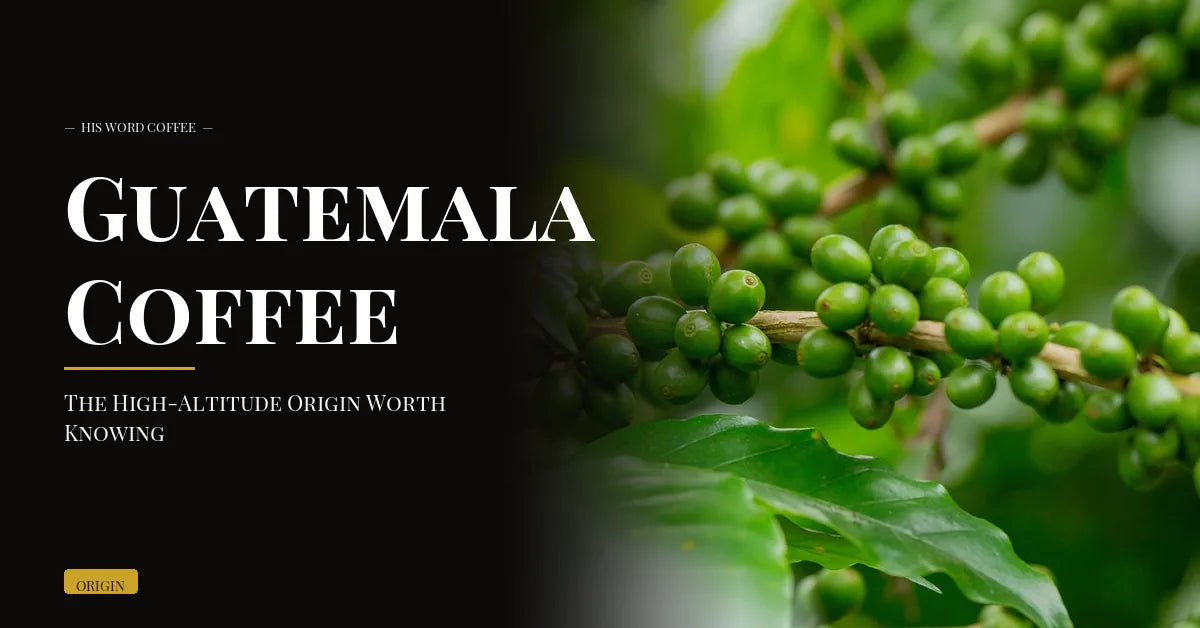
Guatemala has earned its place among the world's most respected coffee origins. Grown on volcanic slopes at altitudes that would make most crops struggle, Guatemalan coffee delivers a flavor depth that keeps specialty roasters coming back season after season.
Key Takeaways

- Guatemala grows coffee at 1,200 to 2,000+ meters above sea level, producing dense, complex beans.
- Five main regions each offer distinct flavor characteristics, from Antigua's chocolate-forward cups to Huehuetenango's bright fruit notes.
- Washed processing is standard, delivering clarity and clean brightness in the cup.
- Guatemalan coffee is generally lower in perceived acid (research published in PubMed)ity than East African origins, making it friendly for those with mild stomach sensitivity.
- Antigua lots in particular are excellent for espresso due to their body, sweetness, and balanced acidity.
Table of Contents
Guatemala's Coffee Reputation
Coffee has been grown in Guatemala since the mid-1800s, and today the country ranks consistently among the top specialty coffee producers in the world. The Asociacion Nacional del Cafe (Anacafe) has played a significant role in improving quality standards, organizing the country's diverse growing regions and helping smallholder farmers access international markets.
What makes Guatemala stand out in a crowded field of Central American origins? A combination of geography, climate, and tradition. The country sits in a highland belt where volcanic soil, consistent temperatures, and meaningful altitude variations create ideal conditions for slow cherry development. Slow development means more complex sugars and acids in the finished bean, which translates to more nuanced flavor in your cup.
When specialty buyers describe Guatemalan coffee, they consistently reach for the same set of descriptors: chocolate, brown sugar, dried fruit, mild spice, and sometimes a subtle earthiness. These notes are not accidental. They are the direct expression of where and how this coffee is grown.
Guatemala is also known for consistency. While some origins are celebrated for exceptional outlier lots that are difficult to source reliably, Guatemala produces dependably high-quality coffee across many farms and cooperatives. That reliability has made it a staple in specialty roasters' rotations and a trusted choice for blends and single-origin offerings alike.
The Altitude Advantage

If you spend time around specialty coffee, you will hear altitude mentioned constantly. It is not marketing language. Altitude has a measurable impact on how coffee tastes, and Guatemala is a clear illustration of why.
Coffee grown at higher elevations develops more slowly. Lower temperatures at altitude slow the growth cycle of the coffee cherry, giving the fruit more time to develop sugars and aromatic compounds. The result is a denser bean with more complex flavor potential. Roasters and green buyers often pay a premium for high-altitude lots precisely because the raw material is better.
Guatemalan coffee spans a wide altitude range. Depending on the region, farms sit anywhere from 1,200 meters to over 2,000 meters above sea level. To put that in perspective, 2,000 meters is roughly 6,500 feet, comparable to high-altitude farming in parts of Ethiopia and Colombia. At those elevations, coffee cherries take longer to ripen, the nights are cool enough to rest the plant, and the combination produces the kind of dense, flavorful beans that score well at cupping tables.
Volcanic soil compounds the altitude effect. Much of Guatemala's coffee land sits near active or dormant volcanoes, and the mineral-rich soil derived from volcanic ash adds a subtle earthiness and body to the cup that is distinctive to this origin.
Key Growing Regions
Guatemala officially recognizes eight coffee-producing regions, each with its own microclimate and flavor identity. Five of them account for the vast majority of specialty exports and are the ones you are most likely to encounter on a bag label.
Antigua
Antigua is the most famous Guatemalan coffee region, and for good reason. Located in a valley surrounded by three volcanoes including Agua, Acatenango, and Fuego, Antigua benefits from volcanic soil, stable year-round temperatures, and low humidity. These conditions produce a coffee that is consistent, approachable, and rich. Expect notes of dark chocolate, brown sugar, and a smooth body with mild, pleasant acidity. Antigua is the go-to recommendation for someone new to Guatemalan specialty coffee, and it is especially prized for espresso.
Huehuetenango
Pronounced "way-way-teh-NAHN-go," this remote northwestern region is where you find Guatemala's most complex and fruit-forward coffees. Huehuetenango sits at higher altitudes than Antigua, and warm, dry winds from the Tehuantepec plains protect crops from frost while maintaining cool growing temperatures. The result is a brighter, more acidic cup with notes of stone fruit, berry, and floral undertones. Huehuetenango is beloved by specialty buyers looking for something more adventurous and is the origin of choice for those who enjoy the bright, layered profiles associated with East African coffee but still want Guatemalan sweetness and body.
Lake Atitlan
Coffees grown along the shores and slopes surrounding Lake Atitlan benefit from the humidity generated by the lake itself and the shelter of surrounding volcanoes. The microclimate here is distinct, producing a cup that combines brightness with a creamy body. Flavor notes tend toward citrus, dark chocolate, and a subtle wine-like quality. Atitlan coffee is slightly less common in the US specialty market than Antigua or Huehuetenango, which makes it a worthwhile discovery for curious drinkers.
Fraijanes
Fraijanes sits southeast of Guatemala City on the slopes of the Pacaya volcano. The region receives significant rainfall and has a distinct rainy and dry season cycle that shapes cherry development. Fraijanes coffees tend to be bright and clean, with notes of citrus zest, caramel, and mild floral characteristics. The region produces excellent washed lots that punch above their weight for price.
Acatenango
Acatenango sits adjacent to Antigua on the slopes of the Acatenango volcano but has a cooler, wetter climate that produces a noticeably different cup. The higher moisture and altitude create conditions for a more delicate, complex coffee with notes of peach, honey, and subtle floral notes alongside the chocolate base common to many Guatemalan origins. Acatenango lots are increasingly sought after by specialty roasters and worth seeking out when available.
Processing Methods
Processing refers to how the coffee cherry is handled after harvest, specifically how the fruit is removed from the seed before drying. The method has a significant impact on flavor, and Guatemala has a well-established processing tradition.
The dominant method across Guatemalan regions is washed processing, also called wet processing. In the washed method, the outer fruit skin is removed immediately after harvest, and the beans are fermented in water tanks to loosen the remaining mucilage (the sticky fruit layer). After fermentation, the beans are washed clean and dried on raised beds or patios.
Washed processing produces a cup that is clean, bright, and transparent. Because the fruit is removed before drying, the flavors you taste are primarily the character of the bean itself rather than the fruit. This is why washed Guatemalan coffees show clear chocolate, sugar, and nut notes without the jammy or funky fruit character you sometimes find in natural-processed coffees.
Natural processing, where the whole cherry is dried with the fruit intact, is less common in Guatemala but does exist. Natural-processed Guatemalan lots tend to show more fruit-forward, wine-like characteristics and a heavier body. If you come across a natural-processed Guatemalan, particularly from Huehuetenango, it is worth trying. The contrast with the typical washed profile from the same origin is striking.
Honey processing, a middle-ground method where some mucilage is left on the bean during drying, is also produced in small quantities and offers a bridge between the clarity of washed and the sweetness of natural lots.
Flavor Profile by Region
Guatemalan coffee does not have a single flavor profile. The country's regional diversity means that two bags both labeled "Guatemala" can taste quite different depending on where the coffee was grown. Here is a simplified regional flavor guide.
| Region | Body | Acidity | Primary Notes |
|---|---|---|---|
| Antigua | Medium-Full | Mild | Dark chocolate, brown sugar, walnut, smooth finish |
| Huehuetenango | Medium | Bright | Stone fruit, berry, floral, honey, complex |
| Lake Atitlan | Medium-Full | Medium | Dark chocolate, citrus, wine-like, creamy |
| Fraijanes | Medium | Medium-Bright | Citrus, caramel, light floral |
| Acatenango | Medium | Medium | Peach, honey, chocolate, delicate floral |
The overall Guatemalan cup, regardless of region, tends to be well-balanced with a satisfying sweetness and a finish that lingers without bitterness. This makes it a crowd-pleasing origin, suitable for everyday drinking and for showcasing the nuances that specialty coffee can offer.
Coffee Varietals Grown in Guatemala
Guatemala primarily grows Arabica coffee, and within that species, a handful of varietals account for the majority of production. Understanding varietals is useful because they influence cup character alongside terroir and processing.
Bourbon: One of the oldest and most prized Arabica varietals, Bourbon produces a cup known for sweetness, complexity, and a round body. It was introduced to Guatemala from Reunion Island (formerly Bourbon Island) in the 19th century and remains an important varietal in the country's specialty production. Bourbon trees produce lower yields than modern hybrids, which is part of why Bourbon lots command higher prices.
Caturra: A natural mutation of Bourbon, Caturra is more compact and higher-yielding while retaining much of Bourbon's quality potential. It is one of the most widely planted varietals in Guatemala and across Central America. Caturra tends toward bright acidity and a clean, balanced cup.
Catuai: A hybrid of Caturra and Mundo Novo, Catuai was developed in Brazil for its disease resistance and high yield. It is widely planted in Guatemala and performs consistently across altitudes. Catuai tends to produce a slightly less complex cup than Bourbon but is reliable and accessible.
Typica: One of the earliest Arabica varietals brought to the Americas, Typica is prized for its exceptional cup quality, though it requires more care and produces lower yields. Typica lots from high-altitude Guatemalan farms can be extraordinary, showing delicate sweetness and layered complexity. These lots are rarer and tend to be more expensive when available.
You may also encounter less common varietals like Pache, Maragogype (the "elephant bean" known for its unusual size), and increasingly, SL28 or other experimental varietals being trialed by progressive farms. Guatemala's specialty sector has an active interest in varietal experimentation, so the range available continues to expand.
Why Guatemala Works Well for Espresso
Not every single-origin coffee translates well to espresso. The pressure and concentration of espresso extraction can amplify qualities that are pleasant in a pour over but overwhelming in a small concentrated shot. Guatemalan coffee, and Antigua in particular, is one of the exceptions that works beautifully as espresso.
Several factors make it a strong espresso candidate. First, the chocolate and brown sugar base notes that define Antigua translate directly into espresso as a rich, sweet shot with a satisfying finish. Second, the medium-full body holds up well under pressure and produces a thick, syrupy texture that espresso drinkers value. Third, the acidity in Antigua coffee is mild enough that it does not become sharp or harsh in a concentrated shot.
The combination of sweetness, body, and balanced acidity is exactly what experienced baristas look for when selecting a single-origin espresso. For those who take their espresso straight or as a traditional double shot, a quality Antigua is an excellent choice. It also pairs well with milk in lattes and cappuccinos, where the chocolate notes play nicely with dairy sweetness.
For espresso, a medium-dark roast of Antigua tends to work best for most home setups, though lighter roasts can work beautifully if your grinder and machine are well-calibrated. If you are new to brewing espresso with single-origin coffee, Guatemalan Antigua is one of the more forgiving starting points.
How to Brew Guatemalan Coffee
The ideal brewing method for Guatemalan coffee depends partly on which region you are working with. Here is a practical guide by method.
Pour Over (V60, Chemex, Kalita Wave)
- Best for: Huehuetenango, Acatenango, Fraijanes, Atitlan
- Ratio: 1:15 to 1:17 (coffee to water by weight)
- Water temperature: 92-96C (197-205F)
- Grind: Medium (similar to sea salt), see our coffee grind size chart for reference
- Notes: Pour over's clean extraction showcases the fruit and floral notes in brighter Guatemalan lots. Use a medium roast for best results.
French Press
- Best for: Antigua, Atitlan
- Ratio: 1:12 to 1:14
- Water temperature: 93-96C (200-205F)
- Grind: Coarse, see our grind size guide
- Notes: French press immersion brewing emphasizes body and mouthfeel, making it a natural fit for Antigua's rich, full profile. The chocolate notes are particularly prominent this way.
Espresso
- Best for: Antigua (especially medium-dark roast)
- Ratio: 1:1.5 to 1:2 (dose to yield)
- Water temperature: 91-94C
- Grind: Fine, see our grind size chart
- Notes: Antigua's chocolate base and full body make it one of the better single-origin espresso choices from Central America. Aim for a 25-30 second extraction.
Cold Brew
- Best for: Antigua, Atitlan
- Ratio: 1:7 to 1:8 (coarser grind, 12-18 hour steep in cold water)
- Notes: Full-bodied Guatemalan lots cold brew beautifully. The chocolate and brown sugar notes become very pronounced when cold-steeped, and the result is a smooth concentrate that holds up well over ice.
Whatever method you use, freshness matters. Grind just before brewing if possible, and use beans within 2-4 weeks of the roast date for peak flavor. See our full grind size guide for detailed settings by brewing method.
Guatemala and Stomach Sensitivity
If you have a sensitive stomach and have been told to moderate your coffee intake, origin choice can make a meaningful difference. Not all coffee affects everyone the same way, and Guatemalan coffee is generally considered one of the friendlier origins for those who experience mild acidity-related discomfort.
The reason comes back to altitude, processing, and roast. Washed-processed Guatemalan coffee tends to have a perceived acidity that is clean and bright rather than sharp or harsh. Antigua, in particular, sits at the milder end of the acidity spectrum compared to East African origins like Ethiopian or Kenyan coffee, which tend to have more pronounced, sometimes citric acidity. For some people, that difference is enough to make Guatemalan a daily drinker when brighter origins cause issues.
Roast level also plays a role. Medium or medium-dark roasts of Guatemalan coffee tend to have lower perceived acidity than light roasts of the same beans. If you find even Guatemalan coffee occasionally bothers your stomach, try a slightly darker roast, brew with slightly cooler water, or consider a cold brew preparation, which extracts less of the acids responsible for stomach irritation.
We have written more about this topic in our guide on choosing coffee for a sensitive stomach, which includes a broader comparison of origins and roast levels for those who need to be thoughtful about what they brew.
His Word Coffee and Guatemalan Origins
Guatemalan origins are among our most popular when available. The combination of approachable flavor, genuine quality, and versatility across brewing methods makes Guatemala a reliable choice for our customers, whether they are experienced specialty drinkers or just beginning to explore single-origin coffee.
When we source Guatemalan coffee, we look for lots that demonstrate what this origin does best: clean chocolate sweetness, satisfying body, and a finish that stays with you without bitterness. Browse our current single-origin coffee selection to see what is in rotation, and explore our full coffee catalog if you are looking for something specific.
Frequently Asked Questions
What does Guatemala coffee taste like?
Guatemalan coffee typically features notes of dark chocolate, brown sugar, and mild dried fruit with a medium to full body. Flavor varies by region: Antigua tends toward chocolate and smooth sweetness, while Huehuetenango offers brighter, more fruit-forward complexity. Overall, Guatemalan coffee is well-balanced with a satisfying finish.
What is Antigua coffee?
Antigua is Guatemala's most famous coffee-growing region, located in a valley surrounded by three volcanoes. Volcanic soil and a stable microclimate produce consistent, high-quality coffee with notes of dark chocolate, brown sugar, and a smooth, medium-full body. Antigua coffee is particularly well-suited to espresso and French press brewing.
Is Guatemalan coffee high in caffeine (the FDA's caffeine safety guidelines)?
Guatemalan coffee is Arabica, which generally has moderate caffeine content, lower than Robusta varieties. High-altitude Arabica beans tend to be denser, which can mean slightly higher caffeine per bean by weight, but the difference in your cup is minor. Standard brewing ratios produce a cup with typical caffeine content for specialty Arabica coffee.
What is the best grind size for Guatemala coffee beans?
Grind size depends on your brewing method. For pour over, use a medium grind (similar to sea salt). For French press, use a coarse grind. For espresso, use a fine grind. For cold brew, use a coarse grind with a longer steep time. See our complete grind size chart for specific settings and visual references.
How is Guatemala coffee different from Colombian coffee?
Both are respected Arabica origins with some flavor overlap, but they differ in key ways. Guatemalan coffee, particularly from Antigua, tends to have a heavier body, more pronounced chocolate notes, and slightly lower perceived acidity. Colombian coffee often shows brighter acidity and more prominent fruit and citrus characteristics. Both are excellent choices, but Guatemala tends to suit drinkers who prefer richness and sweetness over brightness.
Is Huehuetenango coffee good for beginners?
Huehuetenango can be excellent for beginners who want to explore specialty coffee's fruit and floral side, but if you are accustomed to mild, low-acidity coffee, the brightness might be a bit of a jump. Antigua is often the better starting point for those new to Guatemalan specialty coffee, as its chocolate and brown sugar profile is approachable and familiar. Once you are comfortable with Antigua, Huehuetenango is a rewarding next step.
What are the main coffee varietals from Guatemala?
The primary varietals are Bourbon, Caturra, Catuai, and Typica. Bourbon is prized for sweetness and complexity. Caturra offers bright acidity and clean balance. Catuai is reliable and widely planted. Typica, though lower-yielding, can produce exceptional lots with delicate sweetness and layered flavor at high altitude.
Explore Guatemalan Coffee
Ready to taste what high-altitude volcanic soil can do? Browse our single-origin offerings and find a Guatemalan lot worth brewing.
Shop Single Origin View All CoffeesSources: Fair Trade Certified, How It Works. Specialty Coffee Association, Brewing Best PracticesExplore More.

Leave a comment
This site is protected by hCaptcha and the hCaptcha Privacy Policy and Terms of Service apply.