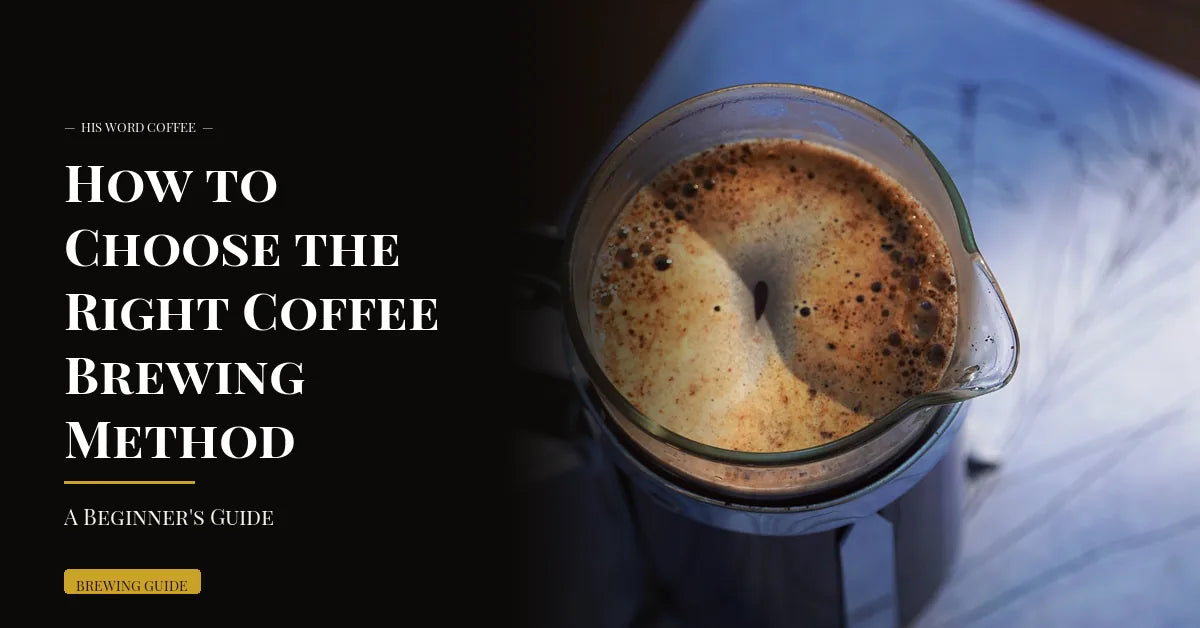
So you want to brew better coffee at home, but the number of options feels a little overwhelming. French Press, pour over, drip machine, AeroPress, cold brew... where do you even start?
Here is the good news: there is no single "right" answer. The best brewing method for you depends on your morning routine, what flavors you enjoy, how many cups you need, and what you are willing to spend. And once you find the method that fits your life, making a great cup of coffee becomes one of the simplest, most rewarding parts of your day.
We put together this guide to walk you through the five most popular home brewing methods, side by side, so you can make a confident choice without the guesswork.
What We'll Cover
What Are the Five Most Popular Home Brewing Methods?
Let's walk through each one so you can see what makes them different and which might be the right fit for your kitchen.
French Press
The French Press is one of the oldest and simplest ways to brew coffee. You add coarsely ground coffee to the carafe, pour in hot water, wait about four to five minutes, and press down the metal filter. That is it.
Because the grounds sit directly in the water (this is called immersion brewing), French Press coffee tends to be full-bodied and rich with a heavier mouthfeel. The metal mesh filter lets natural oils pass through, which adds depth and texture that paper filters would remove. It is a forgiving method that does not require precise pouring technique, and a quality French Press costs between $20 and $40.
The trade-off? You may notice a little sediment at the bottom of your cup, and the coffee can turn bitter if you leave it sitting in the carafe after brewing. Pour the full batch right away to avoid over-extraction. If you like bold, rich coffee with body, though, this is a great place to start.
Pour Over
Pour over brewing is all about control. You place a paper filter in a cone-shaped dripper, add medium to medium-fine grounds, and slowly pour hot water over them in a circular motion. The water passes through the coffee and filter by gravity, producing a clean, clear cup.
This method highlights the more delicate, nuanced flavors in coffee, like fruit notes, floral qualities, and bright acid (research published in PubMed)ity. Popular pour over devices include the Hario V60, Kalita Wave, and Chemex (which uses a thicker filter for an especially clean cup).
Pour over takes more hands-on time (the total brew, including pouring and drawdown, runs about 3 to 4 minutes) and has a bit of a learning curve. But if you enjoy a slower morning ritual and appreciate tasting the subtle differences between coffee origins, it is well worth it.
Automatic Drip Machine
The drip machine is the most familiar brewing method in American kitchens. You add a filter, scoop in your coffee, fill the reservoir with water, and press a button. Many models let you set a timer the night before so coffee is ready when you wake up.
Drip machines produce a clean, balanced cup that falls somewhere between the richness of French Press and the clarity of pour over. They are ideal for brewing multiple cups at once and require almost no active involvement.
The quality does vary between machines, though. Budget models may not heat water to the right temperature (195 to 205 degrees Fahrenheit is the sweet spot). If you go this route, look for machines certified by the Specialty Coffee (the SCA's standards) Association, which tests for proper brewing temperature, water contact time, and extraction.
AeroPress
The AeroPress is a compact, portable brewer that uses gentle air pressure to push water through coffee grounds. It was invented by Alan Adler in 2005, and it has become a favorite among coffee enthusiasts for its versatility and speed.
One of the things that makes the AeroPress unique is how adaptable it is. You can brew a concentrated, espresso-like shot by using fine grounds and a short brew time, or make a longer, smoother cup by adjusting the grind and water ratio. You can even make a quick cold brew concentrate in about two minutes by using cold water and a longer stir time. It typically brews a single serving in about 1 to 2 minutes.
The AeroPress is also very forgiving and nearly impossible to break. At around $30 to $40, it is one of the most affordable and travel-friendly brewing options available.
Cold Brew
Cold brew is made by steeping coarsely ground coffee in cold or room-temperature water for 12 to 24 hours. The long, slow extraction produces a smooth, naturally sweet concentrate that is lower in perceived acidity than hot-brewed coffee.
This makes cold brew a good option if you find that hot coffee sometimes bothers your stomach. The concentrate keeps in the fridge for up to two weeks and can be diluted with water, milk, or ice to your preferred strength.
The downside is the wait time and the amount of coffee required (cold brew uses about twice the grounds per serving compared to hot methods). But if you plan ahead, it is one of the most low-effort methods available. You can make a big batch on Sunday and have coffee ready all week.
How Do These Brewing Methods Compare?
| Factor | French Press | Pour Over | Drip Machine | AeroPress | Cold Brew |
|---|---|---|---|---|---|
| Brew Time | 4 to 5 minutes | 3 to 4 minutes | 5 to 12 minutes | 1 to 2 minutes | 12 to 24 hours |
| Hands-On Effort | Low | High | Minimal | Medium | Minimal (just waiting) |
| Flavor Profile | Bold, rich, full body | Clean, bright, nuanced | Balanced, smooth | Versatile (adjustable) | Smooth, sweet, low acidity |
| Grind Size | Coarse | Medium to medium-fine | Medium | Fine to medium | Extra coarse |
| Servings per Brew | 2 to 8 cups | 1 to 3 cups | 4 to 12 cups | 1 cup | Batch (makes many) |
| Equipment Cost | $20 to $40 | $20 to $80 | $30 to $300 | $30 to $40 | $15 to $50 |
| Skill Level | Beginner | Intermediate | Beginner | Beginner | Beginner |
| Filter Type | Metal mesh | Paper | Paper | Paper or metal | Mesh or cloth |
| Best For | Bold coffee lovers, families | Flavor explorers | Busy mornings, offices | Travel, single servings | Hot weather, sensitive stomachs |
How Do You Choose the Right Method for You?
Choose Based on Your Morning Routine
If your mornings are a sprint out the door, a programmable drip machine or a batch of cold brew made over the weekend will serve you well. If you have a few extra minutes and enjoy a slower start, pour over or AeroPress turns coffee-making into a calming ritual. And if you just want something dead simple that works every time, the French Press is hard to beat.
Choose Based on Your Budget
Budget Breakdown by Setup
- Budget-friendly ($50 to $100): French Press ($20 to $40) plus a hand burr grinder ($30 to $50). Great coffee, minimal investment.
- Mid-range ($150 to $300): Pour over dripper ($20 to $80) plus a quality electric burr grinder ($100 to $200). More control, more consistency.
- Convenience-focused ($200 to $400): SCA-certified drip machine ($150 to $300). Set it and forget it, with great results.
- Versatile traveler ($60 to $90): AeroPress ($35) plus a hand burr grinder ($30 to $50). Compact, portable, and capable of brewing many different styles.
Choose Based on Flavor Preferences
If you love bold, rich, full-bodied coffee with depth and weight, lean toward French Press or AeroPress. If you prefer bright, clean cups where you can taste fruit and floral notes, pour over or Chemex will bring those flavors forward. If you are looking for smooth coffee with lower perceived acidity, cold brew or French Press are solid choices. And if you are not sure what you like yet, AeroPress is the most versatile starting point because you can adjust it to brew many different styles.
Choose Based on How Many People You Brew For
Brewing for just yourself? AeroPress or a small pour over keeps things simple and efficient with no wasted coffee. Brewing for a family of two to four? A French Press or drip machine handles multiple cups easily. Hosting friends or serving a group? A large French Press (8 cups) or a batch-brew drip machine is your best bet.
Why Does Your Grinder Matter More Than Your Brewer?
This is something that surprises a lot of people. You could have a $300 pour over setup, but if you are grinding with a $15 blade grinder that chops beans into wildly different sizes, your coffee will still taste off. The small particles will over-extract and turn bitter while the larger chunks will under-extract and taste sour. You end up with a muddy cup that is both at the same time.

A burr grinder, on the other hand, crushes beans between two abrasive surfaces set at a specific distance. This produces grounds that are much more uniform in size, which means the water extracts flavors evenly. The result is a cleaner, more balanced cup where you can actually taste the natural character of the beans.
Our Grinder Recommendation for Beginners
If you are just starting out, a hand burr grinder in the $30 to $50 range (like the Timemore C2 or JavaPresse) is a solid first step. It takes a little arm effort, but the grind consistency is dramatically better than any blade grinder. When you are ready to upgrade, an electric burr grinder like the Baratza Encore ($100 to $150) is the most popular choice among home brewers for good reason.
Bottom line: invest in your grinder before upgrading your brewer. A $30 French Press with a quality burr grinder will produce better coffee than a $300 machine paired with a blade grinder.
Great Beans to Start Your Brewing Journey
No matter which brewing method you choose, fresh beans make all the difference. We roast every batch to order in our Vancouver, Washington roastery using a fluid bed process that brings out natural sweetness and clarity without bitterness.
A few favorites that work well across brewing methods:
- Colombia El Tiple: Caramel, dark chocolate, cherry, and vanilla. A versatile medium roast that shines in French Press, pour over, and drip.
- House Blend: Chocolate and caramel in a smooth, balanced medium roast. A crowd-pleaser that works with any method.
- Breakfast Blend: Caramel, chocolate, and dark chocolate notes in a bright medium roast. An approachable starting point for anyone new to specialty coffee.
Every bag ships fresh within days of roasting, so you are tasting coffee at its peak no matter how you brew it.
What Are the Most Common Beginner Mistakes?
Choosing based on looks instead of practicality. That beautiful Chemex looks stunning on a kitchen shelf and photographs well. But if your mornings are a rush and you need coffee ready when you stumble out of bed, a programmable drip machine is the honest choice. Pick the method that matches your real life, not your ideal life.
Overspending before knowing what you like. Start with one quality brewing device and learn it well before buying more. A $30 French Press paired with good technique will produce better coffee than a $300 espresso machine used without proper training. You can always add to your collection later.
Ignoring grind quality. We said it above and it is worth repeating: your grinder affects flavor more than your brewer. An uneven grind leads to uneven extraction, and uneven extraction leads to coffee that tastes simultaneously bitter and sour. A basic burr grinder is the single best investment you can make for your home coffee setup.
Giving up too soon. Every brewing method has a learning curve. The first few cups with a new method might not blow you away, and that is completely normal. Give yourself at least two weeks of daily brewing before deciding whether a method is right for you. Keep a simple mental note of what worked and what didn't. Like any meaningful daily practice, coffee brewing rewards patience and consistency.
Using old coffee. Even the best technique and equipment cannot rescue stale beans. Coffee reaches its peak flavor within a few weeks of roasting. If the bag does not have a roast date on it, that is usually a sign it has been sitting around for a while. Look for beans from a roaster who can tell you exactly when they were roasted.
How Do You Get Started Step by Step?
Your 5-Step Plan
- Step 1 - Assess your routine: Be honest about how much time you have each morning and how many cups you need. This narrows your options quickly.
- Step 2 - Identify your flavor preferences: Do you prefer your coffee black or with cream? Do you gravitate toward bold and rich, or bright and clean? Are you sensitive to acidity or bitterness?
- Step 3 - Set a realistic budget: Include both equipment and ongoing costs (filters, beans). Remember that great coffee comes from fresh beans and proper technique, not from expensive equipment.
- Step 4 - Pick one method and commit for two weeks: Brew daily with the same method for at least 14 days. This gives you enough experience to know whether it fits your life and your palate.
- Step 5 - Adjust and explore: After two weeks, you will know what you like and what you would change. Your preferences might evolve as your palate develops, and that is a completely natural part of the journey.
One more thing worth mentioning: water quality matters more than most people realize. Since brewed coffee is roughly 98% water, off-tasting tap water will carry those flavors right into your cup. Filtered water or spring water generally gives you the cleanest, most balanced results.
Ready to Taste the Difference Fresh Beans Make?
No matter which brewing method you choose, it all starts with quality beans. We roast small batches to order in Vancouver, WA and ship them fresh to your door.
Find Your RoastFrequently Asked Questions
What is the easiest coffee brewing method for beginners?
French Press is generally the easiest for beginners. It is forgiving, requires minimal equipment, and produces consistently good results. No paper filters needed, easy to clean, and it makes multiple cups at once. A quality French Press costs between $20 and $40, and when paired with a basic hand burr grinder, you are looking at a total investment under $100 for excellent coffee.
How much should I spend on my first coffee setup?
Start with $50 to $100 for a quality burr grinder and one brewing device. The grinder matters more than the brewer for flavor quality. A hand burr grinder ($30 to $50) paired with a French Press ($20 to $40) gives you excellent results without a big investment. You can always upgrade individual pieces later as you learn what matters most to you.
Do I need expensive equipment to make good coffee?
Not at all. Some of the best coffee comes from simple methods like French Press or pour over paired with a $30 burr grinder. Technique and fresh beans matter far more than expensive equipment. Focus on proper grind size, good water, and freshly roasted beans before investing in premium gear.
What brewing method makes the strongest coffee?
French Press and AeroPress both produce full-bodied, concentrated coffee because they use immersion brewing where grounds steep directly in water. Cold brew concentrate is also very strong before dilution. That said, the strength of any method can be adjusted by changing your coffee-to-water ratio. More coffee relative to water equals a stronger cup, regardless of the method.
How important is water quality for brewing coffee?
Very important. Since brewed coffee is about 98% water, off-tasting tap water will carry those flavors into your cup. Filtered water or spring water generally produces the cleanest, most balanced results. Avoid distilled water, which strips out the minerals that help with proper extraction and can make coffee taste flat.
Can I use pre-ground coffee instead of grinding my own?
You can, but freshly ground beans will give you noticeably better flavor. Ground coffee begins losing its aromatic compounds within minutes of grinding, and the deterioration accelerates over days. If you prefer pre-ground, look for a small-batch roaster like His Word Coffee who grinds it fresh for your specific brewing method. Use it within a week or two for the best results.
Looking for Low-Acidity Coffee?
If stomach sensitivity is a factor in choosing your brewing method, it helps to understand naturally low-acid beans. The historical Haiti Hope Rising profile was grown from Blue Mountain Typica varietal, known for producing some of the smoothest, gentlest coffee available. It is useful background for why cold brew and French press can work well for people who want great flavor without the bite.
Your Brewing Journey Starts with Great Beans
We roast every batch fresh in our Vancouver, WA roastery using a fluid bed process that brings out natural sweetness and smooth, clean flavor. Whatever method you choose, we would love to be part of your morning.
Find Your Roast

Leave a comment
This site is protected by hCaptcha and the hCaptcha Privacy Policy and Terms of Service apply.