
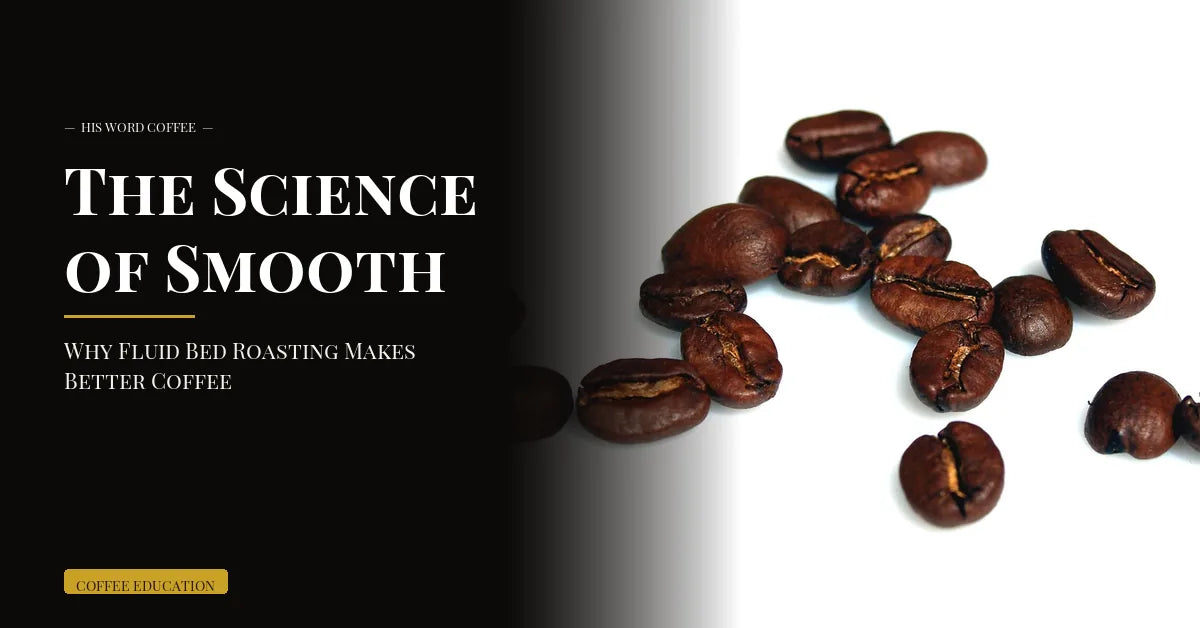
Most of us have felt that sharp, bitter bite at the back of the throat after a morning cup of coffee. For years we were told that bitterness is just part of coffee, or a sign of a "bold" roast. When we started roasting here in Vancouver, we found that a lot of that harshness does not come from the bean itself. A good amount of it comes from how the bean is roasted.
When we set out to roast specialty coffee, we chose a path that is less common in larger roasteries: fluid bed roasting. This method, often called hot air roasting, relies on moving air more than the contact of a metal drum. In our cupping and in our day to day brewing, the cups tend to taste clean and bright. Below is a plain explanation of how it works, what it can and cannot do, and why we landed on it.
Why Hot Air Roasting Matters to Us
- Cleaner flavor: Beans roast on moving air instead of resting against hot metal, which makes scorched, burnt notes easier to avoid.
- Chaff carried off during the roast: The air stream lifts the papery chaff away as it loosens, so less of it burns inside the roaster.
- A smoother cup for many drinkers: By avoiding scorched, smoky notes, many people find the cup feels smoother. How a coffee sits with you is personal, so we share this as taste feedback, not a health promise.
- Small batch control: We adjust air temperature and airflow on our fluid bed air roaster to bring out each origin.
Table of Contents
What is Fluid Bed Roasting?
Think about the difference between popping popcorn in a pot on the stove and using an air popper. In the pot, the kernels at the bottom can scorch before the rest are done. In an air popper, every kernel tumbles in the heat, so the batch comes out light and even. Fluid bed roasting applies that same idea to specialty coffee.
One note for fairness: no roaster runs on convection alone. Even an air roaster has some contact and radiant heat. The point is that the balance tips heavily toward moving air, and that balance is what gives us the even, clean roast we are after.
☕ The Science of the "Fluid Bed"
- Convection heating: Heat moves mostly through hot air, which spreads around the whole bean rather than only where it touches metal.
- Levitation: Beans stay in motion, so no single bean parks in one hot spot for too long.
- Precision: We can adjust air temperature and airflow to follow the roast curve we want for each origin.
Hot Air vs. Traditional Drum Roasting
Drum roasters have been the industry standard for a long time, and plenty of wonderful coffee comes off them. They work a bit like a clothes dryer, tumbling beans inside a heated metal drum. A skilled roaster manages that contact heat carefully. The trade-off is the risk of "tipping" or "scorching." If the drum runs too hot, beans can pick up dark, burnt spots where they touch the metal, which adds a smoky, carbon flavor that can cover up the more delicate notes.
We are not here to say drum roasting is bad. It is not. We simply find that an air roaster fits the clean, bright style we are chasing, and it gives us a roast curve that is easier for us to repeat batch to batch.
The Secret to Ending Bitterness: Chaff Removal
If you have ever smelled burning paper, you know it is not pleasant. When chaff scorches inside a roaster, some of that smoky character can carry into the beans. We think this is one reason a lot of coffee tastes "heavy" or ashy. By moving the chaff out as it detaches, we keep the focus on the coffee itself.
To be precise, bitterness in coffee comes from several places, including roast level, brew time, and water temperature, not chaff alone. Chaff control is one lever among several. It happens to be one that air roasting handles well.
🌿 Taste the Air Roasted Difference
We roast our coffees on our fluid bed air roaster in small batches so we can stay close to each one.
A good place to start is our House Blend:
- Origin: A versatile blend drawing on Latin America and East Africa.
- Roast level: Medium.
- What we taste in our cupping: A creamy texture with cocoa nib and soft caramel sweetness.
- Process: Roasted to order in small batches on our air roaster.
It is an easy introduction to how clean and balanced a cup can be.
Is Air Roasted Coffee Better for Your Stomach?
It helps to separate two things. There is the measurable acidity of coffee (its pH), and there is the sharp feeling some people get in the gut, which is more about perception and personal tolerance. The measurable acidity of brewed coffee depends largely on the bean's origin, the roast level, and how it is brewed. Lighter roasts generally read as more acidic, and longer or darker roasts read as less acidic.
There is some interesting research on roast level and stomach comfort. Studies have looked at compounds in coffee, including N-methylpyridinium (NMP), which forms during roasting and has been studied for its possible role in lowering stomach acid production. Findings are mixed and far from settled, so we describe this as an area of ongoing study rather than a proven benefit. If coffee regularly bothers your stomach, the most reliable step is to talk with your doctor.
What we can say honestly is this: by carrying chaff away and avoiding scorched, smoky compounds, our air roasted coffee tends to taste clean and smooth, and a number of our regulars in the Vancouver area tell us it sits well for them. We are glad to hear it, and we still encourage you to listen to your own body.
For readers who want a naturally caffeine-light cup in the evening, our Evening Grace Decaf is a Mexican EA (ethyl acetate) decaf with a sweet, rounded flavor. We do not claim it is low acid, since we have not had it lab tested, but many people enjoy it as a gentle end to the day.

💡 Pro Tip for Sensitive Stomachs
If you love coffee but find it can be hard on your stomach, a few things are worth trying: a medium or darker roast (which often reads as less acidic), a slightly coarser grind, and brewing with water a touch below boiling. Some people also do better with cold brew. These are general tips from our experience at the roaster, not medical advice, so check with your doctor if discomfort keeps up.
How We Roast Our Coffees
Everything we offer is roasted on our fluid bed air roaster, in small batches, here in Vancouver, Washington. Roasting in small lots lets us watch each batch closely and keep the roast curve consistent. Here are a few of the coffees we roast this way, with the notes we actually taste in our cupping:
A Few of Our Single Origins and Blends
- Ethiopia Sunrise: Bright and fruit forward, with blueberry, mango, and raspberry notes that the clean air roast helps keep lively.
- Colombia El Tiple: A balanced, approachable single origin with gentle sweetness and a smooth finish.
- Costa Rica Tarrazú: Clean and crisp, with a bright, well-structured character from the Tarrazú region.
- Guatemala Los Huipiles: Rounded and comforting, with cocoa and soft sweetness.
- House Blend: Our everyday medium roast, with cocoa nib and caramel sweetness.
Ready to Taste the Difference?
Skip the bitter, scorched cup. See how air roasting brings out the better side of each bean.
Shop Our CoffeeFrequently Asked Questions
Why haven't I heard of fluid bed roasting before?
Drum roasting has been the standard for a long time, and most large roasters use drums because they scale easily. Fluid bed roasting is more common in smaller specialty roasteries like ours, where small batches and flavor clarity matter most.
Does air roasted coffee look different?
It often does. Air roasted beans can look more uniform and matte, while drum roasted beans can look oilier or shinier, especially at darker roasts. A drier surface early on can also help the coffee hold its freshness a little longer, though storage and grind timing matter more for freshness overall.
Is air roasted coffee less acidic?
Not automatically. Measurable acidity (pH) depends mostly on the bean's origin, the roast level, and the brew. What air roasting does well is remove scorched, smoky character, which can make a cup taste smoother and cleaner. If you are sensitive to acidity, roast level and brew method usually make the biggest difference.
Is it more expensive to roast this way?
The equipment is an investment, and we think the cup is worth it. Small batch air roasting lets us be careful stewards of the beans we source and honor the farmers' work by not burning their coffee.
🌿 A Bright Choice
If you enjoy bright, fruit forward flavors, try our Ethiopia Sunrise. The air roast helps keep the natural fruit notes clear, without smoky interference.
What we taste in our cupping: Blueberry, mango, and raspberry.
Sources
We aim to be accurate and transparent. A few references behind the points above:
- Specialty Coffee Association, on coffee quality and cupping standards: sca.coffee/research
- Somoza et al., research on N-methylpyridinium (NMP) and stomach acid (study coverage and abstract via PubMed): pubmed.ncbi.nlm.nih.gov
Coffee Crafted with Character
We believe every cup should be a moment of joy, not a source of bitterness. Join our community and taste coffee roasted with care, right here in Vancouver, Washington. Questions? Reach us at 360-270-8106.
Shop Our Coffee

Leave a comment
This site is protected by hCaptcha and the hCaptcha Privacy Policy and Terms of Service apply.