
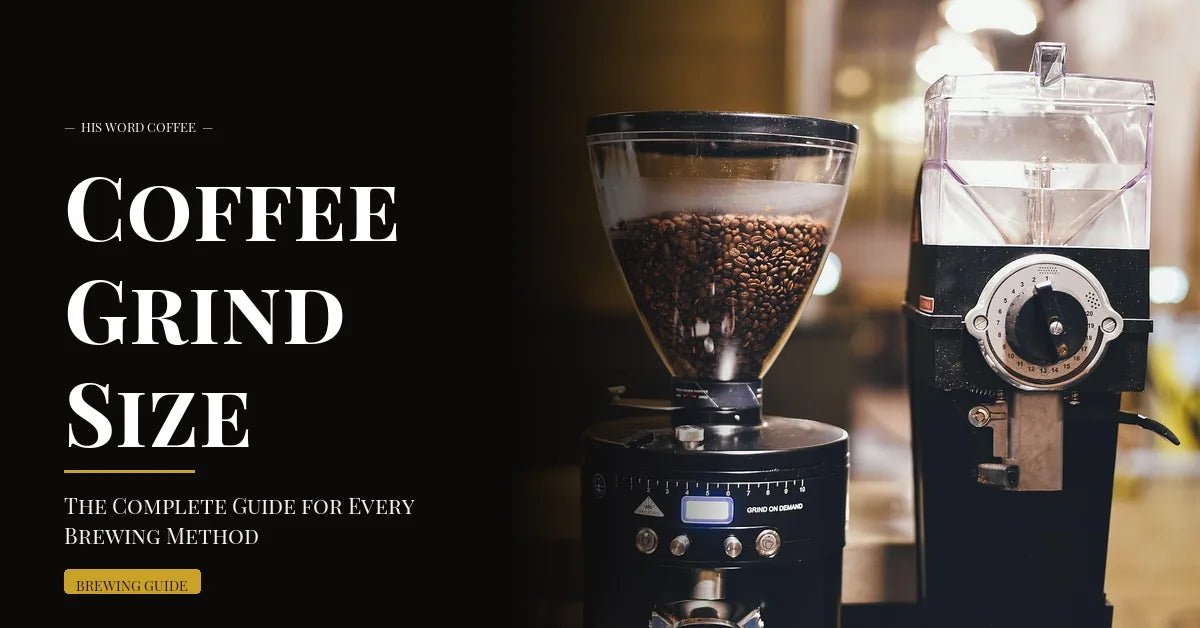
The difference between an extraordinary cup and a disappointing one often comes down to a single variable: coffee grind size. Use the wrong grind for your brewing method, and you'll either over-extract bitter flavors or under-extract sour, weak coffee, no matter how good your beans are.
This comprehensive guide covers everything you need to know about coffee grind size: what each grind level looks like, which methods require which grinds, and how to troubleshoot common problems by adjusting your grinder settings.
Key Takeaways: Coffee Grind Size Quick Reference
- Grind size determines extraction: Finer grinds extract faster (espresso, Turkish), coarser grinds extract slower (French press, cold brew)
- Match grind to brew time: Short brew times need fine grinds, long brew times need coarse grinds
- Visual comparison matters: Extra coarse looks like sea salt, fine looks like table salt, extra fine like flour
- Consistency is everything: Uneven grinds cause simultaneous over-extraction and under-extraction
- Invest in a burr grinder: The single best upgrade for improving coffee quality at home
- Adjust by taste: Bitter = grind coarser, Sour = grind finer
In This Guide
- Why Does Grind Size Matter?
- Master Coffee Grind Size Chart
- Extra Coarse Grind (Cold Brew)
- Coarse Grind (French Press)
- Medium-Coarse Grind (Chemex)
- Medium Grind (Drip Coffee)
- Medium-Fine Grind (Pour Over)
- Fine Grind (Espresso, AeroPress)
- Extra Fine Grind (Turkish Coffee)
- Troubleshooting: Fix Bad Coffee
- Grinder Recommendations
- Frequently Asked Questions
- Quick Reference Chart
- Master Your Grind
Why Does Grind Size Matter?
Coffee grind size directly controls extraction: how much flavor, oils, and compounds dissolve from the coffee grounds into your water. Think of it as surface area physics: the finer you grind, the more surface area you expose, and the faster water extracts flavor.
Here's why this matters:
- Too fine for your method = Over-extraction = Bitter, harsh, astringent coffee with unpleasant aftertaste
- Too coarse for your method = Under-extraction = Sour, weak, watery coffee that lacks body and sweetness
- Just right = Balanced extraction = Sweet, complex coffee that showcases the bean's natural characteristics
Different brewing methods expose coffee to water for different durations. Espresso pulls in 25-30 seconds, so it needs very fine grounds. French press steeps for 4 minutes, so it needs coarse grounds. The general rule: shorter brew time = finer grind, longer brew time = coarser grind.
Master Coffee Grind Size Chart
This chart shows every standard grind size, what it looks like, which brewing methods it's used for, and approximate brew times. Save this as your go-to reference.
| Grind Size | Looks Like | Brewing Methods | Brew Time | Particle Size |
|---|---|---|---|---|
| Extra Coarse | Peppercorns, coarse sea salt Distinct, chunky particles | Cold brew, cowboy coffee | 12-24 hours | ~1.5mm |
| Coarse | Kosher salt, breadcrumbs Heavy, gritty texture | French press, percolator, cupping | 4-8 minutes | ~1mm |
| Medium-Coarse | Coarse sand, rough sugar Gritty but smaller particles | Chemex, Clever Dripper, some pour-overs | 3-4 minutes | ~0.75mm |
| Medium | Regular sand, granulated sugar Feels like beach sand | Drip coffee makers, siphon brewers, AeroPress (long brew) | 3-4 minutes | ~0.5mm |
| Medium-Fine | Fine sand, table salt Smooth but still gritty | Pour-over (V60, Kalita), Moka pot, AeroPress (standard) | 2-3 minutes | ~0.4mm |
| Fine | Table salt, fine sugar Smooth, powder-like but grainy | Espresso, AeroPress (short brew), Moka pot | 25-30 seconds | ~0.3mm |
| Extra Fine | Powdered sugar, flour Silky, almost no grit | Turkish coffee, ibrik | 1-4 minutes | ~0.1mm |
Now that your grind size is dialed in…
Freshness Is the Other Half of Great Coffee
Grind size is one part of the equation. Freshness is the other. Coffee loses flavor within days of roasting — most people never taste how good their beans can actually be. We roast in small batches and ship within days of roasting.
Shop Fresh Roasted Coffee →What Is Extra Coarse Grind? (Cold Brew)
Extra Coarse Grind
Looks like chunky peppercorns or coarse sea salt. Individual particles are distinct and large, roughly the size of cracked pepper. When you rub it between your fingers, it feels like coarse kosher salt with visible gaps between particles.
Best for: Cold brew, cowboy coffee (boiled coffee)
Why this grind size? Extra coarse grind is essential for extended brewing times. Cold brew steeps for 12-24 hours. If you used a finer grind, the prolonged contact time would massively over-extract, creating bitter, muddy coffee. The large particle size slows extraction, allowing smooth, sweet flavors to develop without harsh bitterness.
Common mistake: Using medium or coarse grind for cold brew. This over-extracts and creates unpleasantly bitter concentrate. Always use extra coarse for cold brewing.
What Is Coarse Grind? (French Press)
Coarse Grind
Resembles kosher salt or coarse breadcrumbs. Particles are clearly visible but smaller than extra coarse. When rubbed between fingers, it has a heavy, gritty texture. Think rough sand from a construction site rather than beach sand.
Best for: French press, percolator, coffee cupping
Why this grind size? French press uses full immersion for 4 minutes with a metal mesh filter. Coarse grounds prevent over-extraction during the steep time and minimize sediment passing through the filter. Finer grinds would create excessive sediment (sludge at the bottom) and bitter, over-extracted coffee.
What Is Medium-Coarse Grind? (Chemex)
Medium-Coarse Grind
Looks like rough sand or coarse sugar. Particles are smaller than coarse but still distinctly gritty. Rub it between your fingers: it should feel like rough construction sand, not smooth beach sand.
Best for: Chemex, Clever Dripper, some larger pour-over brewers
Why this grind size? Chemex uses thick paper filters that slow water flow, increasing contact time compared to standard pour-overs. Medium-coarse grind balances this by preventing over-extraction while still allowing proper flavor development. It's coarser than a standard V60 pour-over but finer than French press.
Adjustment tip: If your Chemex drains too slowly (over 5 minutes), grind coarser. Too fast (under 3 minutes), grind finer.
What Is Medium Grind? (Drip Coffee)
Medium Grind
Looks like regular beach sand or standard granulated sugar. This is the "default" grind you'll get from most pre-ground coffee. When you pinch it, it feels smooth like sand, not rough, not powdery. Individual grains are visible but small.
Best for: Drip coffee makers, automatic brewers, siphon coffee, some AeroPress recipes
Why this grind size? Medium grind is the workhorse of coffee brewing. It's designed for standard automatic drip machines where water passes through at a steady rate for 5-6 minutes. It extracts efficiently without clogging filters or creating excessive sediment.
Key point: Medium grind is versatile but not optimal for methods that need specific sizes (like espresso or French press). It's a safe middle ground that works adequately for many methods but excels specifically with drip machines.
What Grind Size Should You Use for Pour Over?
Medium-Fine Grind
Looks like fine sand or table salt. Smoother than medium but still has visible grain structure, not yet powder. When you rub it between fingers, it feels silky but you can still detect individual particles, like fine beach sand after the tide.
Best for: Pour-over (V60, Kalita Wave, Bee House), Moka pot, AeroPress (standard method)
Why this grind size? Pour-over brewing with a V60 or Kalita typically takes 2.5-3.5 minutes with thin paper filters. Medium-fine grind balances flow rate and extraction, fine enough to extract flavor quickly but coarse enough that water doesn't pool or over-extract. This is the sweet spot for highlighting a coffee's complexity and clarity.
What Is Fine Grind? (Espresso, AeroPress)
Fine Grind
Looks like fine table salt or superfine sugar. Still has slight grittiness when rubbed, but particles are very small, approaching powder but not quite there. Think of the texture of fine sand or baker's sugar rather than flour.
Best for: Espresso machines, AeroPress (short brew), Moka pot (stovetop espresso)
Why this grind size? Espresso brewing forces hot water through coffee at 9 bars of pressure in just 25-30 seconds. This extremely short contact time requires very fine grounds to extract sufficient flavor, body, and create that signature espresso crema. The fine particles also create the resistance needed to build proper extraction pressure.
Critical for espresso: Fine grind requires precise calibration. Too fine and the machine can't push water through (chokes), resulting in bitter, over-extracted espresso. Too coarse and water rushes through too fast (under-extracts), creating sour, weak shots. Adjust in tiny increments.
For AeroPress: Fine grind works when using short steep times (1 minute or less) with the inverted method. Pair it with slightly cooler water (175-185°F) to prevent over-extraction.
What Is Extra Fine Grind? (Turkish Coffee)
Extra Fine Grind
Looks and feels like powdered sugar or flour, silky smooth with almost no detectable grit. When you rub it between fingers, it's completely smooth and powdery. This is the finest grind possible, approaching talcum powder consistency.
Best for: Turkish coffee (ibrik/cezve), Greek coffee
Why this grind size? Turkish coffee is prepared by bringing ultra-fine grounds and water to a near-boil three times in a special pot. The coffee is served unfiltered, with the grounds settling to the bottom of the cup. The powder-fine grind is essential: it creates the thick, syrupy texture and allows flavors to fully integrate into the small volume of water.
Important note: Most burr grinders cannot achieve true Turkish grind. You'll need either a specialized Turkish grinder or a high-quality spice/blade grinder. Many specialty roasters offer to grind Turkish coffee for you if you don't have the right equipment.
How Do I Fix Coffee That Tastes Wrong?
When coffee doesn't taste right, grind size is often the culprit. Here's how to diagnose and fix the most common problems:
Coffee Tastes Sour or Weak
Problem: Under-Extraction
Water didn't pull enough flavor from the grounds. Coffee tastes acidic, sour, salty, or just plain watery with no body or sweetness.
- Grind finer to increase surface area
- Use slightly hotter water (increase 5°F)
- Increase brew time by 30-60 seconds
- Use more coffee (stronger ratio like 1:15)
- Ensure even saturation of all grounds
Coffee Tastes Bitter or Harsh
Problem: Over-Extraction
Too much was extracted from the grounds. Coffee tastes bitter, astringent, dry, or leaves an unpleasant aftertaste that lingers.
- Grind coarser to reduce extraction
- Use slightly cooler water (decrease 5°F)
- Shorten brew time
- Use less coffee (weaker ratio like 1:17)
- Check that beans aren't stale (over 30 days old)
Coffee Tastes Flat or Muddy
Problem: Inconsistent Grind
Uneven particle sizes mean some coffee over-extracts (bitter) while some under-extracts (sour), creating a muddled, flat taste with no clarity.
- Upgrade to a burr grinder (not blade)
- Clean your grinder: old coffee oils affect taste
- Replace worn burrs if grinder is old
- Don't overfill grinder hopper
- Grind in short pulses for better consistency
Brew Time Is Wrong
Problem: Grind Size Doesn't Match Method
Your pour-over finishes in 1.5 minutes or takes 6 minutes. Your French press is impossible to plunge. Your espresso won't pull.
- Too fast: Grind finer to slow water flow
- Too slow: Grind coarser to speed up flow
- Espresso chokes: Grind coarser or reduce dose
- Espresso gushes: Grind finer or increase dose
- Target times: espresso 25-30s, pour-over 3-4min, French press 4min
What Coffee Grinder Should I Buy?
A quality grinder is the most important investment in your coffee setup, more important than your brewing device. Here's what to look for at different price points:
Entry-Level Burr Grinder
$30-$60
Manual burr grinders or basic electric burr models. Good consistency for pour-over and drip. Requires more effort but delivers solid results.
Examples: Hario Mini Mill, JavaPresse Manual Grinder, Krups GX5000
Quality Burr Grinder
$100-$200
Electric burr grinders with multiple grind settings. Excellent consistency across all methods except true espresso. Reliable, consistent, durable.
Examples: Baratza Encore, Oxo Brew Conical Burr, Capresso Infinity
Precision Grinder
$300-$500
High-precision burr grinders with stepless or micro-adjustments. Designed for espresso but excels at all methods. Commercial-quality results at home.
Examples: Baratza Virtuoso+, Fellow Ode, Breville Smart Grinder Pro
Premium Grinder
$500+
Flat burr grinders with exceptional consistency and durability. Restaurant and cafe quality. Built to last decades with proper maintenance.
Examples: Baratza Sette 270, Niche Zero, Eureka Mignon Specialita
Burr vs. Blade: Why It Matters
Burr grinders crush beans between two burrs (ceramic or steel discs), producing uniform particle size. This consistency ensures even extraction: all grounds extract at the same rate, creating balanced coffee.
Blade grinders chop beans with spinning blades, like a blender. This creates wildly inconsistent particles: some powder, some chunks. Result: simultaneous over-extraction (bitter) and under-extraction (sour) in the same cup.
Verdict: If you're serious about good coffee, invest in a burr grinder. Even a $40 manual burr grinder dramatically outperforms a $30 blade grinder.
Great Grind Needs Great Beans
Perfect grind size only matters when you start with fresh, quality coffee. Our beans are roasted in small batches and shipped within days so they arrive in peak condition, ready to showcase what proper grinding can achieve.
Shop Fresh-Roasted CoffeeFrequently Asked Questions About Coffee Grind Size
What is the best grind size for pour-over coffee?
Medium-fine grind works best for most pour-over brewers like the V60 and Kalita Wave. It should look like fine sand or table salt. For Chemex, use medium-coarse (closer to rough sand) because its thicker filter slows water flow. Adjust finer if brew time is under 2.5 minutes, coarser if over 4 minutes.
Why does my coffee taste bitter?
Bitter coffee indicates over-extraction: too much was pulled from the grounds. The most common cause is grind that's too fine for your brewing method. Solution: grind coarser, use cooler water (5°F less), or reduce brew time. Also check bean freshness: stale coffee (over 30 days old) tastes increasingly bitter.
Can I use pre-ground coffee for different brewing methods?
Pre-ground coffee is typically medium grind, optimized for drip coffee makers. It will work adequately for drip and pour-over but won't be ideal for French press (too fine, creates sediment) or espresso (too coarse, under-extracts). For best results, grind fresh beans right before brewing and match grind size to your method.
How fine should I grind coffee for espresso?
Espresso requires fine grind, similar to table salt or superfine sugar. Still slightly gritty, not powder. The exact setting varies by machine, bean, and roast level. Dial in by testing: if extraction is under 25 seconds (sour), grind finer; if over 35 seconds (bitter), grind coarser. Target 25-30 seconds for a double shot.
What grind size for French press prevents sediment?
Use coarse grind for French press: it should look like kosher salt or breadcrumbs. Coarser grind minimizes sediment passing through the metal filter. Some sediment is normal and contributes to body, but if you have excessive sludge, grind slightly coarser or upgrade to a burr grinder for better consistency.
Does grind size affect coffee strength?
Grind size affects extraction, not strength. Strength comes from coffee-to-water ratio (more coffee = stronger). However, finer grinds extract more completely, which can make coffee taste "stronger" due to increased body and intensity. For truly stronger coffee, use more grounds (try 1:15 ratio instead of 1:17) rather than grinding finer.
Get the Printable Grind Size Chart
If you want a quick-reference card to keep near your grinder, you can save or print this guide. The chart below summarizes the key grind settings in one place. For a clean, printer-friendly version, we include it in our weekly coffee tips newsletter along with practical brewing advice.
Quick Reference: Grind Size by Brew Method
| Brew Method | Grind Size | Texture |
|---|---|---|
| Cold Brew | Extra Coarse | Like rock salt |
| French Press | Coarse | Like coarse sea salt |
| Chemex | Medium-Coarse | Like rough sand |
| Drip Coffee Maker | Medium | Like table salt |
| Pour Over (V60, Kalita) | Medium-Fine | Like fine beach sand |
| Espresso | Fine | Like table sugar |
| Turkish Coffee | Extra Fine | Like powdered sugar |
Get Weekly Brewing Tips
Practical guides, grind tips, and honest coffee advice from a small-batch roaster in Vancouver, WA. No spam, just coffee.
Master Your Grind, Master Your Coffee
Understanding coffee grind size is one of the most powerful skills in your brewing toolkit. Once you learn to match grind to method and adjust based on taste, you'll unlock flavors you never knew existed in your coffee, even from beans you've been drinking for months.
Start with the chart in this guide. Pick your brewing method, match the recommended grind size, and adjust from there based on what you taste. Keep notes on what works. Over time, you'll develop an intuition for the exact grind your coffee needs.
Remember: consistency matters more than exact size. A medium-fine grind that's uniform will always outperform a "perfect" grind that's inconsistent. Invest in a burr grinder, grind fresh before each brew, and trust your palate.
Ready to put this knowledge into practice? Explore our fresh-roasted coffee collection and experience what proper grinding can reveal.
Further Reading: Explore more from the His Word Coffee blog:
Sources: Specialty Coffee Association, Brewing Best Practices.
The Complete Coffee
Grind Size Reference Card
Every brew method. Every grind setting. One printable card. Never brew a bitter, over-extracted cup again. Yours free when you join our list.
We'll also send weekly brewing tips. Unsubscribe any time.
Need the right grind for your brew method?
Pick the best grinder setup and coffee profile in one place, then scale your taste fast without guessing.


Leave a comment
This site is protected by hCaptcha and the hCaptcha Privacy Policy and Terms of Service apply.