
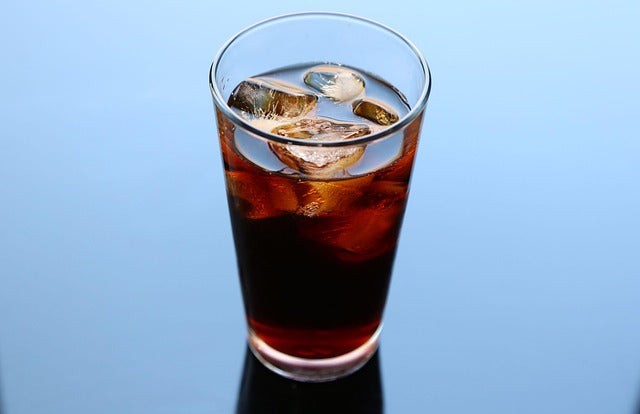
Key Takeaways

- Standard cold brew concentrate ratio: 1:4 coffee to water (1 oz coffee per 4 oz water)
- Standard ready-to-drink cold brew ratio: 1:8 coffee to water
- Most store-bought cold brew is concentrate, so dilute it 1:1 with water or milk before drinking
- Steep time: 12 to 16 hours at room temperature, or 18 to 24 hours in the refrigerator
- Grind size matters: use a coarse grind (similar to French press) to avoid bitterness
- Cold brew concentrate has roughly 1.5 to 2 times more caffeine per ounce than drip coffee, before you dilute it
- Air-roasted, medium-light roasts work especially well because their natural sweetness shines when served cold
Cold brew is one of the most forgiving brewing methods to learn, but the ratio is the one variable that beginners get wrong most often. Use too much coffee and it is so concentrated it is hard to drink. Use too little and it tastes like cold coffee water.
I am Nick Murphy, and my wife Rachel and I roast His Word Coffee in Vancouver, Washington. We roast every batch on a fluid-bed air roaster, and cold brew is one of the first things we test with a new coffee, because the cold cup hides nothing. This guide gives you the exact ratios for concentrate and ready-to-drink cold brew, a full ratio chart, and step-by-step instructions for making it at home.
The Standard Cold Brew Ratio
There are two ways to make cold brew: as a concentrate (strong, meant to be diluted) or ready-to-drink (diluted at brew time, drink straight).
Each has a different starting ratio:
| Brew Style | Coffee : Water | Example (1 cup water) | How to Serve |
|---|---|---|---|
| Concentrate | 1:4 | 2 oz coffee + 8 oz water | Dilute 1:1 before drinking |
| Ready-to-drink | 1:8 | 1 oz coffee + 8 oz water | Drink straight over ice |
| Strong concentrate | 1:3 | 2.5 oz coffee + 8 oz water | Use for cold brew espresso drinks |
| Mild/light brew | 1:10 | 0.8 oz coffee + 8 oz water | Smooth, lower-caffeine option |
Concentrate vs. Ready-to-Drink: Which Is Better?
Cold brew concentrate (1:4) is the professional standard. It is how most coffee shops and bottled cold brew brands make it. Advantages:
- Uses less storage space (smaller batch volume)
- Stays fresh longer, about 2 weeks in the refrigerator versus about 1 week for ready-to-drink
- More flexible: dilute with water, milk, oat milk, or add to recipes
- Better for iced lattes, since it does not get watered down as the ice melts
Ready-to-drink cold brew (1:8) is simpler. Brew it, strain it, pour it over ice. There is no dilution step. It is better if:
- You want a lower-caffeine option
- You are making it for guests who will drink it right away
- You prefer a simpler workflow
Cold Brew Ratio Chart by Batch Size

Use this chart to scale your brew for any batch size. Measurements in weight (grams) are more precise than volume, but volume measurements work well for home brewing.
| Batch Size (Water) | Coffee (1:4 Concentrate) | Coffee (1:8 Ready-to-Drink) | Yield After Straining |
|---|---|---|---|
| 2 cups (16 oz) | 4 oz / ~85g | 2 oz / ~56g | ~1.5 to 1.75 cups |
| 4 cups (32 oz) | 8 oz / ~170g | 4 oz / ~113g | ~3 to 3.5 cups |
| 8 cups (64 oz) | 16 oz / ~340g | 8 oz / ~226g | ~6 to 7 cups |
| 1 gallon (128 oz) | 32 oz / ~680g | 16 oz / ~453g | ~12 to 14 cups |
Note: Expect a 15 to 25% loss to grounds absorption. The coarser your grind, the less it absorbs. A 32-oz batch yields roughly 24 to 27 oz after straining.
Grind Size and Steep Time
Ratio is the most important variable, but grind size and steep time are what determine whether your cold brew tastes clean or bitter.
Grind size
Use a coarse grind, similar to what you would use for a French press. This is not optional. Fine or medium-fine grinds over-extract during the long cold steep, which produces harsh, bitter, or overly astringent results.
The reason is surface area. A coarse grind has less exposed surface, so the slow, cold water pulls flavor out gently over many hours. A fine grind exposes far more surface to that same long soak, and it keeps giving up bitter compounds long after the good flavor is gone. When we dial in a cold brew at the roastery, getting the grind right does more for the final cup than almost anything else.
If you are using a blade grinder instead of a burr grinder, pulse just enough to break up the beans. Do not grind to a powder. Blade grinders make inconsistent particles, which causes uneven extraction.
Steep time and temperature
| Method | Temperature | Steep Time | Notes |
|---|---|---|---|
| Room temperature | 68 to 72°F | 12 to 16 hours | Faster, slightly brighter flavor |
| Refrigerator | 34 to 40°F | 18 to 24 hours | Recommended, smoother and more controlled |
| Extended refrigerator | 34 to 40°F | 24 to 36 hours | Stronger and richer, still low bitterness |
Why Cold Brew Tastes Smoother
People often say cold brew tastes smoother and less sharp than hot coffee, and there is real chemistry behind that. Brewing with cold water pulls fewer of the bitter and acidic compounds out of the grounds than hot water does, because many of those compounds dissolve more readily at high temperatures. Research comparing cold brew and hot brew of the same beans has found measurable differences in their acid and antioxidant profiles, which lines up with what many people taste in the cup.
A couple of honest caveats. "Smoother" is mostly about flavor and perceived acidity, not a medical claim. Cold brew is not automatically low acid, and how a given coffee tastes depends a lot on the bean, the roast, and your ratio. If you need a genuinely low-acid coffee for a sensitive stomach, that is a separate question best answered by trying a few options and seeing what agrees with you. You can read one peer-reviewed comparison of cold brew and hot brew chemistry if you want the details.
How to Make Cold Brew at Home
You do not need special equipment. A mason jar and a fine-mesh strainer (or a paper coffee filter) is all you need.
-
Weigh or measure your coffee. For a 32-oz batch of concentrate: 8 oz (about 170g) of coarsely ground coffee. For ready-to-drink: 4 oz (about 113g). A 4-cup mason jar works well for this size.
-
Add room-temperature water. Pour 32 oz (4 cups) of filtered water over the grounds. Stir gently so all the grounds are saturated. Dry clumps on top will not extract evenly.
-
Cover and steep. Refrigerator method: cover loosely and steep 18 to 24 hours. Room-temperature method: cover and steep 12 to 16 hours, then move it to the fridge.
-
Strain. Pour through a fine-mesh strainer lined with a paper coffee filter into a clean jar. Do not press or squeeze the grounds, because that forces bitter compounds into your brew. Let gravity do the work.
-
Store and serve. Seal and refrigerate. Cold brew concentrate keeps for up to 2 weeks. Ready-to-drink keeps for about 1 week. Serve over ice, diluting concentrate 1:1 with water or milk.
For more brewing ratio guides, our French press ratio guide follows the same principles with a different method. The coarse-grind requirement is identical.
Best His Word Coffees for Cold Brew
Here is what we actually reach for when we make cold brew at the roastery. We roast each of these on our fluid-bed air roaster, which gives a clean, even development that we find translates well to the cold cup. The tasting notes below are what we observe in our own cupping.
- Ethiopia Sunrise is our top pick for cold brew. Roasted on the lighter side, it shows bright citrus and floral notes that stay crisp and sweet when cold.
- Colombia El Tiple is a balanced, approachable single origin. It makes a rounded cold brew with gentle sweetness and a soft, nutty finish that takes milk well.
- Costa Rica Tarrazú is a smooth dark roast with milk chocolate and caramel. We find it makes a rich, easy-drinking cold brew that is great over ice with a splash of cream.
- Guatemala Los Huipiles brings a bit more body and a chocolatey depth, which is nice if you like a fuller cold brew concentrate for lattes.
- Evening Grace Decaf is our sugarcane-process (EA) decaf. If you want cold brew you can sip in the evening, brew this one the same way. We have not had it lab tested for acidity, so we describe it as a caffeine-free option rather than a low-acid one.
Whichever you choose, fresh matters. We roast to order and print the roast date on every bag, and cold brew shows off that freshness as much as any brew method.
Troubleshooting Your Cold Brew
| Problem | Likely Cause | Fix |
|---|---|---|
| Too strong / syrupy | Forgot to dilute concentrate | Add equal parts water or milk |
| Too weak / watery | Ratio too low (1:10 or more) or under-steeped | Increase coffee dose or steep longer |
| Bitter / harsh | Grind too fine or over-steeped | Use a coarser grind; reduce steep time to 18 hours |
| Sour / under-extracted | Under-steeped or too cold | Extend steep to 24 hours; start with room-temp water |
| Gritty texture | Filter not fine enough | Double-filter through a paper coffee filter |
| Flat / no aroma | Stale coffee | Use freshly ground beans, since staleness is amplified cold |
Better Beans, Better Cold Brew
Cold brewing reveals what is actually in the cup, with no heat to mask it. Air-roasted specialty coffee gives you a naturally sweet, clean cold brew without the bitterness.
Shop Coffee BeansFrequently Asked Questions
What is the best cold brew coffee ratio?
The standard cold brew ratio is 1:4 (coffee to water) for concentrate, or 1:8 for ready-to-drink. The 1:4 concentrate ratio is the professional standard, so dilute it with equal parts water or milk before drinking. Start with 1:8 if you are new to cold brew and want a simpler process.
How much coffee do I need for 1 cup of cold brew?
For cold brew concentrate (1:4 ratio): use 2 oz (about 56g) of coarsely ground coffee per 8 oz (1 cup) of water. After steeping and straining, you will have about 6 to 7 oz of concentrate. Dilute it 1:1 with water or milk to make roughly 12 to 14 oz of finished cold brew.
How long should you steep cold brew?
18 to 24 hours in the refrigerator is the sweet spot. At room temperature, 12 to 16 hours is enough. Beyond 36 hours, even coarse-ground cold brew can develop bitter notes. If you want stronger flavor, increase your coffee dose rather than extending the steep time.
Does cold brew have more caffeine than regular coffee?
Cold brew concentrate has more caffeine per ounce than drip coffee, typically about 1.5 to 2 times higher. After you dilute the concentrate 1:1 before drinking, the caffeine per serving becomes roughly comparable to a strong cup of drip coffee. The high concentration is why undiluted concentrate tastes so intense.
What grind size is best for cold brew?
Coarse grind, similar to French press or sea salt texture. This is the most important variable after ratio. Fine or medium-fine grinds over-extract during the long cold steep, producing bitter, harsh cold brew regardless of your ratio or steep time. Use a burr grinder if possible for consistent particle size.
Can I use regular ground coffee for cold brew?
Pre-ground coffee is usually ground to a medium fineness designed for drip machines, which is too fine for cold brew. It will over-extract and produce bitter, harsh cold brew. If you must use pre-ground, steep for only 8 to 12 hours instead of the standard 18 to 24, and check it frequently.
How long does cold brew last in the refrigerator?
Cold brew concentrate keeps up to 2 weeks refrigerated in a sealed container. Ready-to-drink cold brew (already diluted) keeps about 1 week. The higher concentration of the 1:4 ratio holds up longer, which is another practical advantage of making concentrate over ready-to-drink.
What roast is best for cold brew?
Medium to medium-light roasts usually produce the best cold brew. Light roasts can taste sour or underdeveloped cold. Very dark roasts often taste flat or ashy cold, without the heat to bring out complexity. Air-roasted medium-light coffees work especially well, because their clean development and natural sweetness translate beautifully to cold brew.
Written by Nick Murphy, roaster at His Word Coffee, Vancouver, WA. Questions? Email info@hiswordcoffee.com or call 360-270-8106. Ratio recommendations are consistent with guidance from the Specialty Coffee Association (SCA). Steep times are based on standard commercial and home cold brew practices.

Leave a comment
This site is protected by hCaptcha and the hCaptcha Privacy Policy and Terms of Service apply.