
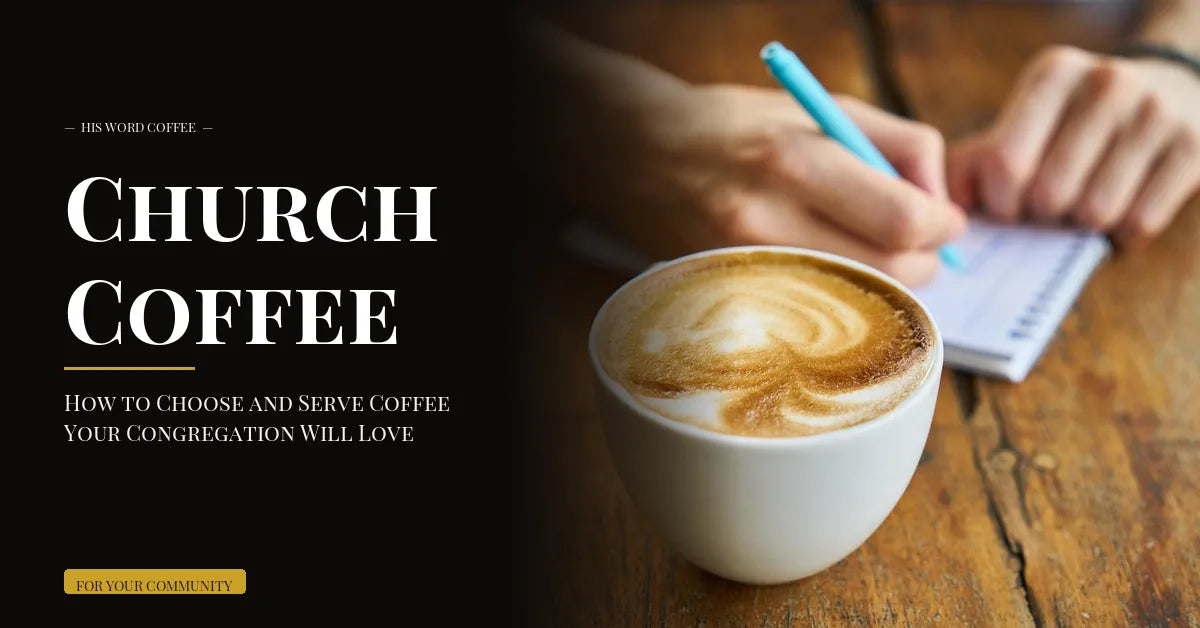
Church coffee has a reputation for being weak, stale, or burnt. It does not have to be. The difference between coffee people politely ignore and coffee they actually look forward to comes down to a few simple choices: fresher beans, a consistent brew, and a little care in how you serve it. This guide covers everything a church hospitality team needs to make that happen.
Why Church Coffee Has a Reputation (and How to Change It)
The reputation is real. Most church coffee tastes like it was brewed two hours ago from a can that sat on a shelf for six months. There are a few reasons for this:
- Pre-ground coffee sold in bulk is often months old before it reaches the pot
- Large-batch brewers keep coffee on a heating element too long, which burns it
- The ratio of grounds to water is usually off, producing a weak, watery brew
None of these problems are hard to fix. With a few changes, your congregation can have church coffee they genuinely look forward to, not just coffee they tolerate out of politeness.
What Makes Good Coffee for a Large Group
For a church setting, the goal is consistency and approachability. You are not trying to impress coffee enthusiasts. You are trying to serve something warm, smooth, and worth drinking to a wide range of people.
Three things matter most:
Freshness
Coffee starts to go stale within two to four weeks of roasting. Most grocery store bags are already months old by the time you open them. If you want better coffee for your congregation, start with beans that have a roast date on the bag and use them within a month of that date.
Grind and brew timing
Pre-ground coffee loses flavor fast. If your church can grind right before brewing, you will notice a clear difference. A simple commercial burr grinder costs less than a hundred dollars and lasts for years in a weekly use setting.
The right ratio
A standard starting point is two tablespoons of ground coffee per six ounces of water. Most church brewers use significantly less than this. Getting the ratio right is the easiest, cheapest improvement you can make to your church coffee hour.
Choosing the Best Coffee for Churches
Not every coffee works well for a congregation. Here is what to look for when buying coffee for your church:
Medium roast
A medium roast is the safest choice for a large, mixed group. It is approachable without being flat, and it tastes good whether someone drinks it black or adds cream and sugar. Dark roasts can taste harsh or bitter to some people. Very light roasts tend to be polarizing. Medium is the middle ground that works for almost everyone.
Low acid
Many congregants, especially older members, avoid coffee because it upsets their stomach. A naturally low-acid (research published in PubMed) coffee handles this without requiring a separate pot. Our Haiti Hope Rising is a good example: smooth, gentle on sensitive stomachs, and easy to enjoy without any modifications.
A recognizable origin
Colombian and Ethiopian coffees are the most widely known and consistently enjoyed. A single-origin coffee from a quality small-batch roaster will be noticeably better than a generic pre-ground blend. You do not need to explain the origin to your congregation. It will simply taste better.
For churches looking for a reliable weekly option, our Breakfast Blend is smooth and balanced, designed specifically for consistent brewing and easy drinking. It works well in standard church brewing equipment and pleases a wide range of palates.
How Much Coffee to Brew for Your Congregation
Plan for about 60 percent of your attendance to take a cup at coffee hour. Not everyone drinks coffee, and some people only take one.
| Attendance | Expected coffee drinkers | Ground coffee needed |
|---|---|---|
| 50 people | ~30 cups | ~3/4 lb (340g) |
| 100 people | ~60 cups | ~1.25 lb (570g) |
| 200 people | ~120 cups | ~2.5 lb (1.1 kg) |
| 300 people | ~180 cups | ~3.75 lb (1.7 kg) |
These are starting estimates. After a few Sundays you will have a better sense of your congregation's habits.
Equipment for Serving Church Coffee at Scale
The equipment you need depends on your congregation size and budget.
For congregations under 100
A quality commercial drip brewer, like the Bunn NHBX or a Bonavita commercial model, handles 12-cup batches efficiently. Plan to brew two or three batches back to back so you have enough when people arrive after service.

For congregations between 100 and 300
A commercial urn brewer (the Bunn VPR series is a common choice) brews 3 to 4 gallons per hour and keeps coffee warm in insulated airpots. Airpots are significantly better than glass carafes because they keep coffee hot without burning it on a heating element. The difference in taste is noticeable, especially after the first 30 minutes.
For congregations over 300
You will likely need two commercial urns running simultaneously, or a combination of an urn and a batch brewer. At this scale, having a dedicated volunteer manage the coffee station makes a meaningful difference in quality and consistency.
Keep it clean
Whatever equipment you use, clean it every week. Coffee oils build up in brewers and make everything taste bitter. A simple rinse with white vinegar every month prevents most of this. A dirty brewer is one of the most common reasons church coffee tastes off, even when the beans are good.
Church Coffee Hour Tips That Make a Difference
Small details change the experience significantly:
- Brew in smaller batches more often. One large batch that sits for two hours is always worse than two smaller batches brewed fresh. Coffee loses quality quickly once brewed, especially if it stays on a heating element.
- Offer both regular and decaf. A second pot or airpot labeled decaf is appreciated by older members, people with health conditions, and anyone attending an evening service.
- Label what you are serving. A simple card with the coffee name, origin, or roast date gives people something to talk about and signals that someone put care into the choice.
- Provide a few options at the station. Half-and-half, whole milk, a non-dairy option, and a couple of sweeteners cover most preferences without overwhelming the table.
- Use smaller cups. Eight-ounce cups encourage people to take a fresh cup rather than carry around a lukewarm one. It also makes your supply go further.
Fresh-Roasted Coffee vs. Store-Bought: What Your Congregation Will Notice
Most church coffee comes from a grocery store shelf or a warehouse club. There is nothing wrong with that as a starting point, but there is a clear and noticeable difference when you switch to fresh-roasted coffee from a small-batch roaster.
The key difference is time. Coffee is best within two to four weeks of roasting. Most grocery store coffee does not show a roast date, which usually means it was roasted months before you bought it. The flavor compounds that make coffee taste good break down over time. By the time you brew it, a lot of what should taste bright and clean instead tastes flat or bitter.
Fresh-roasted coffee tastes cleaner and more distinct. The same brewing method, the same ratio, and the same equipment produces a noticeably better cup. For a weekly church setting, ordering a two to four pound bag every three to four weeks keeps you consistently in the fresh window.
You can browse our full selection to find an option that fits your congregation. If you are regularly buying for a large group, ask us about wholesale pricing. We work with churches and offer straightforward pricing for recurring orders.
Ordering Coffee for Your Church: Subscriptions and Wholesale
If you are serving coffee every Sunday, a subscription or wholesale account makes the logistics easier. You get fresh beans delivered on a schedule you set, the price per bag is lower, and you never have to remember to reorder before Sunday.
For churches ordering regularly, our wholesale program offers per-account pricing and a dedicated discount code. It is designed for exactly this kind of consistent, recurring use. Setup takes a few minutes and the first order ships with your next batch.
Key Takeaways
- Church coffee fails mostly because of stale beans and a bad ratio, not bad equipment
- A medium roast from a fresh-roasted source solves most problems without any other changes
- Plan for 60 percent of attendance to take a cup, roughly 1.25 lbs of ground coffee per 100 people
- Insulated airpots keep coffee better than glass carafes on heating elements
- Offering decaf and clear labeling are low-effort ways to improve your coffee hour
- Fresh-roasted coffee ordered every three to four weeks keeps quality consistently high
Frequently Asked Questions About Church Coffee
What is the best coffee for a church?
A medium roast from a small-batch roaster with a recent roast date is the best starting point. It is approachable for most people, works well black or with cream and sugar, and brews consistently with standard equipment. Look for bags with a roast date and use them within four weeks of that date.
How much coffee do I need for 100 people at church?
Plan for about 60 cups, which requires roughly 1.25 pounds (570 grams) of ground coffee. This assumes a standard 8-ounce cup and a 2-tablespoon-per-6-ounce ratio. Adjust based on your congregation after a few Sundays.
What coffee maker is best for a church?
For small congregations (under 100), a commercial drip brewer like the Bunn NHBX handles the volume. For larger groups, an insulated airpot urn keeps coffee hot without burning it. Airpots are the single biggest quality upgrade most churches can make without changing the coffee itself.
Should we offer decaf at church?
Yes. Decaf is appreciated by older members, people with health conditions, and anyone attending an evening service. A second pot or labeled airpot handles this with minimal extra effort and makes your hospitality feel more complete.
How do I keep church coffee hot without it burning?
Use insulated airpots instead of glass carafes on heating elements. An airpot keeps coffee at temperature for 2 to 3 hours without any additional heat, so the coffee does not continue to cook after brewing. It is the most practical improvement for most church hospitality setups.
Can churches get wholesale pricing on coffee?
Yes. We offer wholesale pricing for churches and community organizations. Visit our wholesale page to see current pricing or reach out directly. Orders are fulfilled fresh-roasted and shipped on a schedule that fits your Sunday needs.
Get fresh coffee guides weekly.
Join our newsletter for brewing tips, origin stories, and 10% off your first order.

Leave a comment
This site is protected by hCaptcha and the hCaptcha Privacy Policy and Terms of Service apply.