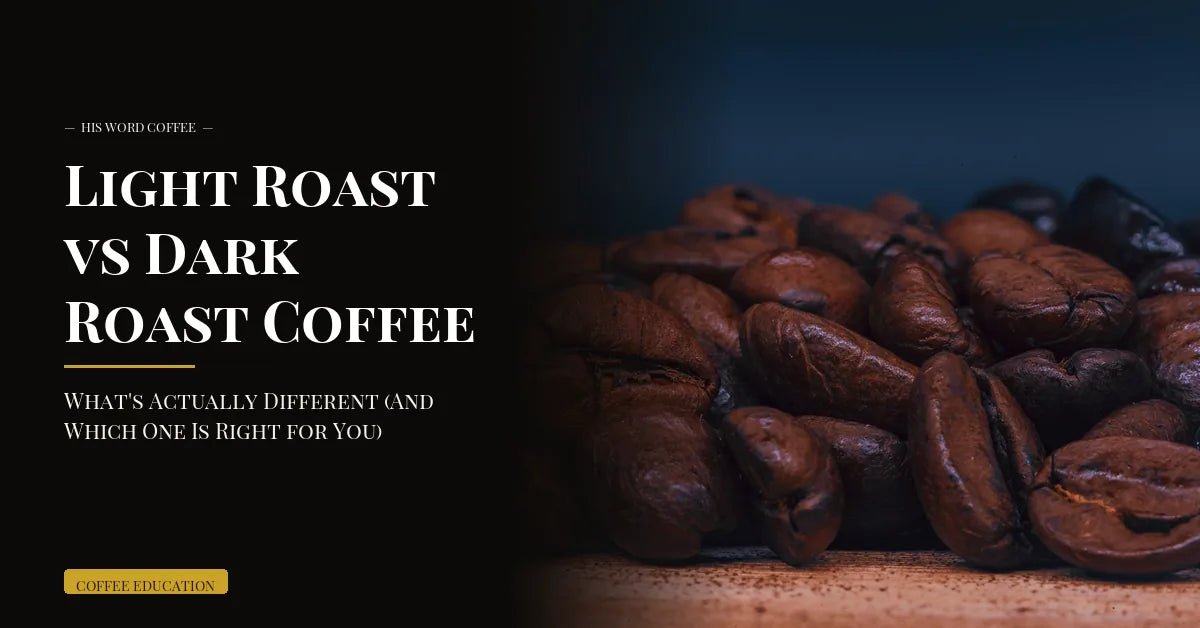
Light roast has more caffeine, not less. That's the first thing most people get wrong. Dark roast is bolder, smoother, and less acidic, but it's not "stronger" in the caffeine sense. Medium roast sits in between and honestly works for most people. Which one is right for you comes down to how you drink your coffee and what flavors you actually enjoy.
Key Takeaways

- Caffeine myth debunked: Light roast has slightly more caffeine than dark roast by volume. Roasting doesn't destroy caffeine, but it does reduce bean density.
- Flavor, not strength: "Strong" coffee is about concentration (how much coffee you use), not roast level. Dark roast just tastes bolder.
- Light roast flavor: Bright, fruity, floral, and acidic. The origin character of the bean comes through clearly.
- Dark roast flavor: Bold, smoky, chocolatey, and bitter. The roast itself dominates rather than the bean's origin.
- Acidity: Light roast is more acidic. Dark roast is easier on sensitive stomachs. Air roasting reduces acidity across all roast levels.
- Roasting temperatures: Light roast stops around 356-400F, dark roast pushes past 430F, often to second crack or beyond.
- Best starting point: Medium roast is the most forgiving and crowd-pleasing option if you're not sure where to start.
In This Article
What Roast Level Actually Means
Roasting is heat applied over time. Green coffee beans go into a roaster and come out as the brown, aromatic beans you grind at home. The difference between a light roast and a dark roast is how long the beans stay in the heat and how high that heat gets.
Light roasts typically reach internal temperatures around 356 to 400 degrees Fahrenheit. The roaster pulls the beans at or just after "first crack," which is the audible popping sound caused by steam pressure building inside the bean. At this stage, the bean has lost some moisture but retains a lot of its original character.
Dark roasts push well past 430 degrees, often reaching second crack and beyond. By this point, a significant amount of moisture and some of the original compounds in the bean have burned off. The oils migrate to the surface, giving dark roast beans that shiny appearance you've probably noticed.
Medium roast sits between those two points. It's past first crack but hasn't hit the deep, charred territory of a full dark roast. Most commercial blends land here because it's approachable and consistent across different beans.
One quick note: the names "light," "medium," and "dark" aren't standardized across the industry. One roaster's "medium" might be another's "medium-dark." The best way to know what you're getting is to taste it, or to look for descriptions like flavor notes, roast temperature, or first vs second crack.
How Light vs Dark Roast Tastes Different

This is where it gets interesting. Roast level is one of the biggest factors in how your coffee tastes, right up there with brewing method and grind size.
Light Roast: The Bean Does the Talking
With light roast, you're tasting the coffee bean's origin more than anything else. The flavors that develop naturally in the bean based on altitude, soil, and processing come through clearly. That's why light roasts often have tasting notes like blueberry, jasmine, citrus, or stone fruit. It sounds fancy, but it's just what happens when you don't roast out those delicate compounds.
Light roast also has higher acidity. Not acidity in a bad way, but a brightness similar to lemonade or a crisp apple. Some people love this. Others find it too sharp, especially on an empty stomach.
Dark Roast: The Roast Does the Talking
Dark roast is a different experience. The heat transforms the bean's original flavors into something new: chocolate, caramel, nuts, smoke, and bitterness. The origin character mostly disappears. A dark roast from Ethiopia and a dark roast from Colombia might taste more similar to each other than they do to their respective light roast versions.
The bitterness you get from dark roast comes from compounds created during extended roasting, not from caffeine. It's also smoother in texture because the acids that cause that bright, sharp taste have broken down.
Medium Roast: The Best of Both
Medium roast balances origin flavor and roast flavor. You get some brightness, some body, some complexity. It's the most forgiving roast for different brewing methods and the easiest to enjoy black or with milk. If you're new to specialty coffee, medium roast is where most people start and a lot of people stay.
Light Roast
Bright, fruity, floral, and acidic. Origin flavors shine. Higher acidity. Lighter body. Best brewed with pour-over, drip, or Aeropress at slightly lower temperatures.
Dark Roast
Bold, bitter, smoky, and chocolatey. Roast flavors dominate. Lower acidity. Fuller body with a heavier mouthfeel. Handles milk and cream well. Popular for espresso.
Want to go deeper on how your brewing method affects flavor? Our coffee grind size guide walks through how grind, extraction, and brewing method interact with roast level.
The Caffeine Myth (Light Roast Is Actually Stronger)
You've probably heard that dark roast is stronger. It tastes stronger, feels stronger, and seems like it should have more caffeine. It doesn't.
Caffeine is a remarkably stable compound. Roasting does not destroy it in any meaningful amount. What roasting does do is reduce the bean's density. As moisture burns off during extended roasting, dark roast beans become lighter and slightly larger than light roast beans. That means when you measure coffee by volume (like a scoop), you're fitting fewer dark roast bean molecules into the same space.
By weight, light and dark roast coffee have nearly identical caffeine content. By volume (which is how most people brew), light roast edges out slightly ahead because the denser beans pack more into each scoop.
The difference is small enough that you won't notice it in a normal cup. But if someone tells you to drink dark roast for the caffeine kick, they've got it backwards.
The honest answer on caffeine
If caffeine is your only goal, roast level barely matters. The amount of coffee you use and how you brew it have far more impact on how caffeinated your cup ends up. Choose the roast you actually enjoy and brew it consistently. That's the better path to a reliable morning cup.
Light Roast vs Dark Roast Acidity (And Who Should Care)
If you've ever had coffee that upset your stomach or gave you heartburn, acidity is probably the culprit. Light roast has more of it. Dark roast has less because extended heat breaks down the chlorogenic acids and other compounds that create that sharp, bright flavor.
For most people, acidity isn't a problem. It's part of what makes a good light roast so lively and interesting. But if you have acid reflux, a sensitive stomach, or you just notice that coffee bothers you on an empty stomach, the roast level matters.
There's another factor beyond roast level: how the coffee is roasted. Drum roasting is the traditional method, but air roasting uses a fluidized bed of hot air that circulates around the beans more evenly. Air roasting tends to reduce acidity across all roast levels compared to drum roasting, not just dark roasts.
All of our coffee at His Word Coffee is air-roasted. If you've had trouble with coffee bothering your stomach in the past, that's worth knowing. We've written more about it in our post on air-roasted coffee and stomach benefits.
Which Roast Should You Choose?
The honest answer is: start with medium, then work outward from there. But here's a more specific framework depending on how you drink your coffee.
Choose Light Roast If...
- You drink your coffee black and want to taste what makes each origin unique
- You enjoy tea, wine, or fruity flavors and want that complexity in your cup
- You're exploring specialty coffee and want to taste what the fuss is about
- You brew with a pour-over or drip machine where lighter roasts shine
Breakfast Blend (Light-Medium)
Sweet and approachable with a clean finish. A great entry point if you're curious about lighter roasts but don't want anything too intense. Smooth enough to drink black, bright enough to be interesting.
Choose Medium Roast If...
- You want a reliable daily driver that works black or with a little cream
- You're buying for a household with mixed preferences
- You like balanced coffee without strong bitterness or strong fruit notes
- You're not sure where to start
Colombia El Tiple (Medium)
Chocolate and caramel with a smooth, clean body. One of our most popular bags for a reason. Works beautifully black or with milk.
House Blend (Medium)
Smooth and versatile. This is the everyday coffee that works no matter what mood you're in or what brewing method you're using. A consistent crowd-pleaser.
Choose Dark Roast If...
- You drink your coffee with milk, cream, or a milk alternative and want the coffee to hold its own
- You make espresso-based drinks at home
- You want something bold that cuts through without tasting sharp or acidic
- You've always loved that classic, diner-style coffee flavor
Costa Rica Tarrazu (Dark)
Bold and earthy with a heavy body. This is a proper dark roast, roasted to bring out depth and richness without going bitter or burnt. Great with a splash of cream.
Guatemala Los Huipiles (Medium-Dark)
Rich and full-bodied with a smooth finish. If you want something in between, this lands in that sweet spot between medium and full dark. Solid for espresso or drip.
Not sure which direction you lean? Browse our full coffee bean collection and use the roast level tags to filter by what sounds appealing. Every bag typically ship in 1, 3 business days.
Find Your Roast, Delivered Fresh Every Month
We offer light-medium through dark roasts, all air-roasted to order within 1-3 business days of shipping. Try a subscription and get 10% off every bag.
Start Your SubscriptionFrequently Asked Questions
Is light roast stronger than dark roast?
It depends on what you mean by "stronger." If you mean caffeine, yes, light roast has slightly more caffeine by volume because the denser beans pack more into each scoop. If you mean flavor intensity, no. Dark roast has a bolder, more assertive taste. The word "strong" gets used in two different ways when talking about coffee, which is where most of the confusion comes from.
Which roast has more caffeine?
Light roast has marginally more caffeine by volume (measured by scoop). By weight, they're nearly identical. Either way, the difference is small enough that you won't feel it. The amount of coffee you use and your brew ratio matter far more than roast level For caffeine content.
Why does dark roast taste bitter?
The bitterness in dark roast comes from compounds that form during extended high-heat roasting, not from caffeine. When coffee beans are roasted past a certain temperature, some sugars and acids break down and transform into bitter compounds. A well-roasted dark coffee should have depth and richness, not harsh bitterness. If your dark roast tastes burnt or unpleasant, it may have been over-roasted or brewed with water that was too hot.
What is medium roast?
Medium roast is coffee that's been roasted past first crack but stopped before reaching the higher temperatures of a full dark roast. It balances the origin flavors of the bean with some of the roast-developed flavors like caramel and nut. Medium roast is the most popular category in the U.S. because it works well across brewing methods and palates.
Which roast is better for sensitive stomachs?
Dark roast is generally easier on sensitive stomachs because the extended roasting breaks down more of the acidic compounds. Light roast has higher acidity, which can cause issues for people with acid reflux or stomach sensitivity. That said, the roasting method matters too. Air-roasted coffee tends to be lower in acidity than drum-roasted coffee at any roast level. You can read more about this in our post on air-roasted coffee and stomach benefits.
How do I know which roast to buy?
Start by asking yourself two questions: Do you drink your coffee black, or do you add milk and cream? And do you prefer bright and fruity flavors, or bold and chocolatey ones? If you drink it black and want complexity, try a light or light-medium roast like our Breakfast Blend. If you add dairy and want something bold, try a dark roast like our Costa Rica Tarrazu. If you're still not sure, a medium roast like the Colombia El Tiple is a safe and satisfying place to start.
Sources: Specialty Coffee Association, Brewing Best PracticesExplore More.

Leave a comment
This site is protected by hCaptcha and the hCaptcha Privacy Policy and Terms of Service apply.