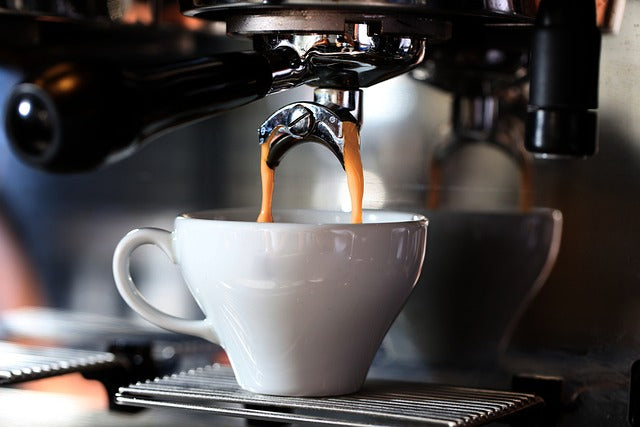
There's a moment, somewhere between a straight espresso and a full latte, where coffee finds its balance. That's the cortado. It's a small drink with a confident character, and once you understand what makes it work, you'll see why baristas and home brewers reach for it again and again.
The cortado has been quietly winning over coffee drinkers for decades. It's not flashy, it doesn't need flavored syrups to impress, and it doesn't demand a long brewing ritual. What it does require is good espresso and a willingness to let coffee speak for itself.
I'm Nick Murphy, and my wife Rachel and I roast the coffee here at His Word Coffee. The cortado is one of the drinks we pull most often when we want to taste what a coffee is really doing, because the milk is light enough that the espresso still carries the cup. In this guide, we'll walk you through what a cortado actually is, how it compares to the drinks you already love, how to make one at home, and why the coffee you start with matters more than any technique.
Key Takeaways

- Even 1:1 Ratio: A cortado is equal parts espresso and warm milk, typically 2oz espresso and 2oz milk, making a 4oz drink total.
- Milk's Role: The warm milk softens the espresso's sharper, more acidic edges without masking the coffee flavor, which is exactly what “cortado” (Spanish for “cut”) means.
- Not a Latte: A latte uses 6-8oz of milk, diluting the espresso significantly. A cortado keeps the coffee front and center with just enough milk to smooth the edges.
- Caffeine: A standard cortado made with two espresso shots contains roughly 120-130mg of caffeine, about the same as a medium drip coffee.
- Calories: Made with unsweetened whole milk, a cortado runs about 40-45 calories. Oat milk lands a little higher, closer to 50-55 calories, while keeping a creamy texture.
- Best Beans: Medium to medium-dark single-origin beans work best, where the espresso has enough body and sweetness to shine through the milk.
- No Foam: Unlike a cappuccino, a cortado uses lightly textured microfoam milk, not stiff foam. The goal is silky, not fluffy.
In This Guide
What Is a Cortado?
A cortado is a coffee drink made with equal parts espresso and steamed milk. The standard build is 2oz of espresso pulled straight into a small glass, followed by 2oz of warm, lightly textured milk. The result is a 4oz drink that's stronger and more concentrated than a latte, but far smoother than a straight shot.
The name comes from the Spanish verb cortar, meaning “to cut.” The milk cuts through the espresso's acidity and sharpness, softening the edges without overpowering the coffee itself. That's the whole idea: not hiding the espresso, just rounding it out.
What you're left with is a drink that tastes unmistakably like coffee. You can pick up the origin notes, the roast character, the natural sweetness of well-pulled espresso. The milk adds body and warmth, but it doesn't take over the conversation. When we cup a new lot in our roastery, a cortado is often the first milk drink we make with it, because if a coffee tastes good cut with a little milk, it usually tastes good everywhere else too.
What Glass Does a Cortado Come In?

Traditionally, a cortado is served in a small 4-5oz glass, often called a “Gibraltar” glass after the Libbey Gibraltar tumbler. The clear glass lets you see the ratio and the color of the drink, which matters more than it sounds. A well-built cortado has a warm caramel color all the way through, with no harsh line between coffee and milk.
Where the Cortado Comes From
The cortado has deep roots in Spanish coffee culture, ordered for generations in coffee bars across Spain and Portugal. It's the kind of drink rarely written on a menu because everyone already knows what it is.
In Spain, it's simply called a cortado. In Portugal, you'll find closely related drinks such as the “pingo” (a shot of espresso with a drop of milk) and the larger “meia de leite” (half coffee, half milk). The concept traveled with Spanish and Portuguese communities, and by the time specialty coffee shops in the United States started paying attention, the cortado had already earned its reputation abroad.
The Gibraltar variation became popular in San Francisco in the early 2000s, often credited to Blue Bottle Coffee. It was essentially the same drink served in a specific Libbey Gibraltar glass, and the name stuck in West Coast coffee culture. Today, cortado and Gibraltar are used interchangeably at many American coffee shops.
“Let your moderation be known unto all men.”
Philippians 4:5Cortado vs. Latte, Cappuccino, and Flat White
The espresso milk drink family can feel confusing until you understand the one variable that separates them all: the ratio of espresso to milk. Here's how the cortado stacks up against the drinks you probably already order. These are typical specialty-cafe builds; sizes vary from shop to shop.
| Drink | Espresso | Milk | Total Size | Milk Texture | Coffee Intensity |
|---|---|---|---|---|---|
| Cortado | 2oz (2 shots) | 2oz | 4oz | Light microfoam | High |
| Latte | 2oz (2 shots) | 6-8oz | 8-12oz | Silky microfoam | Medium-low |
| Cappuccino | 2oz (2 shots) | 2oz steamed + 2oz foam | 6oz | Stiff dry foam | Medium-high |
| Flat White | 2oz (2 shots) | 3-4oz | 5-6oz | Velvety microfoam | High |
| Macchiato | 2oz (2 shots) | 1-2 tsp | 2-2.5oz | Dollop of foam | Very high |
The cortado and the flat white are the closest relatives in this family. The main difference is size and milk ratio: a flat white typically uses slightly more milk (3-4oz) and a higher milk-to-espresso ratio than a cortado's even 1:1 build.
The cappuccino is a different drink entirely. While it uses roughly the same amount of liquid as a cortado, the traditional cappuccino is built on stiff, dry foam rather than silky milk. The foam creates a different mouthfeel and sits on top of the espresso instead of blending into it.
Already love lattes? The cortado is worth trying as a mid-morning drink when you want coffee flavor without the volume. Many latte drinkers find they prefer cortados once they start with espresso that tastes good on its own and doesn't need a tall glass of milk to be pleasant.
The Ratio: Getting the Balance Right
The cortado ratio is deceptively simple: 1 part espresso, 1 part milk. In practice, that usually means 2oz espresso and 2oz milk. Some baristas and home brewers play with 1oz espresso and 1oz milk for a smaller, more intense version, but the 2oz-to-2oz build is the standard.
What matters as much as the ratio is the temperature of the milk. We aim for around 140-145 degrees F (60-63 degrees C), which is warm enough to blend smoothly with the espresso but cool enough that you're not scalding off the natural sweetness of the milk. Once milk pushes much past 160 degrees F it starts to taste flat and a little cooked, which works against everything a cortado is trying to do.
The milk texture should be lightly steamed microfoam, meaning the milk has been stretched just enough to fold in a little air and create a smooth, slightly glossy consistency. You don't want dry, stiff cappuccino foam. You want milk that pours like a gentle wave and settles into the espresso instead of floating on top.
No Espresso Machine? Use a Moka Pot.
A Moka pot brews concentrated coffee that's closer to espresso than regular drip and makes an excellent base for a cortado. Use the first, most concentrated pour as your espresso base, then add equal parts warmed milk. It won't have true crema, but the balance still works.
How to Make a Cortado at Home
Making a cortado at home requires an espresso machine and a way to steam or heat milk. Here's the process we use in our own kitchen, and what actually matters at each step.
What You Need
- Espresso machine (or Moka pot)
- Milk frother, steam wand, or small saucepan
- A 4-5oz glass or small cup
- Freshly ground coffee, fine espresso grind
- Whole milk, oat milk, or your preferred milk (about 2oz)
Step-by-Step Method
- Grind fresh. Grind 18-20g of beans at a fine espresso setting right before brewing. Freshly ground beans make a noticeable difference in espresso flavor.
- Pull your espresso. Extract about 2oz (roughly 60ml) of espresso into your serving glass. A well-pulled double shot usually runs about 25-30 seconds and produces a rich amber crema on top. Treat the timing as a guide, not a rule; taste is the real test.
- Steam your milk. Steam or heat 2oz of milk to 140-145 degrees F. Keep the steam wand tip just below the surface to create light microfoam rather than large bubbles.
- Pour and serve. Pour the steamed milk directly over the espresso in one smooth motion. Serve right away while the crema is still intact.
The cortado is not a complicated drink to make, but it rewards good ingredients and a little attention. If your espresso is sour or bitter on its own, the milk won't fix it. Start with beans you enjoy as straight espresso. Our fresh-roasted coffee includes several single-origins that pull well as espresso if you're looking for a starting point.
Milk alternatives work well in cortados. Oat milk is our first recommendation for non-dairy cortados. It steams well, has a natural sweetness, and doesn't overpower the espresso. Almond milk tends to separate more easily and has a thinner body, so it can leave the drink looking patchy.
Caffeine, Calories, and Nutrition
A standard cortado made with two shots of espresso contains roughly 120-130mg of caffeine. That's consistent with most double-shot espresso drinks and roughly equivalent to a medium drip coffee. For context, the FDA notes that most healthy adults can have up to about 400mg of caffeine a day without expecting harmful effects, though everyone's tolerance is different.
If your cortado is made with a single shot, expect roughly 60-65mg of caffeine, about half a cup of coffee. Many Italian-style cortados are built on a single ristretto shot, which is a shorter, more concentrated pull. Caffeine numbers always vary with the bean, the roast, the grind, and the dose, so treat these as good estimates rather than exact figures.
Calorie Count by Milk Type
The figures below are for the roughly 2oz of milk in a cortado, based on standard nutrition labels. Brands vary, so check your carton if you're counting closely.
| Milk Type | Calories (2oz) | Protein | Notes |
|---|---|---|---|
| Whole Milk | ~37 cal | 2g | Richest texture, best microfoam Our Pick |
| 2% Milk | ~30 cal | 2g | Slightly less body than whole milk |
| Oat Milk | ~45-50 cal | 0.5g | Best non-dairy option for cortados |
| Almond Milk | ~15-20 cal | 0.5g | Thin body, separates more easily |
| Coconut Milk | ~25-30 cal | 0g | Adds coconut flavor; a stylistic choice |
The espresso itself adds almost no calories (roughly 2-5 calories per shot). So an unsweetened whole-milk cortado runs about 40-45 calories total, and an oat-milk version lands closer to 50-55. A standard 12oz latte with whole milk, by comparison, runs around 150-180 calories, mostly because it holds three to four times as much milk.
Cortado and Acid Sensitivity
If you find straight espresso a little sharp but you love coffee flavor, a cortado can be a good middle ground. Adding milk dilutes the cup and raises its pH slightly, so many people find a milk drink gentler than a straight shot. If acidity still bothers you, our guide to low-acid coffee walks through which roast profiles and origins tend to taste smoother, and points you toward beans worth trying.
Choosing the Right Coffee for Your Cortado
The cortado's 1:1 ratio means the espresso carries the drink. You'll taste the coffee more directly here than in a latte, which means the quality and character of your beans matters more, not less.
We reach for medium to medium-dark roasts for cortados, where the espresso has enough body and sweetness to stand up to the milk. From our own lineup, a few coffees we pull often as cortados:
- Colombia El Tiple is our go-to cortado base. In our cupping it leans toward chocolate and brown sugar with a round body, and that sweetness reads clearly through a little milk.
- Guatemala Los Huipiles brings a fuller, cocoa-forward cup that holds up well in milk drinks.
- Costa Rica Tarrazú is a touch brighter and cleaner if you like a cortado with more sparkle.
- If you want a single coffee that just works every morning, our House Blend is built to be forgiving as espresso and friendly with milk.
If you prefer to drink your cortado in the evening, our Evening Grace Decaf is a Mexican EA (ethyl acetate) decaf with a smooth, sweet cup character. It pulls a surprisingly full shot for a decaf, so a decaf cortado actually tastes like a cortado.
Air roasting matters for espresso. We roast our beans on a fluid-bed air roaster, where the beans tumble on a column of hot air instead of resting against hot metal. In our experience this gives us a clean, even roast with less of the scorched bitterness that can creep into espresso, which helps a cortado stay smooth all the way to the bottom of the glass.
Blends designed for espresso are another solid choice. Our coffee blends are roasted with everyday drip and milk drinks in mind, so they make an easy, dependable cortado. Whatever beans you choose, grind fresh and grind to order. Coffee gives up much of its aroma within minutes of grinding, which is one reason we roast in small batches and ship the same week.
Start with Coffee Worth Tasting
The cortado is an honest drink. It shows you exactly what your espresso can do. We roast every batch fresh and ship the same week.
Shop Fresh-Roasted CoffeeA cortado is a coffee drink made with equal parts espresso and warm milk, traditionally 2oz of espresso and 2oz of lightly steamed milk. The name comes from the Spanish word for “cut,” referring to how the milk cuts through the espresso's sharpness. It's smaller and more concentrated than a latte, but smoother than a straight espresso shot.
The main difference is the milk-to-espresso ratio. A cortado uses a 1:1 ratio (equal parts espresso and milk), making a 4oz drink. A latte uses three to four times more milk, typically 6-8oz of milk to 2oz of espresso, making an 8-12oz drink. Cortados keep the espresso front and center.
A standard cortado made with two shots of espresso contains approximately 120-130mg of caffeine, roughly the same as a 12oz cup of drip coffee. A single-shot cortado contains about 60-65mg. Exact amounts vary with the bean, roast, and dose.
Yes. A Moka pot produces concentrated, espresso-like coffee that works well in a cortado. Use the first, most concentrated portion of the brew and combine it with equal parts warmed milk. A French press or AeroPress with a fine grind can also work in a pinch, though the texture will be different.
Nearly identical. A Gibraltar is a cortado served in a specific Libbey Gibraltar glass, a style often credited to Blue Bottle Coffee in San Francisco. The drink itself is the same, though some baristas make a Gibraltar slightly larger than a traditional Spanish cortado. The names are used interchangeably at most coffee shops today.
Whole milk produces the richest texture and the best microfoam for a cortado. For non-dairy options, oat milk is the top choice because it steams well, has a natural sweetness that complements espresso, and keeps a creamy body similar to whole milk.
An unsweetened cortado made with whole milk contains roughly 40-45 calories. Made with oat milk, it's closer to 50-55 calories. The espresso itself contributes only 2-5 calories, which makes the cortado one of the lower-calorie espresso milk drinks.
Medium to medium-dark roast beans with good natural sweetness and body produce excellent cortados. Colombian, Guatemalan, and Costa Rican origins are popular choices. At His Word Coffee we most often pull our Colombia El Tiple and House Blend as cortados, since both stay sweet and clean as espresso and read clearly through a little milk.
Sources: FDA: How Much Caffeine Is Too Much?. Specialty Coffee Association: Protocols and Best Practices. PMC: Coffee Consumption and Gastrointestinal Health.

Leave a comment
This site is protected by hCaptcha and the hCaptcha Privacy Policy and Terms of Service apply.