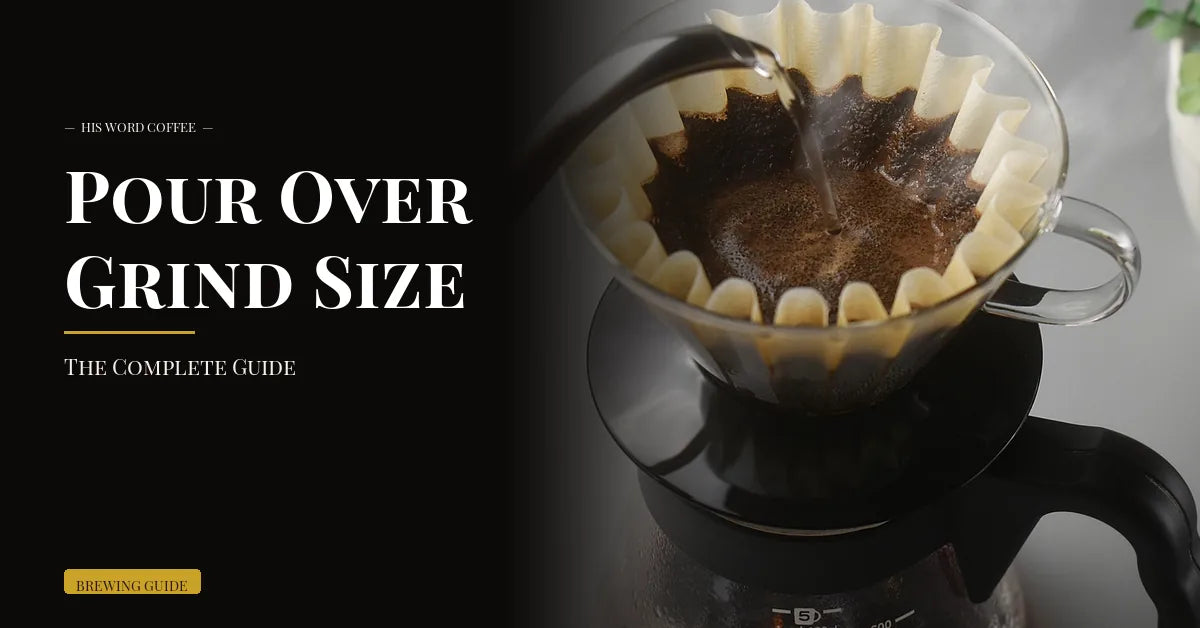
Pour over grind size should be medium fine, with particles that feel like fine sand or baker's sugar. The right setting on a burr grinder typically falls in the middle of the dial. A V60 brewing in three minutes to three and a half minutes is the target you want to dial toward.
Brewing pour-over? This method is great for coffees with clarity and sweetness. Colombia El Tiple is balanced with floral and chocolate notes; Costa Rica Tarrazú leans fruit-forward and sweet. Browse fresh-roasted beans.
Why grind size makes or breaks a pour over
Pour over is a percolation brewer. Water passes through a bed of grounds one time, drains through a paper filter, and ends up in your cup. Because the contact time is short (only two to four minutes), the grind has to match. Too coarse, and water rushes through before it can pull flavor out of the beans, which gives you a sour, thin, weak cup. Too fine, and the bed clogs, water sits on top of the grounds, and you end up with a bitter, over extracted cup that takes five or six minutes to finish dripping. The right grind keeps the water moving steadily through the bed and finishes the brew in the three to three and a half minute window. That timing is what separates a pour over that tastes balanced and sweet from one that tastes muddy or hollow.
What medium fine looks and feels like
Pinch a small amount of correctly ground pour over coffee between your thumb and forefinger. It should feel like fine beach sand or granulated sugar. The Specialty Coffee Association describes pour over grind as roughly 0.75 millimeter particles, finer than drip but coarser than espresso (source: SCA grind guidance).
If your grind feels like table salt, you are close but on the coarse side. If it feels like flour or powdered sugar, you have gone too fine and the bed will clog. The visual test: hold a few grounds up to the light. You should see distinct, sharp grains, not a fine dust cloud.
The pour over grind setting on common grinders
These are starting points. Brew, taste, then move the dial by two clicks at a time. The target is a balanced cup with a three minute to three and a half minute total brew time on a single cup V60 or Kalita Wave.
- Baratza Encore: setting 15 to 20
- Baratza Virtuoso+: setting 15 to 20
- Fellow Ode Gen 2: setting 4 to 6
- 1Zpresso K-Pro: 65 to 80 clicks from zero
- Comandante C40: 18 to 24 clicks from zero
- Wilfa Svart: middle of the dial
- Hario Skerton Pro: roughly three to four full turns coarser from fine zero
Different pour over brewers want slightly different grinds
The shape of the brewer changes how fast water flows through the bed, so the grind shifts a little too.
- Hario V60: medium fine (the standard pour over grind)
- Kalita Wave: medium fine to medium, since the flat bottom slows flow
- Chemex: medium coarse, since the thick filter restricts flow
- Origami or Orea: medium fine, similar to V60
A pour over recipe that matches the grind
This is the method we use to dial in new coffees at the roastery in Vancouver, Washington. It works on a V60 or Kalita Wave with a one cup paper filter.
- Heat 350 grams of water to 205 degrees Fahrenheit
- Rinse the paper filter with hot water and discard the rinse water
- Weigh 22 grams of coffee and grind medium fine
- Add grounds to the filter and shake gently to flatten the bed
- Start a timer and pour 50 grams of water in a steady spiral to bloom for 45 seconds
- At 45 seconds, slowly pour to 200 grams total in the next 30 seconds
- Wait until the water level drops to about half, then pour the remaining 150 grams
- Total brew time should land between three minutes and three minutes thirty seconds
Troubleshooting pour over by taste and timing
Pour over gives you two things to read: what is in the cup and how long the drawdown took. Use both to decide which way to move the grind.
- Sour, thin, fast drawdown (under two minutes thirty seconds): grind finer by two clicks
- Bitter, harsh, slow drawdown (over four minutes): grind coarser by two clicks
- Tastes hollow with a normal drawdown: increase coffee dose, or pour a bit slower
- Channeling visible in the bed: grind a touch coarser and pour more gently
- Bypass tasting watery: use a fresh filter, rinse it longer, and pour closer to the center
The best beans for pour over
Pour over rewards single origins with distinct flavor notes, since the clean paper filter highlights acidity and clarity. Our Ethiopia Sunrise (Guji region, natural process) brings strawberry, peach, and floral notes that pop in a V60. The Colombia El Tiple brews a sweeter, more caramel forward cup. The Costa Rica Tarrazú lands clean and bright with stone fruit notes.
Frequently asked questions
Q: What is the ideal pour over grind size?Medium fine, roughly the consistency of fine sand or granulated sugar. On most burr grinders this lands in the middle of the dial. A correctly ground pour over should produce a three minute to three and a half minute total brew time on a single cup V60 or Kalita Wave.
Q: My pour over is taking too long. What do I change?If your drawdown runs past four minutes, the grind is too fine. Coarsen the grind by two clicks and try again. Other causes are stale filters that are flowing slowly, or too aggressive a pour that disrupts the bed. Rinse the filter with hot water first to clear paper taste and open the flow.
Q: Can I use a French press grind in a pour over?No. French press grind is too coarse and water will pass through the bed in under two minutes, giving you a sour, thin, under extracted cup. If a coarse grind is all you have, switch to a French press or AeroPress instead, where the longer steep can compensate for the larger particles.
Q: Does the brewer shape change the grind I should use?Yes, but not by much. A V60 wants medium fine. A Kalita Wave can go slightly coarser since its flat bottom slows the flow. A Chemex needs to be medium coarse because the thick paper filter restricts flow. Start at the standard for your brewer and adjust by taste from there.
Q: Why do I need to rinse the paper filter?Paper filters straight from the box can leave a faintly papery taste in the cup, and the dry paper restricts water flow. A pre rinse with hot water removes both problems and also warms the brewer, which keeps the brew temperature stable through the pour.

Leave a comment
This site is protected by hCaptcha and the hCaptcha Privacy Policy and Terms of Service apply.