
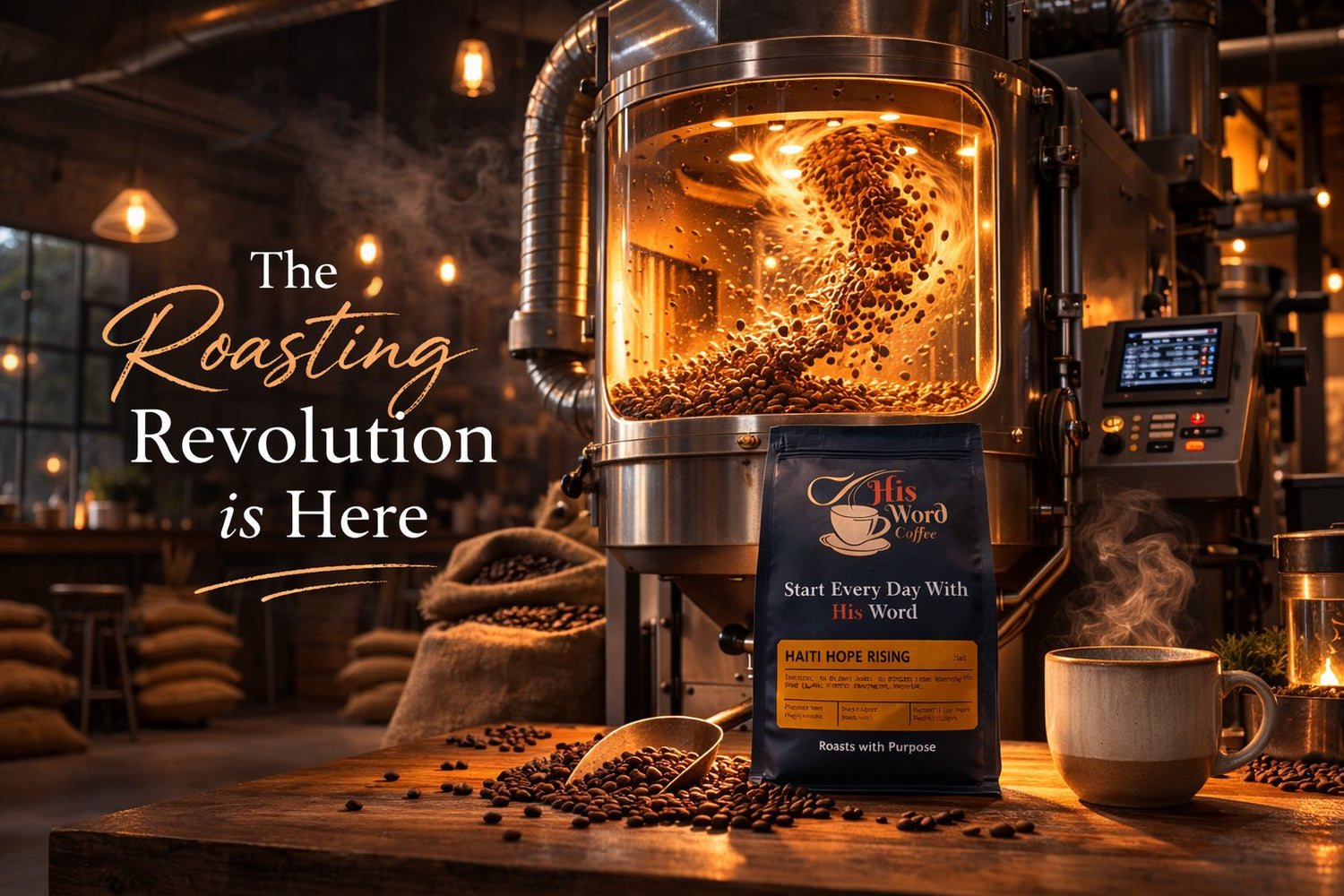
An air roaster looks different from the drum machines most coffee shops use. Instead of tumbling beans against hot metal, it suspends them in a column of heated air. The beans float, spin, and roast from every angle at the same time. The cup that comes out the other side tastes different too. Cleaner. Brighter. More transparent to the origin.
We roast on an air system at His Word Coffee. We did not pick it because it is novel. We picked it because of how the coffee tastes when we cup the result side by side with the drum roasted version of the same green bean. This guide explains what an air roaster actually does, why we made the switch, and how to tell whether the bean in your bag was roasted on one.
Key Takeaways
- Convection, not conduction: Air roasters use heated airflow instead of a hot metal drum.
- Cleaner cup: Less smoke contact means more origin character and less roasty bitterness.
- Faster roast cycle: Beans hit first crack quicker because they heat from all sides.
- Better for light and medium roasts: Air systems shine on transparent, fruit-forward roasts.
- Look for the label: Air roasted coffee is usually marked on the bag, often with the roaster's machine name.
In This Guide
What an air roaster actually is
An air roaster, also called a fluid bed roaster, is a coffee roasting machine that suspends green beans in a fast-moving stream of heated air. There is no rotating drum and no direct metal contact during the active roast. The beans literally float inside the roast chamber while hot air does all the work.
The first commercial air roaster designs go back to Michael Sivetz in the 1970s. Sivetz argued that coffee roasted on a drum picked up smoke and metallic flavors from extended contact with hot surfaces. His air design eliminated that contact. Modern machines from Loring, Bellwether, and Sonofresco all build on the same convection idea, though each does it differently.
How air roasting works
The mechanics are simple. A blower pushes heated air up through a perforated screen. Green coffee beans dropped on the screen rise up into the airflow and tumble in suspension. Heat transfers from the moving air to the surface of every bean at the same time. Chaff blows out of the chamber into a separate collector instead of burning on the drum.
Three things happen as a result.
- Even heat: Every bean heats from every direction. Hot spots are nearly impossible.
- Less smoke contact: The bean is bathed in clean hot air, not surrounded by combustion byproducts.
- Faster development: Convection transfers heat efficiently. Roast cycles are typically 8 to 12 minutes instead of 14 to 18.
Air roaster vs drum roaster
Drum roasters are the industry standard. They work, and many excellent coffees come off them. The choice between drum and air is more about flavor philosophy than right or wrong.
| Trait | Air Roaster | Drum Roaster |
|---|---|---|
| Heat transfer | Convection only | Conduction plus convection |
| Roast cycle | 8 to 12 minutes | 14 to 18 minutes |
| Cup profile | Bright, transparent, clean | Heavier body, more roast character |
| Best for | Light to medium roasts | Medium to dark roasts |
| Chaff handling | Removed live during roast | Collected after, can scorch |
How air roasted coffee tastes different
The shortest description is "less roasty, more origin." A washed Ethiopian roasted on air keeps its blueberry and floral notes. The same bean on a hot drum often picks up a smoky baseline that flattens the top notes.
Drum roasted coffee tends to feel heavier on the palate. There is more body, more chocolate and caramel from Maillard reactions on the hot drum surface, and a longer finish that lingers. Air roasted coffee tends to feel lighter and brighter. The finish is shorter and cleaner.
Neither is better in an absolute sense. They suit different beans and different drinkers. If you tend to drink your coffee black and want to taste the farm, an air roast wins. If you drink mostly milk drinks and want a strong roast backbone, a drum roast might suit you better.
"Every good gift and every perfect gift is from above."
James 1:17Who roasts on air systems
A growing list of specialty roasters. Loring's hybrid Smart Roaster is technically convection-dominant and is used by many third-wave roasters. Bellwether's electric machine is air-based. Sonofresco builds smaller batch air roasters. Smaller craft roasters often build or buy Sivetz-style fluid bed roasters for transparency-first roasting.
How to buy air roasted coffee
Air roasted coffee is usually labeled clearly. Look on the bag or the roaster's site for phrases like "air roasted," "convection roasted," or "fluid bed roasted." If the roaster is proud of the technology, they will mention it.
When trying a new air roasted bag, brew it black first. Pour over, drip, or a clean pourover device will show off the transparency the air roaster preserved.
Why we roast on air at His Word Coffee
We roast in Battle Ground, Washington on an air system because we want our customers to taste the farm, not the roaster. Our most popular bean, Colombia Sunrise, shows brown sugar, milk chocolate, and a soft red apple finish on air. The same green on a drum tends to flatten the apple into a generic chocolate note. We picked the cleaner cup.
For more on how roast level changes a cup, see our espresso roast vs dark roast guide.
Taste the Difference for Yourself
Try a bag of our air roasted coffee. Free first bag on any subscription. Cancel any time.
Start a SubscriptionSource: Michael Sivetz, Coffee Technology (1979); Specialty Coffee Association brewing standards; manufacturer specs from Loring, Bellwether, and Sonofresco.
Frequently Asked Questions
Is air roasted coffee actually better than drum roasted?
Better is the wrong word. Air roasting tends to produce a cleaner, more transparent cup. Drum roasting tends to produce a heavier, more roast-forward cup. Pick the style that matches what you like to drink.
Why is air roasted coffee less common?
Air roasters are newer commercially, often more expensive to buy, and produce a profile that not every customer expects. Drum roasters remain the industry default.
Does air roasted coffee have less caffeine?
No. Caffeine survives roasting and the brewing method matters more than the roast type. Caffeine content is nearly the same.
Can I roast on an air roaster at home?
Yes. Small home air roasters like the Fresh Roast SR series let you roast on a kitchen counter. Capacity is small, typically 100 to 200 grams per batch.
How do I know if a coffee I bought was air roasted?
The bag or the roaster's website will usually say so. Common phrases include air roasted, convection roasted, or fluid bed roasted.


Leave a comment
This site is protected by hCaptcha and the hCaptcha Privacy Policy and Terms of Service apply.