
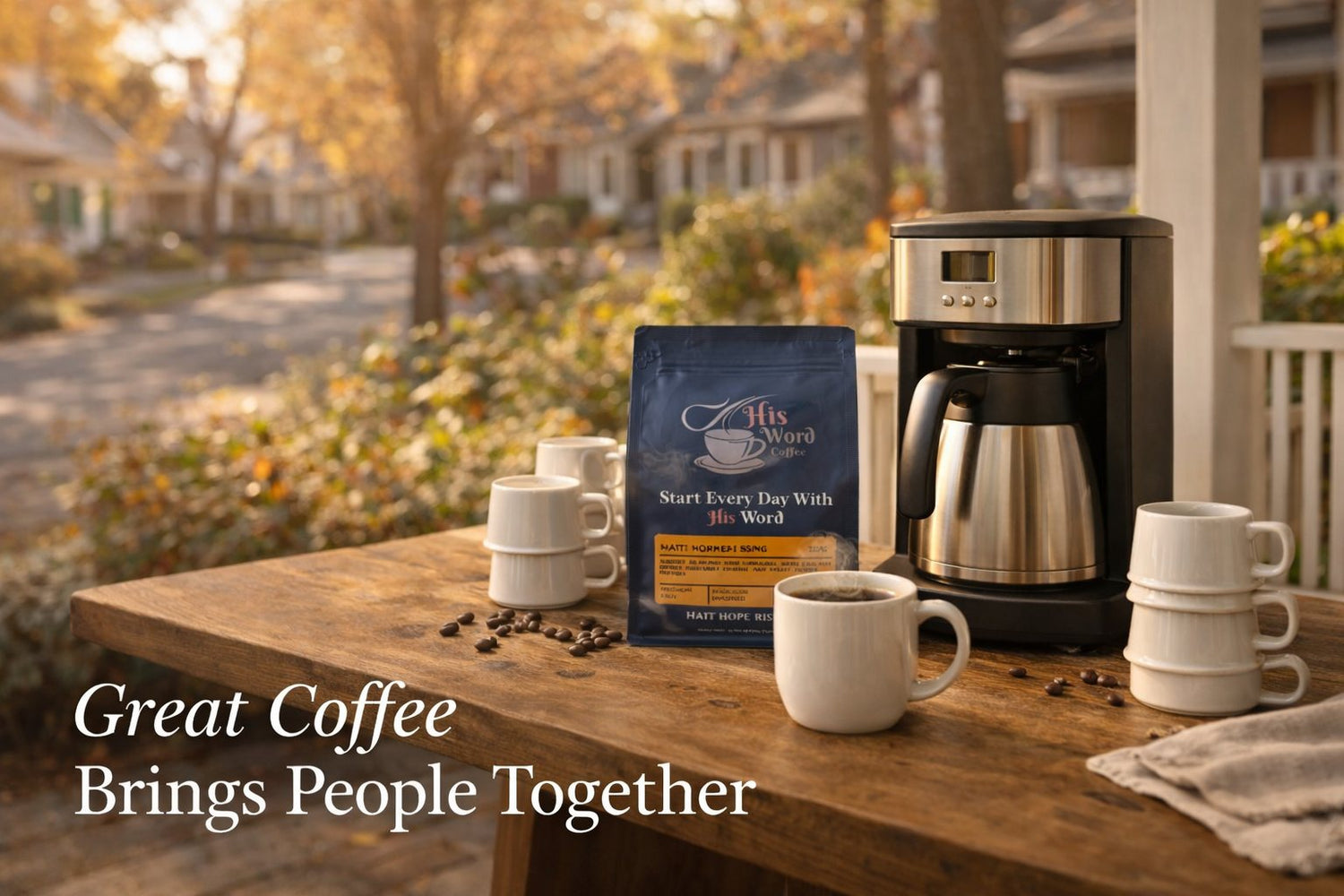
Church coffee has a reputation. Most people walk past the table out of habit. A foam cup, lukewarm, vaguely bitter, with three creamer pods next to it. It does not have to be that way. The same hospitality your church puts into worship, teaching, and care can show up in the cup people hold during fellowship.
We roast coffee for churches in the Pacific Northwest, and we have helped congregations of fifty to fifteen hundred build coffee programs that actually work. The pattern is the same every time. Good beans, clean equipment, a simple process, and one person who cares about it. That is the recipe.
This guide walks through the practical decisions: what to brew, how much to make, what equipment is worth it, and how to serve it without burning out the volunteers.
Key Takeaways
- Beans matter most: Use freshly roasted whole bean coffee. Pre-ground bulk loses flavor in hours.
- One simple recipe: Stick to one ratio every week. About 2 tablespoons of ground coffee per 6 ounces of water.
- Brew in batches: A 60-cup percolator or two 12-cup drip machines covers most churches under 200.
- Train two volunteers: Cross-train so the program survives a missed Sunday.
- Budget less than you think: A church of 100 spends about $40 to $80 a week on quality beans.
In This Guide
Why church coffee matters more than people think
Coffee is not the point of Sunday morning. It is a side detail. But it is a side detail that touches almost every guest who walks in. The first thing many people hold is the cup. The last thing they remember from the lobby is the smell.
Good coffee is a small, honest act of hospitality. It says we noticed you came. It says we wanted you to feel welcome. It says we did not cut a corner where you would feel it. That message lands without anyone preaching it.
"Practice hospitality."
Romans 12:13How to choose beans for church coffee
Pre-ground bulk bags from a warehouse store will save money up front and cost you everything in flavor. Ground coffee loses most of its character within an hour of grinding. Whole bean roasted within the last four weeks is the single biggest upgrade you can make.
For a Sunday crowd, look for a medium roast with a balanced flavor. It needs to taste good black, hold up to creamer, and still please the person who only drinks coffee on Sundays. Our Colombia Sunrise is the most popular church bean we ship. It tastes like brown sugar and chocolate, with low acidity that is gentle on stomachs.
If your church has a strong contingent who avoid caffeine in the afternoon, run a small pot of Evening Grace Decaf alongside the regular. The cost is minor and the gesture matters.
Buy whole bean, grind on site
A $40 burr grinder pays for itself in two weeks of saved flavor. If you cannot grind on site, ask your roaster to grind to drip just before shipping and use the bag within two weeks of arrival.
Equipment for different church sizes
Equipment scales with attendance. Match the brewer to the room, and do not buy more than you need.
| Attendance | Recommended Setup | Weekly Coffee |
|---|---|---|
| Under 75 | Two 12-cup drip brewers, airpots | 2 to 3 lb |
| 75 to 200 | 60-cup commercial percolator or two 60-cup brewers, airpots | 4 to 8 lb |
| 200 to 500 | Twin 100-cup brewers, three to four airpots | 10 to 18 lb |
| 500 plus | Commercial dispense system or contracted mobile coffee bar | 20 plus lb |
Whatever you brew, transfer it to insulated airpots within ten minutes. Coffee held on a hot plate for an hour tastes nothing like coffee held in a quality airpot for the same hour.
A simple recipe that works every week
Keep the recipe boring. Boring is repeatable. Repeatable is what makes Sunday coffee taste the same week after week.
- Ratio: About 2 level tablespoons of ground coffee per 6 ounces of water.
- Grind: Medium, like coarse sand.
- Water: Filtered if possible. Tap water with heavy chlorine ruins good beans.
- Time: Brew, then transfer to airpots within 10 minutes.
- Hold time: Serve within 90 minutes for best taste.
Write it on the wall
Tape the recipe inside the coffee cabinet. New volunteers should be able to make consistent coffee on their first Sunday without asking anyone.
Budgeting church coffee
A common worry is that quality beans will blow the hospitality budget. The math is friendlier than people expect. A 5 lb bag of fresh roasted whole bean coffee brews roughly 320 cups. For a church of 100 adults where 60 percent drink coffee, that is about three weeks of supply for the cost of one bag.
Compared to the time and embarrassment of bad coffee, fresh roast pays for itself. Most churches we work with land in the $40 to $80 per week range, including creamers, cups, and the occasional sleeve of stir sticks.
Building a volunteer rhythm that sticks
The coffee program lives or dies with the people who set it up at 7 a.m. on Sunday. Three habits keep volunteers from burning out.
- Pair people: Two people per Sunday, on a rotation of four pairs. Nobody works two weeks in a row.
- Pre-portion the night before: Pre-measured ground coffee in labeled bags saves 15 minutes on Sunday morning.
- Clean as you go: Pots get rinsed during second service. Deep clean once a month. That keeps flavor consistent.
Working with a roaster
A direct relationship with a small roaster gives you better coffee at lower cost than the warehouse store, plus standing orders and roast date guarantees. If you are in the Pacific Northwest, we ship to churches across the region and offer wholesale pricing for ongoing orders.
Roast-Fresh Coffee for Your Church
His Word Coffee partners with churches across the Pacific Northwest. Standing orders, roast dates inside 7 days, no minimum.
Talk to Us About WholesaleFor more on how to think about coffee hospitality in your ministry, see our piece on coffee hospitality and sharing faith and our Christian coffee and faith-rooted coffee culture.
Source: SCA brewing standards (1:18 ratio target), volume estimates from common church coffee programs we serve, equipment recommendations from National Restaurant Association food service guidelines.
Frequently Asked Questions
How much coffee should a church of 100 make on Sunday morning?
Plan for about 40 to 60 cups, which is two 12-cup brewers running back to back. Adjust based on observation over a few weeks.
Is a percolator or drip brewer better for church coffee?
Drip brewers usually produce cleaner, sweeter coffee. Commercial percolators are easier for volunteers to operate and can handle larger volumes in one cycle.
What is the cheapest way to upgrade church coffee?
Switch from pre-ground bulk to whole bean coffee roasted within the last four weeks, and buy a basic burr grinder. That single change makes the biggest difference.
How long can brewed coffee sit before it tastes bad?
In a sealed insulated airpot, about 90 minutes. On an open warming plate, about 20 minutes.
Should we offer decaf at church?
Yes. A small percolator or single brewer of fresh decaf serves the people who avoid caffeine and shows you noticed them.


Leave a comment
This site is protected by hCaptcha and the hCaptcha Privacy Policy and Terms of Service apply.