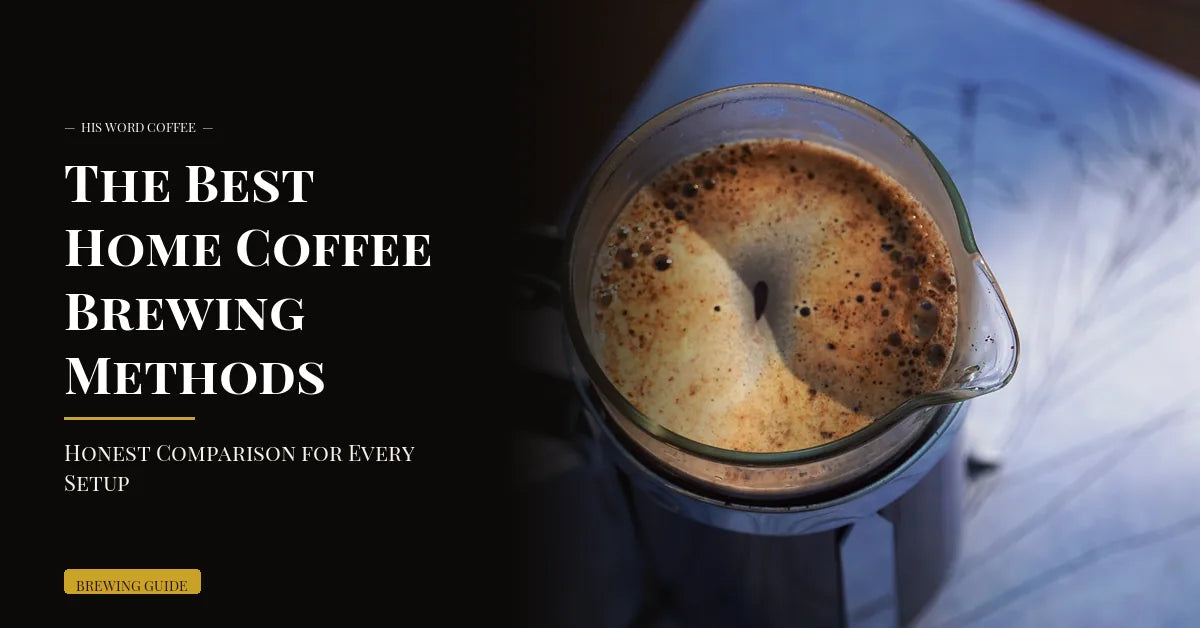
The best home coffee brewing method depends on what you value: convenience, flavor complexity, or body. French press is best for full bodied cups, pour over for clean and bright, AeroPress for versatile single cups, drip for full pots, espresso for milk drinks, and cold brew for smooth iced coffee.
Need beans that match your brewer?
If you just want a smooth daily cup, start with Breakfast Blend. If you like a clearer single-origin cup, try Colombia El Tiple for balanced chocolate-caramel notes, Ethiopia Sunrise for brighter fruit/floral notes, or Costa Rica Tarrazú for a darker, richer cup.
The honest comparison
There is no single best brewing method. The right brewer is the one that matches your schedule, your patience for ritual, and the kind of cup you actually like. A pour over rewards a slow morning and rewards single origin coffees that taste of fruit and flowers. A French press gives you a thick, full bodied cup with almost no learning curve. A drip machine makes eight cups while you get the kids ready for school. The decision is less about which brewer is objectively superior and more about honestly matching the method to your real mornings, your equipment budget, and the flavors you reach for first. The grind matters more than the method anyway, since any brewer produces better coffee with a burr grinder and freshly roasted beans than the same brewer with stale, pre ground supermarket coffee.
French press
Full immersion brewer with a metal mesh filter. Coarse grind, four minute steep, gentle press.
- Best for: people who like bold, full bodied coffee and do not want to fuss with a brewer
- Grind: coarse (kosher salt)
- Time: 4 minutes plus a 4 minute rest before pressing
- Equipment cost: twenty to fifty dollars for the press
- Strengths: rich body, low learning curve, forgiving with cheaper beans
- Tradeoffs: some sediment in the cup, harder to clean than paper filter methods
- Best beans: medium and medium dark roasts. Our Colombia El Tiple and Guatemala Los Huipiles brew well here.
Pour over (V60, Kalita Wave, Chemex)
Manual percolation brewer with a paper filter. Medium fine grind, three to four minute brew.
- Best for: people who enjoy a hands on ritual and want to taste origin flavors clearly
- Grind: medium fine (fine sand)
- Time: 3 to 4 minutes per cup, plus heating water
- Equipment cost: twenty to forty dollars for the brewer, plus paper filters
- Strengths: clean cup, bright acidity, easy cleanup, lets single origins shine
- Tradeoffs: requires technique to dial in, makes one cup at a time
- Best beans: light and medium light single origins. Our Ethiopia Sunrise and Costa Rica Tarrazú are good fits.
AeroPress
Pressurized immersion brewer with a small paper or metal filter. Medium fine grind, two minute brew.
- Best for: travelers, experimenters, and anyone who wants great coffee without fuss
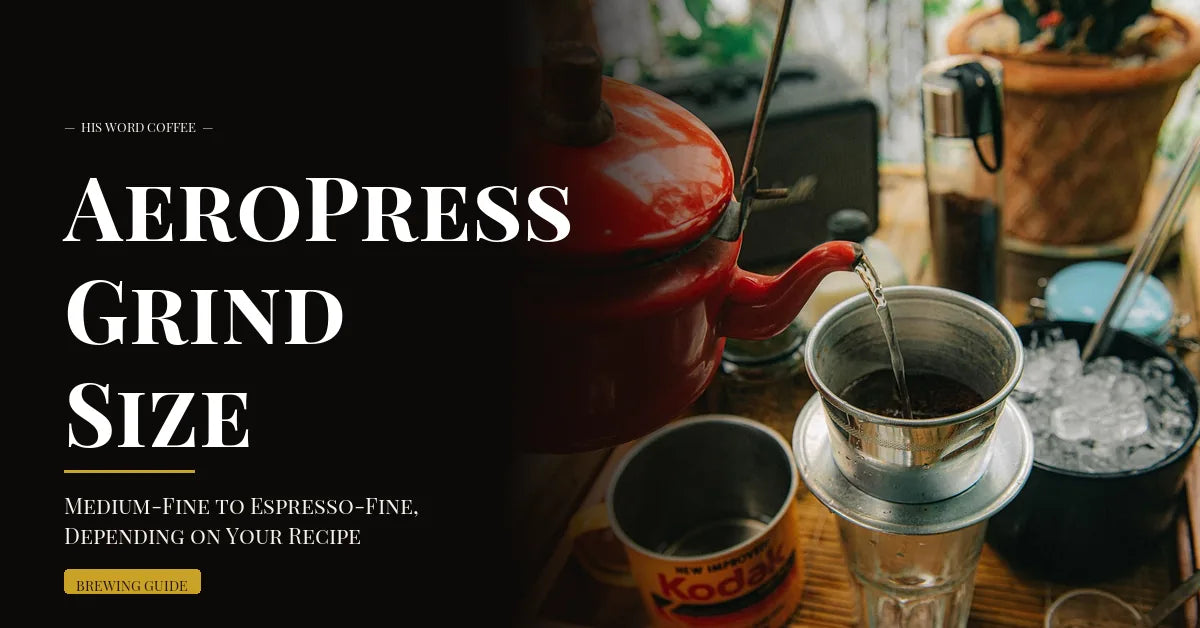
- Grind: medium fine to fine, depending on recipe
- Time: 90 seconds to 2 minutes per cup
- Equipment cost: around forty dollars
- Strengths: most versatile brewer made, indestructible, easy cleanup, forgiving
- Tradeoffs: one cup at a time, can require a separate water heater
- Best beans: almost anything. The AeroPress handles light through dark roasts well.
Drip coffee machine
Automatic percolation brewer with a paper filter. Medium grind, four to six minute brew.
- Best for: households that drink a full pot every morning and want zero hassle
- Grind: medium (granulated sugar)
- Time: push a button, walk away
- Equipment cost: twenty to three hundred dollars depending on machine quality
- Strengths: consistency, volume, hands free, often includes a timer
- Tradeoffs: cheaper machines do not heat water hot enough for proper extraction, glass carafes can scorch the coffee on a warming plate
- Best beans: medium roast blends. Our Breakfast Blend and House Blend brew evenly in any drip machine.
Espresso machine
Pressurized brewer that forces nine bars of water pressure through a fine bed of coffee. Twenty five second extraction.
- Best for: people who want lattes, cappuccinos, or short, intense shots and are willing to invest in technique
- Grind: fine (baker's sugar), dialed in to taste
- Time: 25 to 30 seconds for the shot, plus steaming milk
- Equipment cost: three hundred to several thousand dollars, plus a grinder
- Strengths: highest ceiling in flavor and texture, full cafe drink range at home
- Tradeoffs: steepest learning curve, requires a quality grinder, expensive entry point
- Best beans: medium and dark roasts develop the body and crema espresso needs.
Cold brew
Long, cold extraction in a jar or dedicated brewer. Extra coarse grind, twelve to twenty four hour steep.
- Best for: people who plan ahead and want smooth, low acid iced coffee on tap
- Grind: extra coarse (cracked peppercorns)
- Time: 12 to 24 hours of steeping, then strain
- Equipment cost: a Mason jar and a fine mesh strainer (effectively free) up to fifty dollars for a dedicated brewer
- Strengths: smooth taste, lower acidity, keeps in the fridge for one to two weeks, no daily effort once brewed
- Tradeoffs: requires planning, uses more coffee per cup than hot brewing
- Best beans: medium and dark roasts. Cold brew is forgiving with the beans. Research published on PubMed found that cold brew tends to be lower in titratable acidity than hot brewed coffee from the same beans.
Quick bean match by brewing method
- French press: Guatemala Los Huipiles or Costa Rica Tarrazú for body and depth.
- Pour over: Ethiopia Sunrise for a brighter cup, or Colombia El Tiple for balance.
- AeroPress: Colombia El Tiple for flexibility and a clean finish.
- Drip coffee: Breakfast Blend or House Blend for an easy daily cup.
- Espresso: House Blend or Colombia El Tiple for a familiar, balanced base.
- Cold brew: Costa Rica Tarrazú or Guatemala Los Huipiles for a richer, smoother concentrate.
Not sure where to start? Breakfast Blend is the easiest first bag for most home brewers.
The variable that matters more than the method
The brewer is one input. The grind is the bigger one. A pour over with a blade grinder will taste worse than a French press with a burr grinder, every time. If you have a budget of two hundred dollars total for coffee gear, spend it like this: one hundred and forty on a burr grinder, twenty on a French press or pour over kit, and forty on fresh beans from a local roaster. That combination beats a three hundred dollar drip machine paired with stale pre ground supermarket coffee, no matter how good the machine looks. For more on getting the grind right, see our complete grind size chart.
- Guatemala Los Huipiles for French press or drip when you want chocolate, caramel, and body.
- Costa Rica Tarrazú for pour over when you want a fruit-forward, sweet cup.
- Colombia El Tiple when you want a balanced, everyday single origin with floral and chocolate notes.
Fresh-roasted in Vancouver, WA, and roasted to order so your next brew starts with beans that still have something to say.
Frequently asked questions
Q: What is the easiest home brewing method for a beginner?The French press. The grind is forgiving, the recipe is simple (coarse grind, four minute steep, gentle press), and the brewer is nearly impossible to break. A good French press setup costs under fifty dollars and produces a full bodied cup that is hard to mess up once the grind is right.
Q: Which method makes the best tasting coffee?That depends on what you mean by best. Pour over makes the cleanest, brightest cup and lets single origin flavors come through clearly. French press gives the richest body. Espresso produces the most intense flavor in the smallest volume. AeroPress is the most versatile and can mimic any of the other methods with a recipe change.
Q: Do I need an expensive grinder for home brewing?You need a burr grinder, but it does not have to be expensive. An entry level hand grinder like the Hario Skerton Pro costs around forty dollars and outperforms any blade grinder. The Baratza Encore is a popular electric starter at a higher price point. The grinder is the single most important piece of gear in a home setup.
Q: How much coffee should I use per cup?The standard ratio is one gram of coffee to fifteen or sixteen grams of water for most brew methods. That works out to about twenty grams of coffee for a single twelve ounce cup. French press tends to use a slightly higher dose (one to twelve), and espresso uses a much higher dose (about one to two for a ristretto, one to two and a half for a normale shot).
Q: What is the best brewer for someone who hates cleanup?The AeroPress or a drip machine with a paper filter. Both rinse out quickly and have no fine sediment to deal with. The French press, while easy to brew with, takes the most effort to clean since the metal mesh traps fines that stick to the screen.

Leave a comment
This site is protected by hCaptcha and the hCaptcha Privacy Policy and Terms of Service apply.