
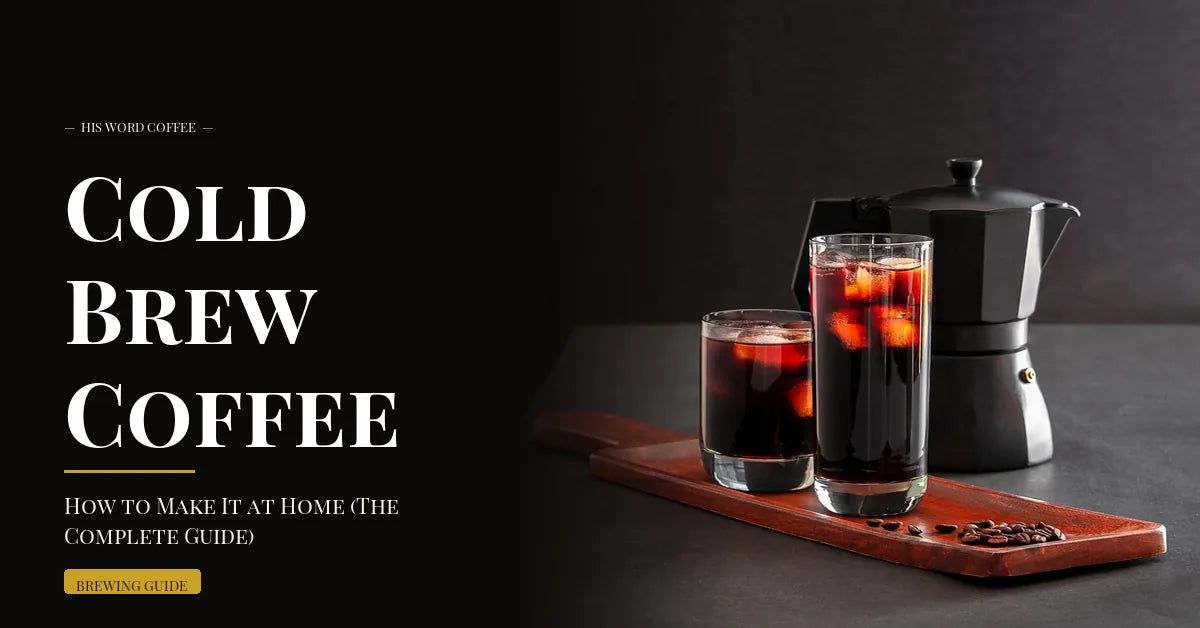
Cold brew coffee is made by steeping coarsely ground coffee in cold or room-temperature water for 12-24 hours. The result is a concentrate that's lower in acid (research published in PubMed)ity than hot-brewed coffee, with a naturally smooth, slightly sweet flavor.
Key Takeaways
- Cold Brew Ratio: Use a 1:6 coffee to water ratio for a strong cold brew concentrate.
- Brew Time: Cold brew steeping takes at least 12 hours, with some recipes recommending overnight.
- Filter Choice: Opt for a fine mesh filter to ensure a smooth, sediment-free brew.
- Rinsing Step: Rinse the coffee grounds before brewing to remove any unwanted bitterness.
- Fridge Storage: Store your cold brew concentrate in the refrigerator for up to two weeks.
Cold brew has become one of the most popular ways to drink coffee, and for good reason. It's easy to make in batches, keeps well in the refrigerator for up to two weeks, and tastes different from hot coffee in ways that a lot of people prefer , especially those who find regular coffee too acidic or bitter.
This guide covers how to make cold brew at home, what equipment you need, which coffees work best for it, and answers to the questions we hear most often.
What Is Cold Brew Coffee?
Cold brew is coffee made by steeping ground coffee in cold or room-temperature water for an extended period, usually 12-24 hours. You filter out the grounds and what you're left with is either a ready-to-drink cold coffee or a concentrate you dilute before drinking.
The long steep time without heat extracts different compounds from the coffee beans than a hot-brew method does. Specifically, cold water extracts fewer of the acids and bitter compounds that hot water pulls out quickly. The result is naturally sweeter, smoother coffee with a flavor profile that regular iced coffee , which is just hot coffee poured over ice , doesn't have.
Cold brew is not the same as iced coffee. Iced coffee is hot-brewed coffee that's chilled or poured over ice. It retains the same acids and flavor compounds as hot coffee, just cooled down. Cold brew tastes distinctly different because the extraction process itself is different.
Cold brew vs iced coffee
Iced coffee: hot-brewed, then chilled. Retains full acidity and can taste diluted when the ice melts. Cold brew: cold-extracted over many hours. Lower acidity, naturally sweet, doesn't dilute because it's served as a concentrate or already chilled. Most coffee shops sell both , they taste noticeably different.
The Right Coffee-to-Water Ratio for Cold Brew
The ratio you use depends on whether you want concentrate (to dilute later) or ready-to-drink cold brew.
Cold brew concentrate: 1:4 ratio
Four parts water to one part coffee by weight. This makes a strong concentrate you dilute with water, milk, or a milk alternative before drinking. A common dilution is 1 part concentrate to 1-2 parts liquid. Most cold brew from coffee shops is sold as concentrate.
Example: 100g coffee + 400g water. After straining, you get roughly 300g of concentrate. Add water or milk to taste.
Ready-to-drink cold brew: 1:8 ratio
Eight parts water to one part coffee. This is ready to drink straight after filtering. A bit less intense, which works well if you prefer a lighter cup or want to drink it without adding anything.
Example: 60g coffee + 480g water. After filtering, drink as-is over ice.
Starting point: 1:5 ratio
If you're new to cold brew, start at 1:5. It's flexible. You can drink it straight if it tastes right, or add a splash of water or milk if it's too strong. Adjust from there on your next batch based on what you get.
Measure by weight, not volume
Coffee measuring by volume (scoops, tablespoons) is inconsistent because grind size changes how much fits in a scoop. A kitchen scale gives you reliable, repeatable results. It's the single most useful tool for consistent cold brew.
Grind Size for Cold Brew
Cold brew needs a coarser grind than drip coffee or espresso. If you grind too fine, the cold brew will over-extract during the long steep and taste bitter. It also gets harder to filter.
The right grind for cold brew is similar to what you'd use for a French press , coarse and chunky, with pieces roughly the size of raw sugar crystals. If you squeeze a handful of grounds, they should clump slightly but fall apart easily.
If your cold brew tastes bitter or harsh, it's usually one of two things: too fine a grind, or too long a steep. Try coarser before you try shorter steep time. See our complete grind size guide for reference charts.
How to Make Cold Brew Coffee at Home
Here's the process from start to finish. No special equipment required beyond a container and a way to filter.
- Measure your coffee and water. Use a scale if you can. For a starter batch, try 60g of coarsely ground coffee with 300g of cold water (1:5 ratio).
- Combine in a container. A mason jar, a pitcher, or a dedicated cold brew maker all work. Stir briefly to make sure all the grounds are saturated.
- Cover and steep. Leave at room temperature for 12-18 hours, or in the refrigerator for 18-24 hours. Room-temperature steeping is slightly faster and extracts a bit more. Both work.
- Filter the grounds. Pour through a fine mesh strainer lined with a paper filter (or a dedicated cold brew filter bag). Don't press or squeeze the grounds , let gravity do it. Squeezing forces fine particles through and makes the cold brew murky and bitter.
- Store and drink. Transfer to a clean jar or pitcher. Refrigerate. Drink within 1-2 weeks for concentrate, 5-7 days for ready-to-drink.
Fresh-Roasted Coffee Makes Better Cold Brew
The quality of your cold brew starts with the beans. Subscribe for fresh air-roasted coffee roasted to order, typically ships in 1, 3 business days.
Start Your SubscriptionEquipment Options for Cold Brew
You don't need anything special to make cold brew. But different setups have real tradeoffs.
Mason jar + paper filter
The simplest approach. Steep in any jar, filter through a paper coffee filter set in a fine mesh strainer over another jar. Zero cost if you already have jars. Slow filtering (can take 10-20 minutes) but the results are clear and clean.

French press
Works well for cold brew. Steep in the French press, then press the plunger and pour. Leaves a bit more sediment than paper filtering, but many people like the texture. Easy to find the right grind since you already have one for French press brewing.
Dedicated cold brew maker
Brands like Toddy, OXO, and Filtron make purpose-built cold brew systems with built-in filters and dispensing carafes. They're convenient and make the process repeatable, but they're not better than a mason jar , just easier for regular cold brew drinkers.
Nut milk bag or filter sock
Pour the coffee and water into a large jar, drop in a nut milk bag or cold brew filter sock filled with grounds, steep, then lift out the bag. No pouring required. Fast, easy, low mess. The bags are reusable.
Get brewing tips delivered weekly.
Join our newsletter for guides like this one, plus 10% off your first order.
Which Coffee Works Best for Cold Brew
You can make cold brew with almost any coffee, but some origins and roast levels work better than others.
Medium and medium-dark roasts
Medium roasts tend to produce the most complex cold brew. The lower acidity of cold extraction lets the origin character come through , chocolate, caramel, fruit, nuttiness. Light roasts can work but often taste thin or acidic in cold brew because cold water doesn't extract their bright, floral compounds as efficiently as hot water would. Dark roasts produce bold, chocolaty cold brew that many people like, but some of the subtlety gets lost.
Single origins with natural sweetness
Colombian, Guatemalan, and Brazilian coffees work especially well. They tend to have natural sweetness and lower acidity that translate into excellent cold brew. Ethiopian coffees can be hit or miss , the fruity notes don't always come through in cold extraction, and lighter-roasted versions can taste thin.
Freshness still matters
Stale coffee makes bad cold brew. Fresh-roasted coffee, where the beans haven't sat for months in a warehouse, produces noticeably better results. You're spending 18+ hours steeping this coffee , start with something worth the wait. Our single-origin coffees are roasted to order and typically typically ship in 1, 3 business days.
Try our Colombia or Guatemala for cold brew
Our Colombia El Tiple and Guatemala Los Huipiles both produce excellent cold brew. Medium roast, natural sweetness, good body. The Colombia has chocolate and caramel notes that cold extraction preserves beautifully.
Storage and Shelf Life
Cold brew keeps longer than hot-brewed coffee because the slow extraction produces fewer volatile compounds that deteriorate quickly.
- Cold brew concentrate: 1-2 weeks in the refrigerator in a sealed jar
- Ready-to-drink cold brew: 5-7 days in the refrigerator
- Room temperature: Don't store at room temperature after straining , refrigerate immediately
The best container is a sealed glass jar or bottle. Plastic is fine but glass doesn't absorb flavors. Keep it covered and away from strong-smelling foods in the refrigerator.
If your cold brew starts to taste flat or slightly off before the two-week mark, it's past its peak. This is most common when the original coffee wasn't very fresh to begin with , stale beans produce cold brew that deteriorates faster.
Frequently Asked Questions About Cold Brew Coffee
How long should I steep cold brew?
12-24 hours is the range. 18-20 hours at room temperature or 20-24 hours in the refrigerator is a good starting point. Shorter steeps are lighter and less extracted. Longer steeps are stronger and can become bitter if you go past 24 hours. If your cold brew tastes bitter, try a shorter steep or a coarser grind before adjusting anything else.
Is cold brew stronger than regular coffee?
Cold brew concentrate is stronger than regular coffee , often 2-4 times more concentrated. But most people dilute it before drinking, bringing the strength to around regular coffee levels or a bit lower. Ready-to-drink cold brew (made at a 1:8 ratio) is typically comparable to or slightly weaker than drip coffee.
Does cold brew have more caffeine than hot coffee?
If you drink it as a concentrate without diluting, yes. If you dilute concentrate to your preferred drinking strength, caffeine (the FDA's caffeine safety guidelines) levels are comparable to regular coffee. Cold brew made at a 1:8 ready-to-drink ratio is similar to or slightly lower in caffeine than drip coffee.
Why does my cold brew taste bitter?
Usually one of two things: the grind is too fine, or the steep time is too long. Try a coarser grind first. If you're already using a coarse grind, shorten the steep by an hour or two. Over-extracted cold brew tastes harsh or bitter despite the cold extraction method's reputation for smoothness.
Can I heat up cold brew coffee?
Yes. Cold brew concentrate makes excellent hot coffee. Just mix one part concentrate with one part hot water. It tastes smoother than most hot-brewed coffee because the cold extraction reduced the acid content. This is a useful trick for busy mornings , make a batch of cold brew, then heat it up as needed throughout the week.
What's the difference between cold brew and nitro cold brew?
Nitro cold brew is regular cold brew that's infused with nitrogen gas and served on tap, similar to how draft beer works. The nitrogen creates a creamy, velvety texture and a thick foam on top. It tastes like cold brew but feels richer, almost like a coffee stout. Most coffee shops that serve nitro cold brew make it from the same cold brew they use for regular iced drinks.
Sources: Specialty Coffee Association, Brewing Best PracticesExplore More.

Leave a comment
This site is protected by hCaptcha and the hCaptcha Privacy Policy and Terms of Service apply.