
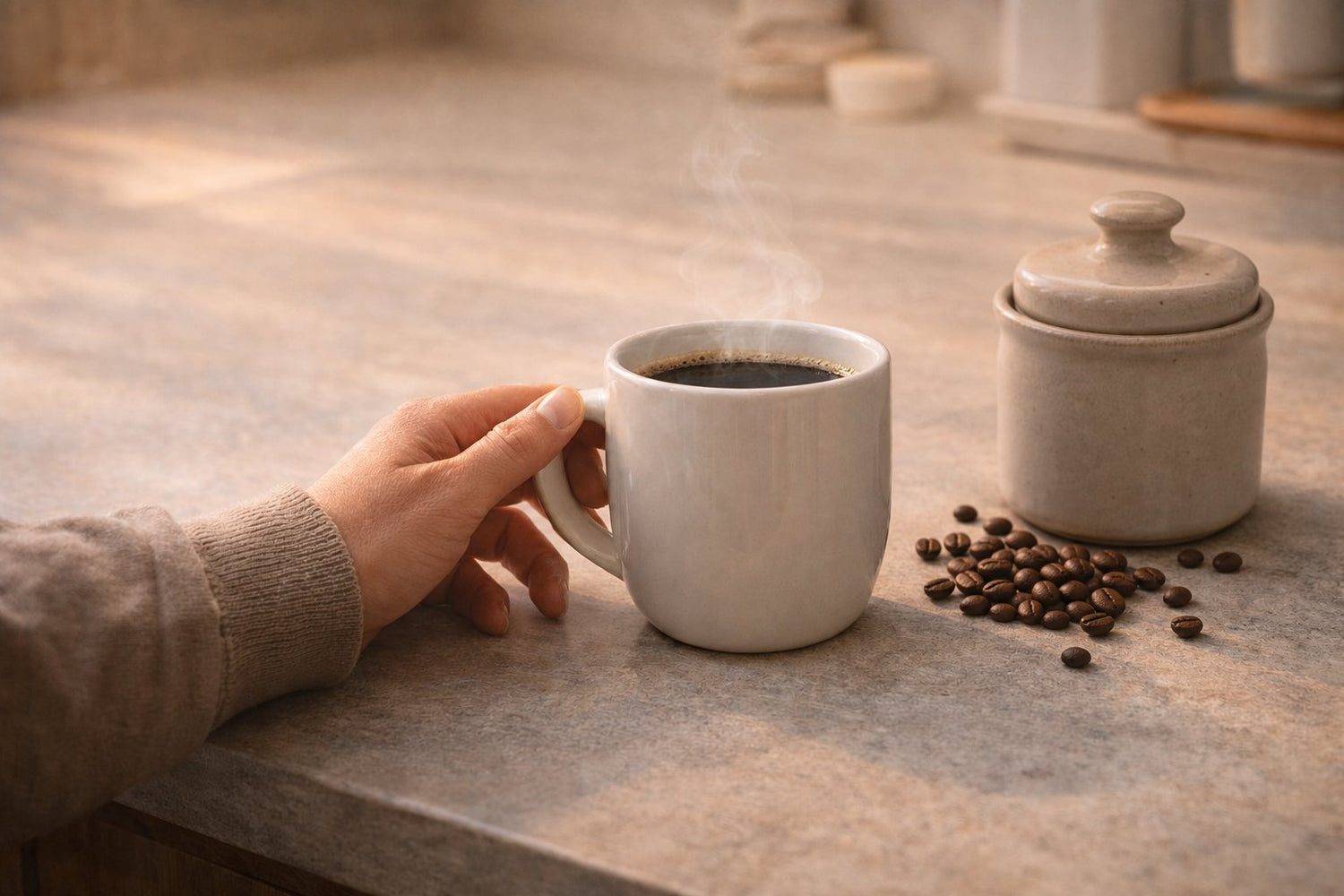
We all know that feeling. You wake up ready for a quiet moment before the day rushes in. You brew a fresh cup, hoping for warmth and comfort. But twenty minutes later the regret sets in, that heavy, burning feeling in your chest or stomach that threatens to ruin your morning. You might think the only answer is to quit coffee for good. After roasting coffee for a few years now, I think there is a gentler path worth trying first.
Written by Nick Murphy, roaster and co-owner of His Word Coffee in Vancouver, Washington.
Key Takeaways

- A common cause: For many sensitive coffee drinkers, the trouble is not the bean alone. Burnt chaff (the papery skin left on green coffee) and scorched, uneven roasting can add harsh, bitter compounds that bother a sensitive stomach.
- How air roasting helps: Fluid-bed air roasting lifts the chaff away and roasts more evenly, so you taste the coffee instead of the char. Many people find the result smoother and easier to enjoy.
- Origin and roast both matter: Choosing a smoother origin and a balanced roast can make your morning cup feel kinder. We roast every bag to order on our own air roaster.
Why does my morning coffee cause stomach pain?
Coffee discomfort is often tied to a mix of acidity, brewing strength, and the bitter, scorched compounds that show up when beans are roasted unevenly. When coffee tumbles in a hot metal drum, the papery chaff and some beans can scorch, adding carbon-like, bitter notes that many sensitive stomachs do not enjoy.
Think about cooking on a stovetop. If you are not careful, the food on the bottom of the pan scorches while the rest cooks unevenly. That scorching leaves a bitter, burnt flavor that your body often rejects.
Something similar can happen in large commercial drum roasters. The beans tumble in a hot metal drum, and some can scorch on contact. The chaff stays in the drum, burns, and can carry through to your grinder. For those of us who are a little more sensitive, that burnt residue can be the difference between a comforting morning and an uncomfortable one.
It is worth being honest here: coffee is naturally acidic no matter how it is roasted, and for some people that acidity, the caffeine, or simply drinking on an empty stomach is the real trigger. If that sounds like you, our guide on drinking coffee on an empty stomach walks through small habit changes that help.
How does air roasting help with a smoother cup?
Air roasting, also called fluid-bed roasting, suspends the coffee on a cushion of hot air so the beans never rest against scorching metal. The moving air roasts the beans evenly and carries the chaff away, which leaves a cleaner bean and, for many drinkers, a smoother, less bitter cup.
At our Vancouver, Washington roastery we roast on our fluid-bed air roaster because we care about the details. We want you to taste the God-given flavor of the bean, like chocolate or red apple, rather than the taste of the roaster.
Because the beans float on a fountain of air, they tend to avoid the harsh, bitter char you find in many grocery-store brands. It is a gentle process that respects the bean. In our own cupping, the cups come out clean and balanced, with the sweetness of the origin coming through instead of a smoky edge.
One honest note on acidity: roasting style and roast level can shape how sharp or smooth a coffee tastes, and the Specialty Coffee Association scores specialty coffee on an 80-point quality scale, where balance and clean flavor count (see the SCA research library). But air roasting on its own is not a guaranteed cure for acid reflux, and we would never claim it is. What we can say is that a fresh, evenly roasted, well-chosen bean gives sensitive drinkers a better starting point. If you want the full picture, see our guide to air-roasted and low-acid coffee.
Which coffee roast is easiest on the stomach?

Many people find a medium-to-dark roast gentler, since a longer roast develops away some of the bright, sharp acids in the bean. Origin matters just as much as roast, though, so we suggest pairing a smoother origin with the roast level you enjoy.
If you love a classic coffee taste but hate the burn, the green coffee you start with is half the story. High-altitude, brightly acidic coffees are delicious for some drinkers and tough for others. A rounder, lower-grown coffee, or a darker roast of a smooth origin, often sits easier.
From our active lineup, here is what I reach for when someone tells me coffee has been hard on their stomach:
- Colombia El Tiple: our smooth, chocolatey Colombian. In our cupping it leans toward cocoa and brown sugar with a soft finish, which makes it a friendly everyday cup. Available in 5-pound bags too if it becomes your daily.
- Guatemala Los Huipiles: balanced and mellow, with gentle sweetness rather than sharp brightness.
- Evening Grace Decaf: our decaf for anyone who wants the ritual without the caffeine, which is a common trigger for jittery stomachs and reflux. It is decaffeinated using the sugarcane (EA) process, and we taste milk chocolate, fig, and pecan. Decaf is not automatically low in acid, so we will not label it that way, but cutting caffeine is one of the simplest changes a sensitive drinker can try.
Prefer to taste your way through the brighter end of the spectrum? Our Ethiopia Sunrise and Costa Rica Tarrazú are wonderful coffees, just livelier in acidity, so I usually point sensitive drinkers to the smoother options above first. For a deeper walkthrough, our low-acid coffee guide and coffee for sensitive stomachs guide compare origins side by side.
Frequently Asked Questions
Does a smoother coffee mean less caffeine?
Not necessarily. Caffeine content is shaped mostly by the bean variety, the dose you brew, and the brewing method, not by how smooth a coffee tastes. A gentler, lower-acid cup can still give you a full morning lift. If caffeine itself bothers your stomach, a decaf like our Evening Grace Decaf is worth a try.
Is cold brew better for acid reflux?
Many people find cold brew gentler. Brewing with cold water pulls out a different balance of compounds than hot water, and some studies suggest cold brew can be lower in certain acids, though research is still mixed. Using fresh, air-roasted beans for cold brew gives you a clean, smooth starting point. If reflux is persistent, talk with your doctor.
Why does grocery store coffee taste bitter?
A lot of grocery-store coffee is roasted weeks or months before it reaches your cart. To cover up that fading flavor, some large roasters push the roast darker, which can leave a bitter, ashy edge. We roast in small batches to order, so your bag arrives fresh, sweet, and balanced rather than flat and bitter.
What is the EA sugarcane process used for your decaf?
Our Evening Grace Decaf uses the sugarcane (EA, ethyl acetate) process, where caffeine is gently removed using a compound naturally derived from fermented sugarcane. We like it because it tends to keep more of the coffee's natural sweetness than harsher methods. You can read more in our sugarcane decaf explainer.
Ready for a Gentler Morning Ritual?
You should not have to choose between a great cup of coffee and feeling good. Taste the difference of fresh, air-roasted coffee, roasted to order and chosen to be kind to your morning.
Shop Our Coffees
A note on health claims: Many people report a smoother experience with fresh, air-roasted coffee, but peer-reviewed studies comparing air-roasted and drum-roasted coffee specifically for digestion are limited, and results vary by person. Nothing here is medical advice. If you have persistent stomach pain, heartburn, or acid reflux, please talk with your healthcare provider.
Sources: Specialty Coffee Association research library (coffee quality and the 80-point scale); coffee acidity and digestion research indexed at PubMed. Have a question about our roasting or which coffee fits a sensitive stomach? Call us at 360-270-8106.
Related reading: Arabica vs Robusta comparison, light roast guide, low-acid coffee guide, best decaf coffee guide.

Leave a comment
This site is protected by hCaptcha and the hCaptcha Privacy Policy and Terms of Service apply.