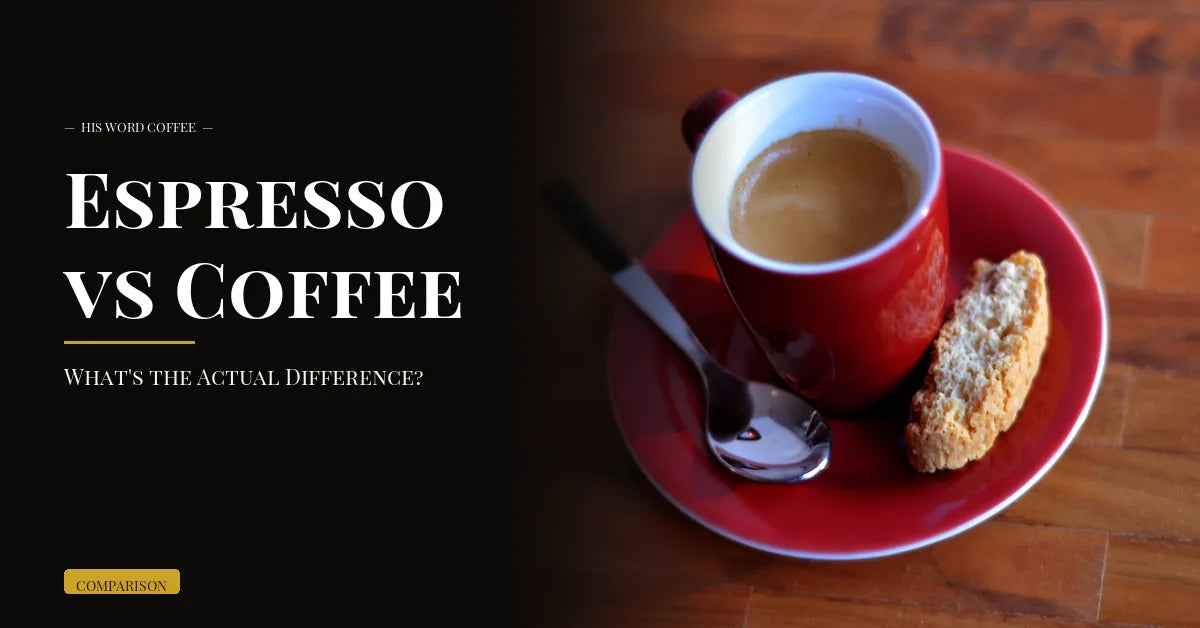
Espresso vs coffee: two words every coffee drinker uses, often interchangeably, but they mean very different things. This guide breaks down the actual differences, corrects a few persistent myths, and helps you decide which belongs in your cup.
Key Takeaways

- Espresso is a brewing method, not a type of bean. Any coffee can be brewed as espresso.
- Espresso uses pressure (9 bar), a fine grind, and extracts in 25 to 30 seconds.
- Espresso has more caffeine per ounce, but a full cup of drip coffee usually has equal or more total caffeine.
- "Espresso roast" is a marketing convention, not a brewing requirement.
- You can use espresso beans in a drip machine and regular coffee in an espresso machine.
In This Article
- The Core Difference: It Is All About Brewing Method
- Brew Specs Side by Side
- Caffeine: Per Ounce vs Per Serving
- The "Espresso Roast" Myth
- Flavor Differences
- Equipment You Actually Need
- Can You Use One Bean for Both?
- Common Espresso Drinks Explained
- When to Choose Espresso vs Drip
- Frequently Asked Questions
The Core Difference: It Is All About Brewing Method
The most important thing to understand about espresso vs coffee is this: espresso is not a type of coffee bean. It is a brewing method. "Coffee" refers to the beverage made from roasted coffee beans in general. "Espresso" refers specifically to coffee brewed by forcing hot water through finely ground coffee using high pressure, typically 9 bar (about 130 PSI).
That single distinction clears up most of the confusion. When someone says they prefer espresso, they are describing how they like their coffee prepared, not what kind of bean is in the bag. And when a label says "espresso roast," that is a marketing convention tied to flavor preferences, not a certification or requirement.
Any coffee bean, from any origin, roasted to any level, can be brewed as espresso. Whether it tastes good that way is a separate question, but there is no gatekeeping rule that says only certain beans count.
Brew Specs Side by Side

The mechanical differences between espresso and drip coffee are significant. Here is how they compare across the variables that matter most.
| Factor | Espresso | Drip / Pour-Over |
|---|---|---|
| Brew pressure | 9 bar (about 130 PSI) | Gravity only (near 0 bar) |
| Grind size | Very fine (like baker's sugar) | Medium (like coarse sand) |
| Extraction time | 25 to 30 seconds | 4 to 6 minutes |
| Serving size | 1 to 2 oz (single or double shot) | 8 to 12 oz per cup |
| Water temperature | 195 to 205 F | 195 to 205 F |
| Coffee-to-water ratio | ~1:2 (18g coffee, 36g water) | ~1:15 to 1:17 |
| Output texture | Concentrated, syrupy, with crema | Clean, lighter body |
| Dissolved solids (TDS) | 8 to 12% | 1.2 to 1.5% |
The pressure is the defining variable. Espresso machines generate enough force to push water through a dense, finely ground coffee puck in under 30 seconds. That pressure extracts oils, dissolved solids, and compounds that gravity-based methods cannot replicate at the same concentration. The result is a small but intensely flavored shot with a layer of reddish-brown foam called crema, which forms when carbon dioxide is released under pressure.
Drip brewing relies on hot water passing through a medium grind over several minutes. The slower contact time, lower pressure, and coarser grind produce a much larger volume of coffee with a cleaner, lighter body. For a deeper look at how grind size affects every brew method, see our coffee grind size chart.
Caffeine: Per Ounce vs Per Serving
This is where most people have the wrong mental model. Espresso does have more caffeine per ounce than drip coffee. A single shot (1 oz) contains roughly 60 to 75 mg of caffeine. Drip coffee has about 10 to 15 mg per ounce. So on a per-ounce basis, espresso is 5 to 6 times stronger.
But per serving, the math flips. A standard 8 oz drip coffee contains between 80 and 120 mg of caffeine. An 8 to 12 oz cup can reach 150 to 180 mg, depending on the roast, bean, and brew ratio. A single espresso shot is 60 to 75 mg. Even a double shot, around 120 to 150 mg, is roughly in the same range as a large drip coffee.
One factor that actually reduces caffeine: roast level. Darker roasts lose a small amount of caffeine during the roasting process compared to lighter roasts, though the difference is modest. The bigger driver of caffeine content is the amount of coffee used and how much water passes through it.
The "Espresso Roast" Myth
Walk into any grocery store and you will see bags labeled "espresso roast." That label has no regulatory definition. It usually means the coffee has been roasted dark, which was the traditional Italian style for espresso, developed in part because dark roasts were more forgiving on older, less precise machines.
Specialty coffee roasters have spent the past decade demonstrating that lighter roasts can produce exceptional espresso. A well-dialed light roast espresso can highlight fruit notes, floral aromatics, and complex acidity that disappear under dark roasting. This is now standard at most specialty cafes. The historical Haiti Hope Rising profile is a naturally low-acid example worth reading about.
That said, dark roasts do have real advantages for espresso. They are more soluble, which makes extraction more predictable, especially on home machines that may not hold pressure or temperature as precisely as commercial equipment. If you are just getting started with home espresso, a medium-dark or dark roast will be more forgiving.
According to the Specialty Coffee Association, there is no mandated roast level for espresso. The method defines it, not the bean or the color of the roast.
Flavor Differences
Concentration changes flavor in specific ways. Espresso tastes more intense because the dissolved solids, oils, and acids are compressed into a small volume. You get a shorter, bolder experience with less water diluting the compounds.
The crema that forms on top of an espresso shot adds a slightly bitter, emulsified quality. It is not everyone's favorite part on its own, but it integrates into the overall flavor and gives espresso its characteristic texture.
Drip coffee offers more nuance at lower intensity. A specialty pour-over can express a wide range of flavors, from stone fruit to chocolate to floral notes, that a dark espresso roast would flatten. The lighter body and higher water ratio give the palate more room to identify individual flavor characteristics.
How Milk Changes the Equation
Espresso is rarely consumed straight in Western coffee culture. Most people drink it combined with milk in some form: a latte, cappuccino, or flat white. Milk proteins bind with coffee compounds and soften bitterness while adding sweetness. Espresso's concentration means it can hold its flavor even when diluted with 6 oz or more of steamed milk, whereas drip coffee would mostly disappear into the milk.
Equipment You Actually Need
This is where the practical gap between espresso and drip widens considerably.
For Drip Coffee
You need a brewer (automatic drip machine, French press, pour-over dripper) and a grinder if you are buying whole beans. Entry-level options start at $15 and produce perfectly good coffee. A burr grinder in the $50 to $100 range will meaningfully improve consistency. The ceiling on drip equipment is much lower than espresso.
For Espresso
You need a machine capable of generating 9 bar of stable pressure, and the reality is that home espresso machines vary enormously in how well they do this. Entry-level machines ($100 to $200) can produce espresso-style coffee but often struggle with temperature stability and pressure consistency. Mid-range machines ($400 to $800) get closer to cafe performance. A quality grinder matters as much as the machine itself because espresso requires a very fine, very consistent grind. Dial that grind wrong and the shot will be under or over-extracted.
The investment is higher and the learning curve is steeper. Many people find the ritual rewarding. Others find it frustrating and stick with drip. Both are valid outcomes.
Can You Use One Bean for Both?
Yes, and this is often where people get confused by labeling.
Espresso beans in a drip machine: Absolutely fine. "Espresso beans" are just regular coffee beans, usually roasted dark. Put them in a drip machine and you get drip coffee. The flavor will reflect the roast level, typically bold and lower in acidity, but there is nothing about an espresso-labeled bag that makes it incompatible with drip brewing.
Regular coffee beans in an espresso machine: Also fine, technically. Any whole bean coffee can be ground fine and pulled as espresso. The result depends heavily on the roast level and origin. Lighter roasts often need grind and pressure adjustments to avoid sourness or channeling. Some people specifically prefer pulling single-origin light roasts as espresso for the distinct flavor profile.
The only practical constraint is grind size. Espresso needs a much finer grind than drip. If you are brewing both, a burr grinder with adjustable settings is essential. We cover grind sizes for each method in detail in our complete grind size guide.
Common Espresso Drinks Explained
Understanding espresso opens up a whole category of drinks that make up most coffee shop menus. Here is what each one actually contains.
| Drink | What It Is | Espresso Shots |
|---|---|---|
| Espresso | Straight shot, 1 to 2 oz | 1 to 2 |
| Americano | Espresso diluted with hot water to approximate drip coffee strength | 1 to 2 |
| Latte | Espresso with steamed milk, small amount of foam on top | 1 to 2 |
| Cappuccino | Equal parts espresso, steamed milk, and milk foam | 1 to 2 |
| Flat White | Double shot with less steamed milk than a latte, smaller cup, stronger coffee flavor | 2 |
| Macchiato | Espresso "stained" with a small amount of milk or foam | 1 to 2 |
| Cortado | Equal parts espresso and steamed milk, no foam | 2 |
The Americano is worth highlighting because it directly bridges espresso and drip coffee. An Americano is made by adding hot water to espresso shots until the volume and strength approximate a regular cup of coffee. The extraction is still espresso-style, but the drinking experience is closer to a standard cup. Many drip coffee drinkers discover they prefer Americanos when trying to reduce volume while keeping caffeine.
For more on building a home espresso routine, see our guide on what makes specialty coffee different.
Get brewing guides, roast updates, and subscriber-only discounts.
When to Choose Espresso vs Drip
Neither method is objectively better. The right choice depends on what you value in a cup of coffee and how you want to spend your time and money.
Choose Espresso If:
- You want a concentrated, intense flavor experience in a small volume.
- You drink milk-based drinks (lattes, cappuccinos, flat whites) regularly.
- You enjoy the craft and are willing to invest time learning grind and extraction variables.
- You want shorter brew time once the machine is warmed up.
Choose Drip If:
- You want a larger volume of coffee to sip over time.
- You prefer lower complexity in your morning routine.
- You are working with a limited equipment budget.
- You enjoy lighter, more nuanced single-origin flavor without the concentration of espresso.
Many households keep both setups. A drip machine handles weekday mornings efficiently. An espresso machine or Moka pot comes out when there is more time. If you are looking for coffees that work well across both methods, browse the full His Word Coffee lineup, where each product page includes brewing recommendations.
The National Coffee Association's 2024 Drinking Trends report found that drip remains the dominant home brewing method, while espresso-based drinks continue to grow as the preferred format when consumers visit cafes. That split reflects the convenience vs experience tradeoff almost exactly.
Frequently Asked Questions
Is espresso stronger than coffee?
Per ounce, yes. Espresso has roughly 60 to 75 mg of caffeine per ounce versus 10 to 15 mg per ounce for drip coffee. But a full 8 to 12 oz cup of drip coffee typically contains as much or more total caffeine than a single or double espresso shot. "Stronger" depends on whether you mean concentration or total caffeine per serving.
What is the difference between espresso beans and coffee beans?
There is no botanical difference. Espresso beans are simply coffee beans, often roasted darker, that are marketed and sold for espresso brewing. Any coffee bean can be used for espresso, and espresso-labeled beans can be brewed in a drip machine without issue.
What is espresso exactly?
Espresso is a brewing method that forces hot water through finely ground coffee under approximately 9 bar of pressure. The process takes 25 to 30 seconds and produces 1 to 2 oz of highly concentrated coffee with a layer of crema on top. It is not a bean type, roast level, or flavor descriptor on its own.
Can I make espresso with a regular coffee maker?
No. Standard drip machines do not generate the pressure required for espresso. You need a machine that produces at least 9 bar of pressure. Moka pots are an affordable alternative that brews strong, concentrated coffee using steam pressure, but they produce around 1 to 2 bar, which is not true espresso by specialty standards.
Why does espresso have crema?
Crema forms when carbon dioxide dissolved in roasted coffee beans is forced out under pressure during extraction. The CO2 emulsifies with coffee oils and water to create the reddish-brown foam layer. Freshly roasted coffee produces more crema. As beans age and off-gas, crema becomes thinner. It is a quality indicator of both fresh roast and proper extraction.
Is a dark roast better for espresso?
Dark roasts are more forgiving for espresso on home machines because they are more soluble and consistent. But they are not required. Specialty cafes regularly pull medium and light roasts as espresso to highlight origin flavors. Light roast espresso can taste bright, fruity, and complex. The right roast depends on your equipment and flavor preference.
What grind size does espresso need?
Espresso requires a very fine grind, similar to baker's sugar, with slight grit that clumps from the coffee oils. The exact setting depends on your grinder, your machine's pressure, and the coffee you are using. Small adjustments to grind size have a significant impact on extraction time and flavor. For a complete breakdown of grind sizes by brew method, see our coffee grind size chart.
Find Your Espresso (or Drip) Coffee
We roast small batches designed to perform well across brewing methods. Whether you pull shots or brew a full pot, the same commitment to quality starts with the bean.
Shop All CoffeesSources: Specialty Coffee Association, Brewing Best PracticesExplore More.

Leave a comment
This site is protected by hCaptcha and the hCaptcha Privacy Policy and Terms of Service apply.